UK Butterflies
Building a Community of Responsible Butterfly Enthusiasts in Britain & Ireland
Building a Community of Responsible Butterfly Enthusiasts in Britain & Ireland
Wingspan
♂ 56 - 64 mm, ♀ 58 - 66 mm
Checklist Number
59.021
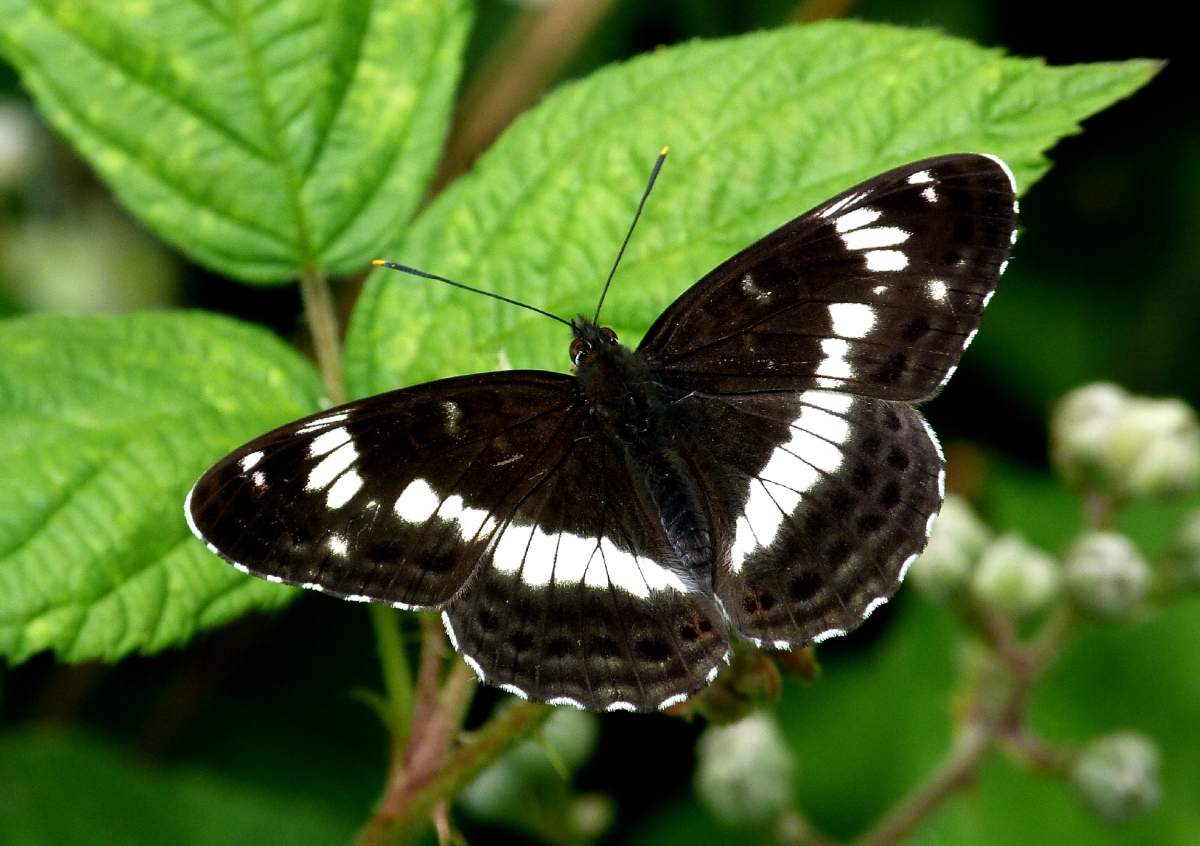
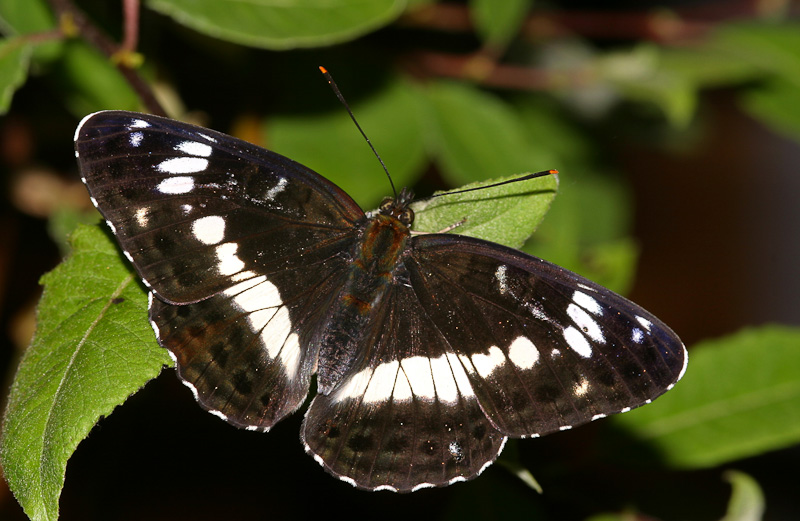
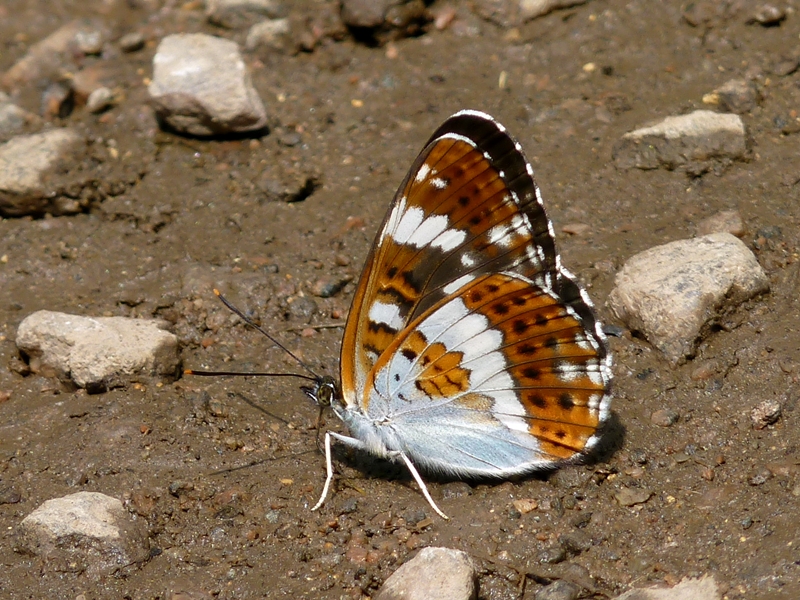
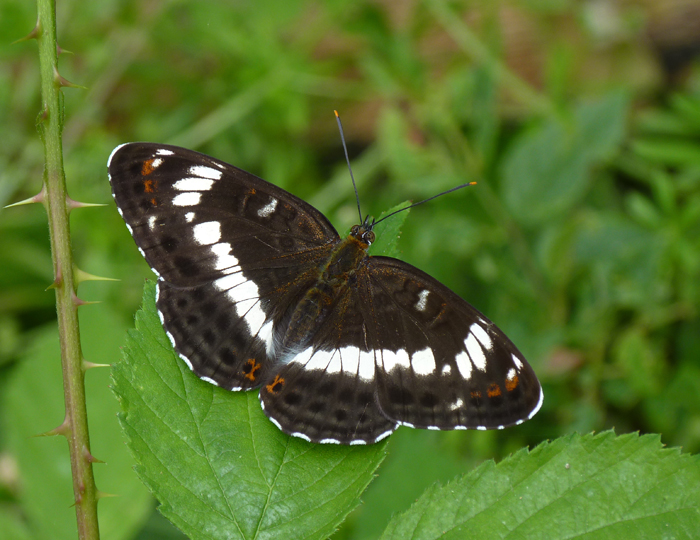
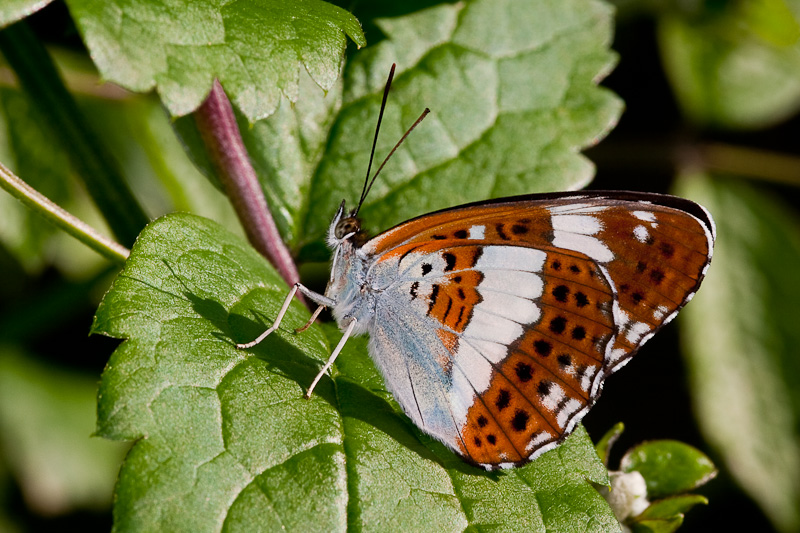
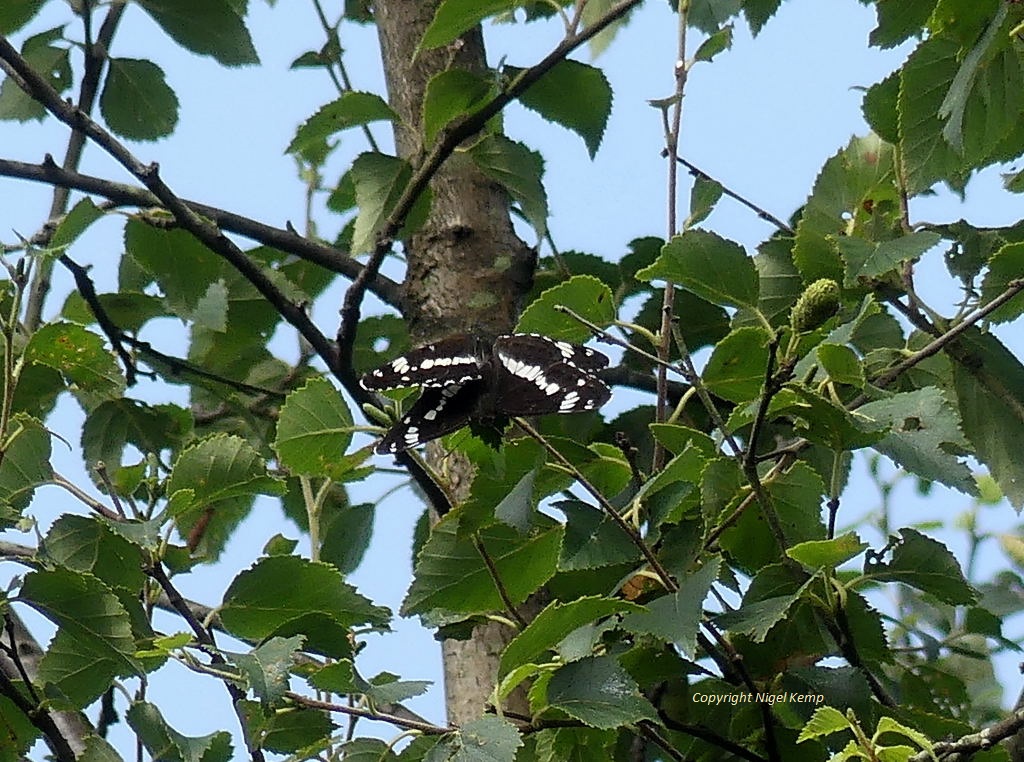
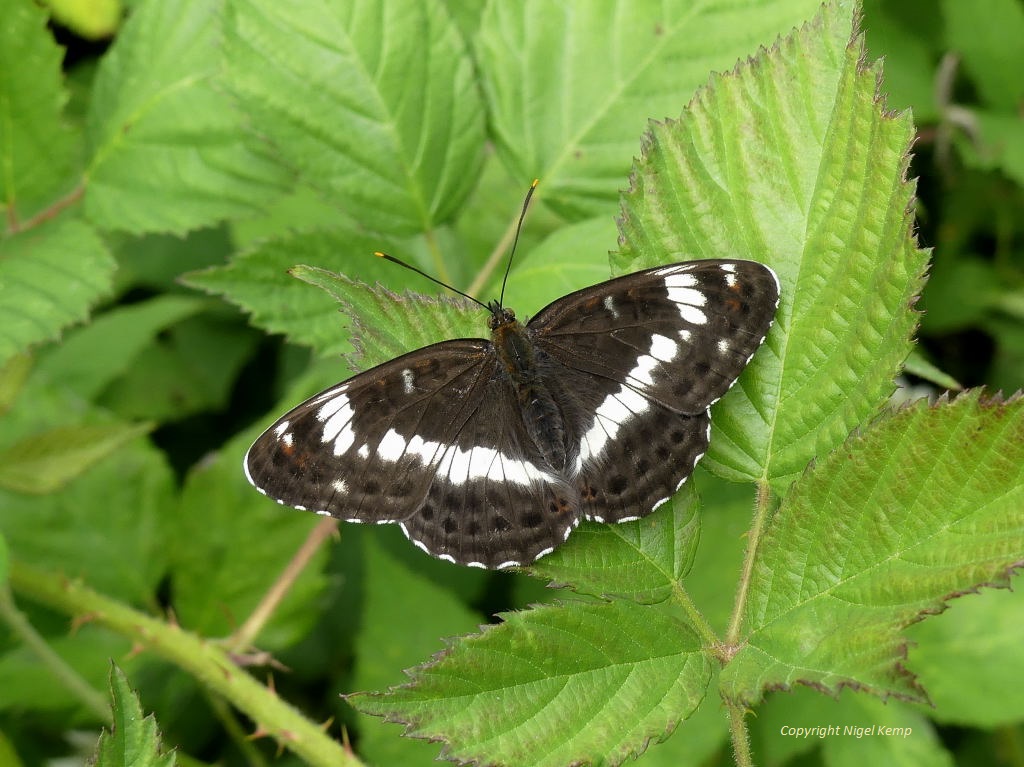
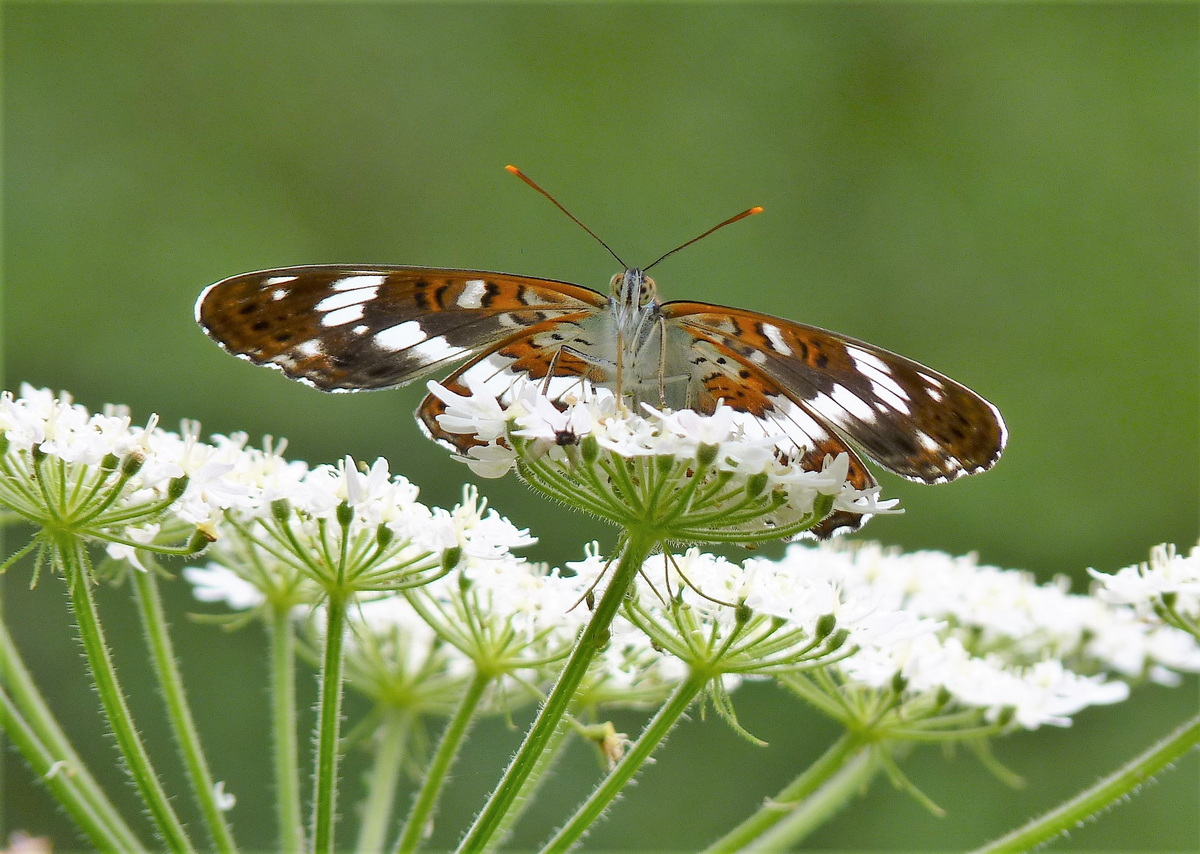
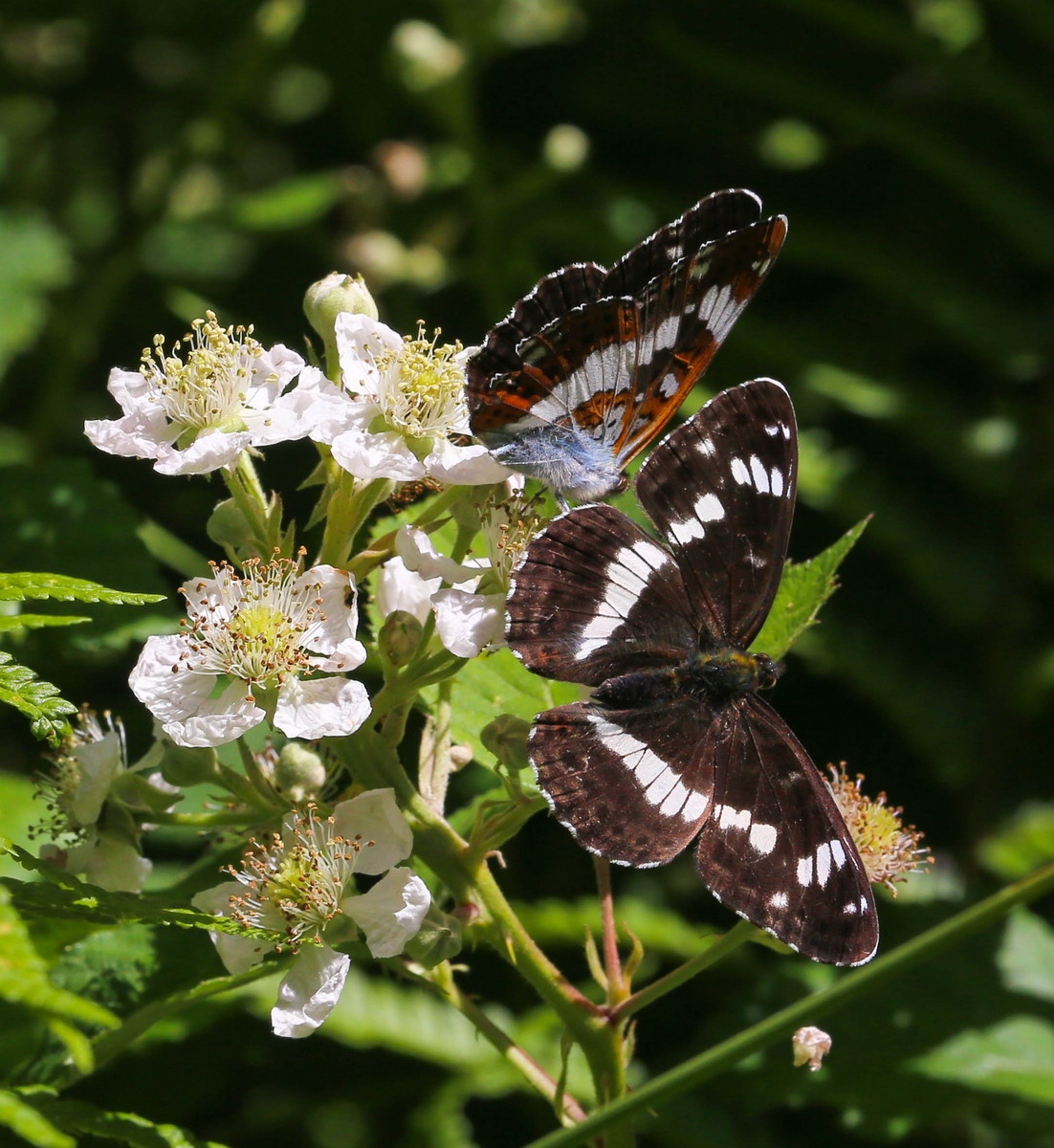
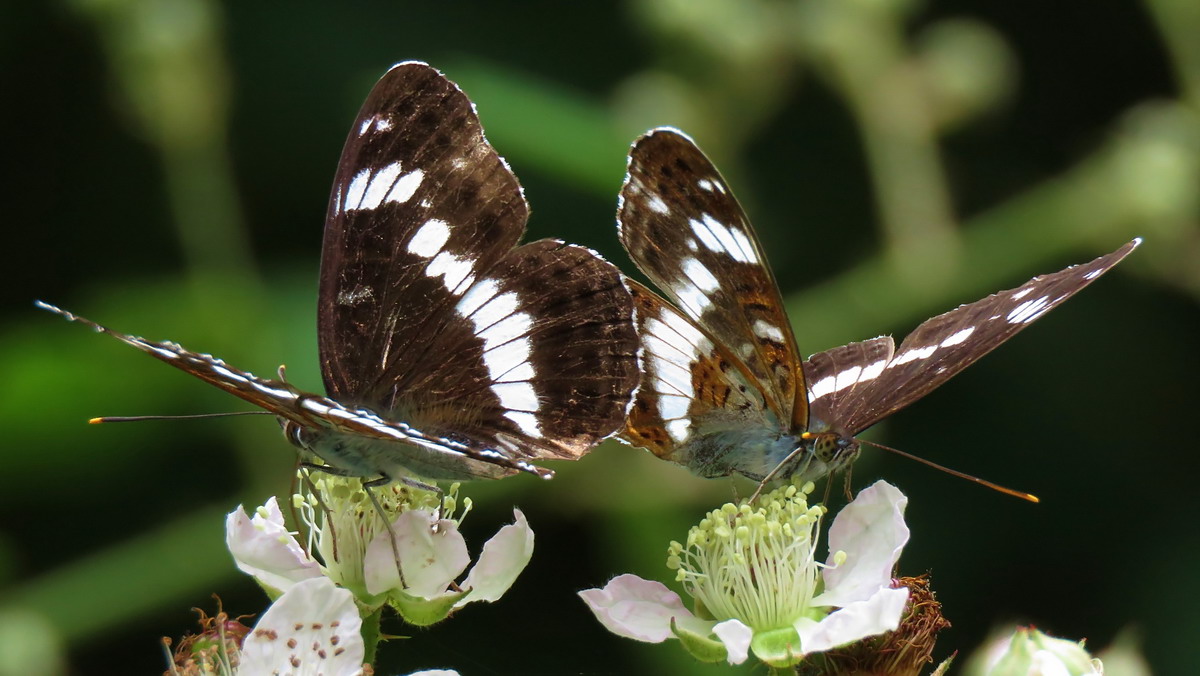
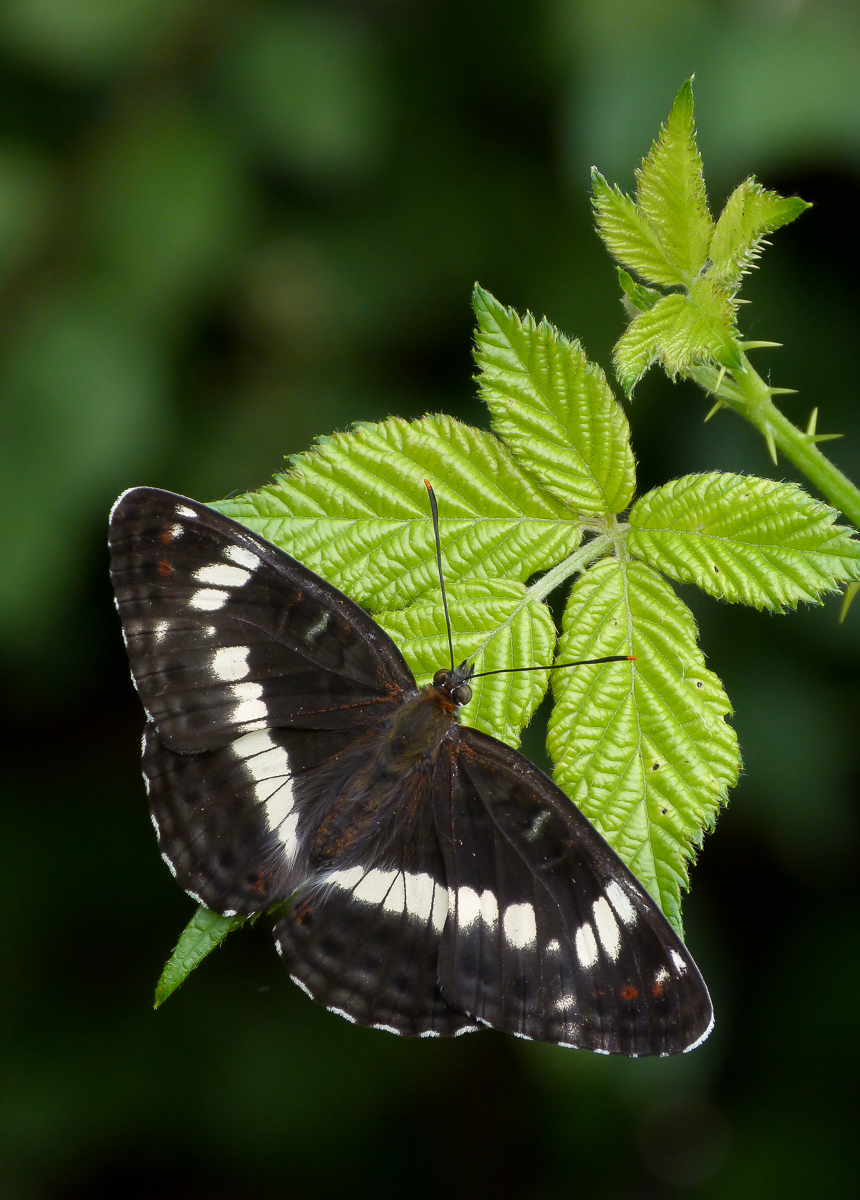
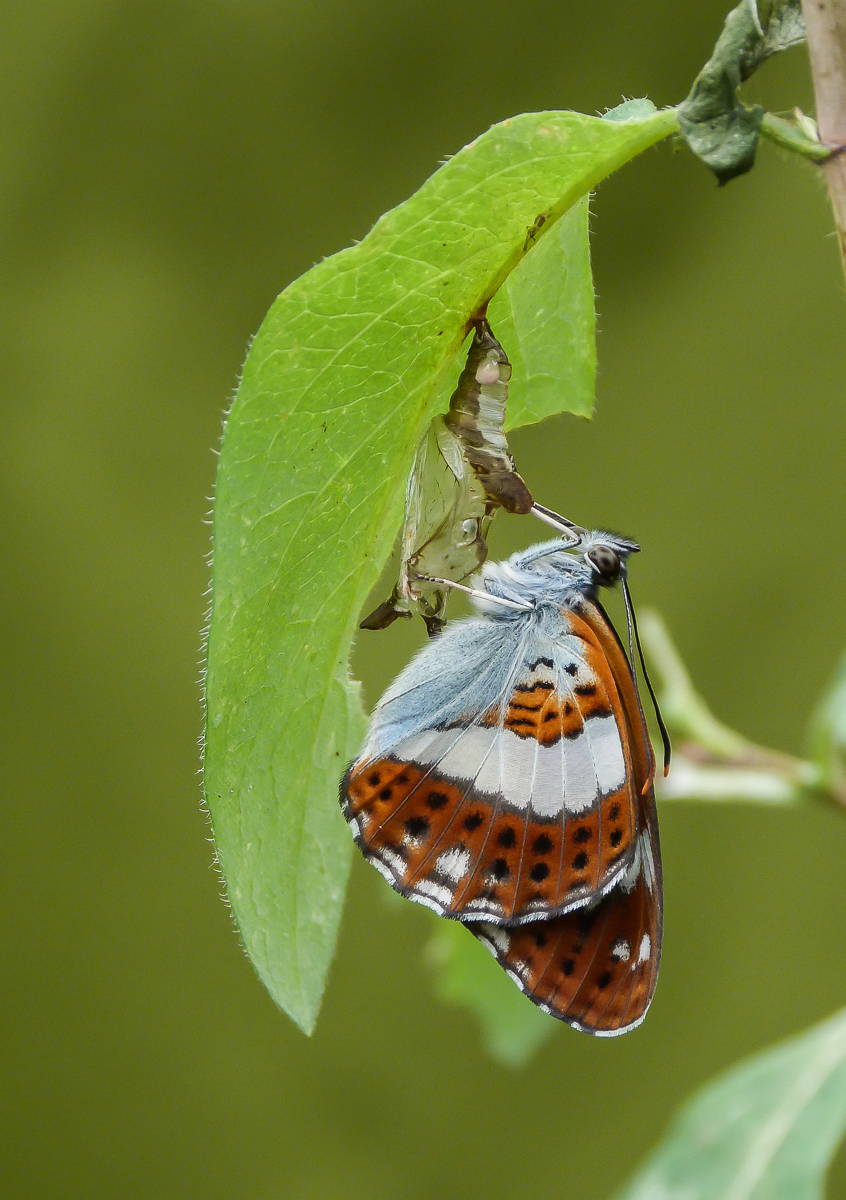
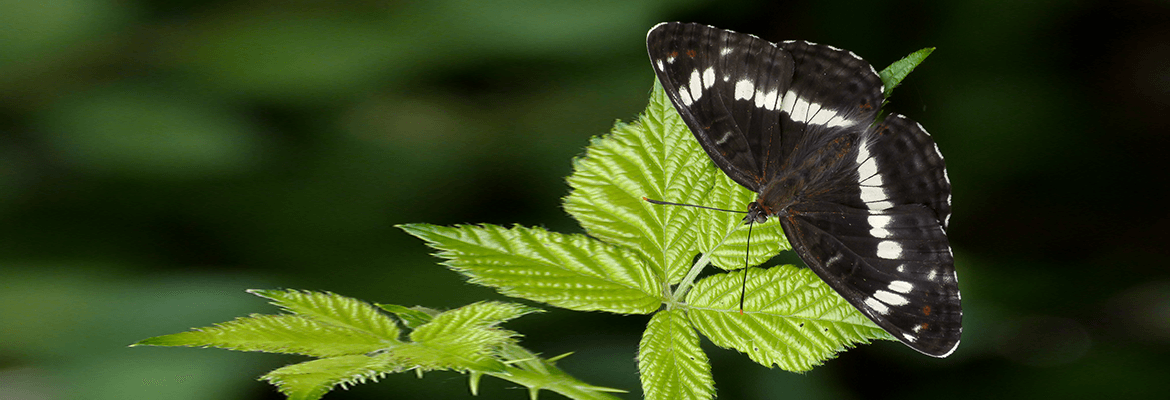
The White Admiral is a woodland species and a delight to behold as it literally glides along forest rides, flying from tree to forest floor and back up with only a few effortless wing beats. For this reason, some of its closest relatives on the continent are known as "gliders". When settled, the adults are unmistakable, with their black uppersides intersected by prominent white bars. The undersides of this butterfly are, however, in complete contrast to the black-and-white uppersides, and are surely one of the most beautiful of all species found in the British Isles.
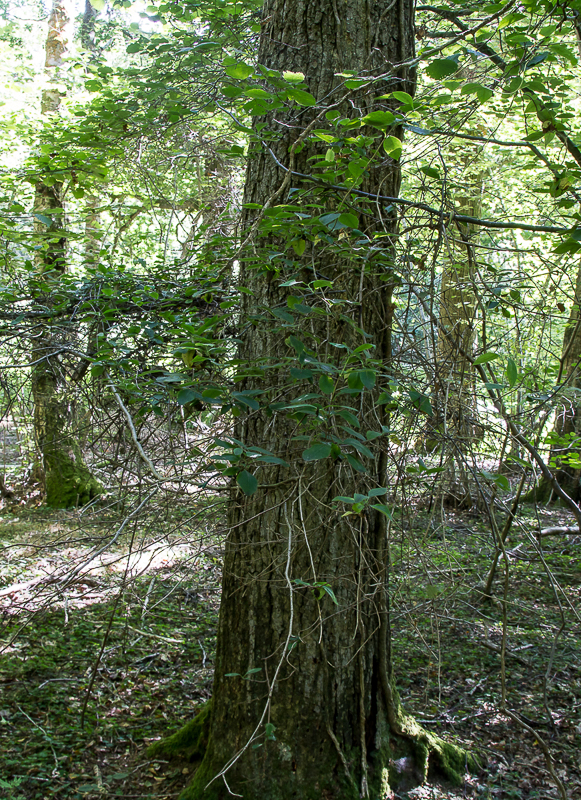
The butterfly is found in central and southern England, south of a line between South Devon in the west and North Lincolnshire in the east, as well as in a few scattered colonies in the eastern counties of Wales. It is not found in Scotland, Ireland or the Isle of Man. The distribution of this species in the early 1900s had declined to the point that it was restricted to southern England. However, there seems to have been a reversal of fortunes, with the butterfly reaching its former distribution that extends as far north as Lincolnshire. One explanation is that global warming has allowed the species to thrive at sites that had become too cool. Another is that the cessation of coppicing, that has been detrimental to so many woodland butterflies, has benefited this species which requires Honeysuckle growing in shady woodland for the successful development of its larvae.
| Family: | Nymphalidae | Rafinesque, 1815 |
| Subfamily: | Limenitidinae | Behr, 1864 |
| Tribe: | Limenitidini | Behr, 1864 |
| Genus: | Limenitis | Fabricius, 1807 |
| Subgenus: | ||
| Species: | camilla | (Linnaeus, 1764) |
Description to be completed.
The distribution data (2000-2009) has been made available through the generosity of Butterfly Conservation and any subspecies distribution is taken from Riley (2007). Click here to see the distribution of this species together with site information overlaid.
This species has shown worrying declines in terms of distribution and population at monitored sites and is therefore a priority species for conservation efforts. Although numbers at existing sites have fallen, the expansion of the range of this species does appear to have continued in the last decade.
The table below shows the occurrence (distribution) and abundance (population) trends, using information from The State of the UK's Butterflies 2015 (Fox, 2015). Any UK BAP status is taken from the UK Biodiversity Action Plan (UK BAP) (2007 review).
1976-2014 (%) | 1976-2014 (%) | 2005-2014 (%) | 2005-2014 (%) | Click here to access the Biodiversity Action Plan (BAP). |  -25 -25 |  -59 -59 | -14 | -45 |
|---|
Adults emerge in the second half of June and peak in the first part of July. There is usually one brood each year but, in some years, there may be a partial second brood in late summer.

Males and females are similar in appearance, although females are slightly browner and larger, and have more-rounded wings. The adults feed from honeydew and are particularly partial to Bramble blossom. It is not uncommon, on good sites, to see several White Admiral all feeding from the same Bramble patch. A downside of this, however, is that their wings can get tatty very quickly, as they move around Bramble blossom, probing for nectar. The adults will also feed on salts and minerals from moist earth and animal droppings.
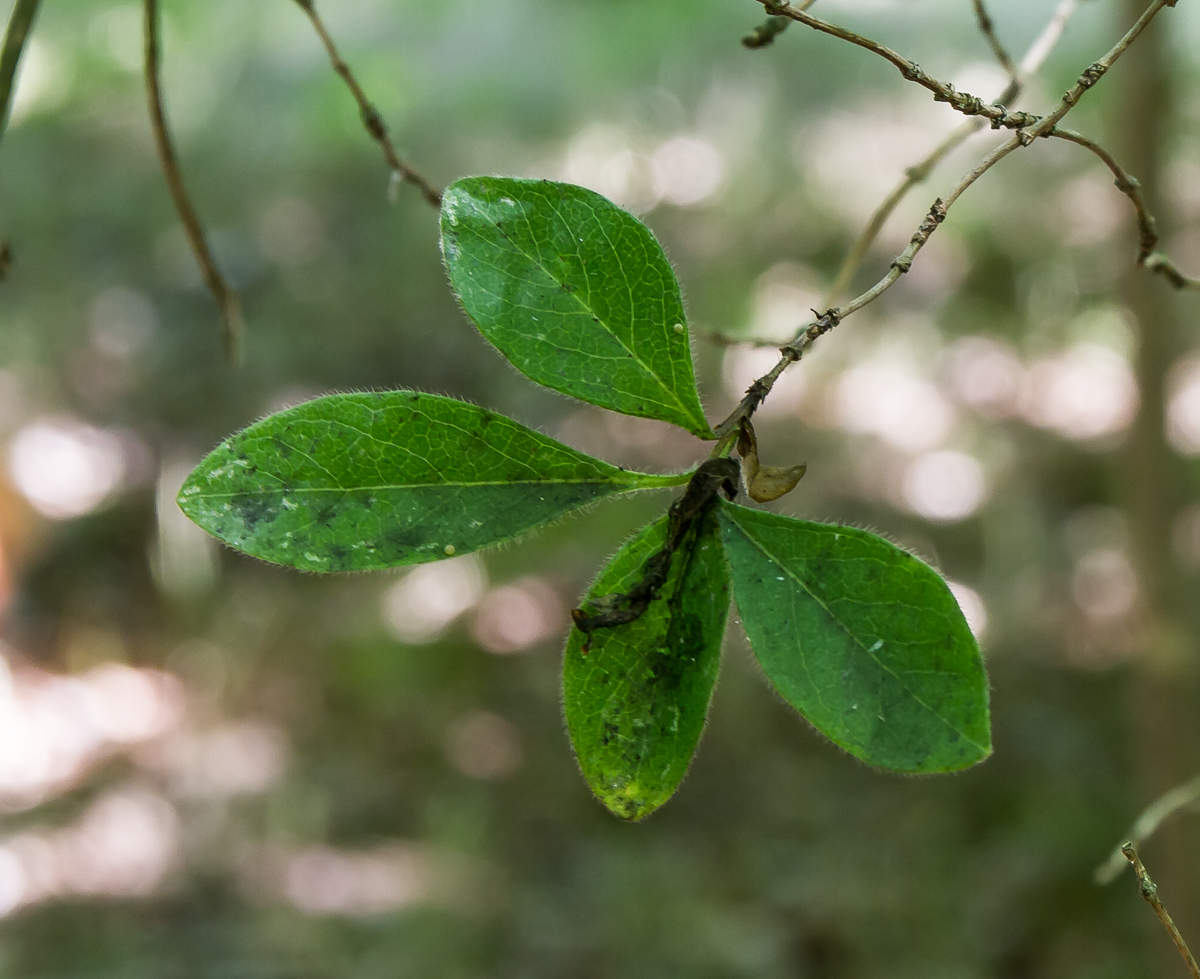
The behaviour of the female when egg-laying is in complete contrast to the normal soaring flights, making her easy to spot. The female flits low in undergrowth or through shaded woodland, stopping every now and again on the foodplant to lay a single egg. The female selects Honeysuckle that is in partial shade, often at the edge of a woodland ride or in lightly-shaded woodland. She also selects leaves on straggly pieces of isolated plant, rather than the lushest leaves that are often growing in full sun.
Adults feed primarily on brambles (Rubus spp.) and Honeydew (N/A). Betony (Betonica officinalis), thistles (Carduus spp. and Cirsium spp.), umbellifers (Apiaceae spp.) and Wild Privet (Ligustrum vulgare) are also used.
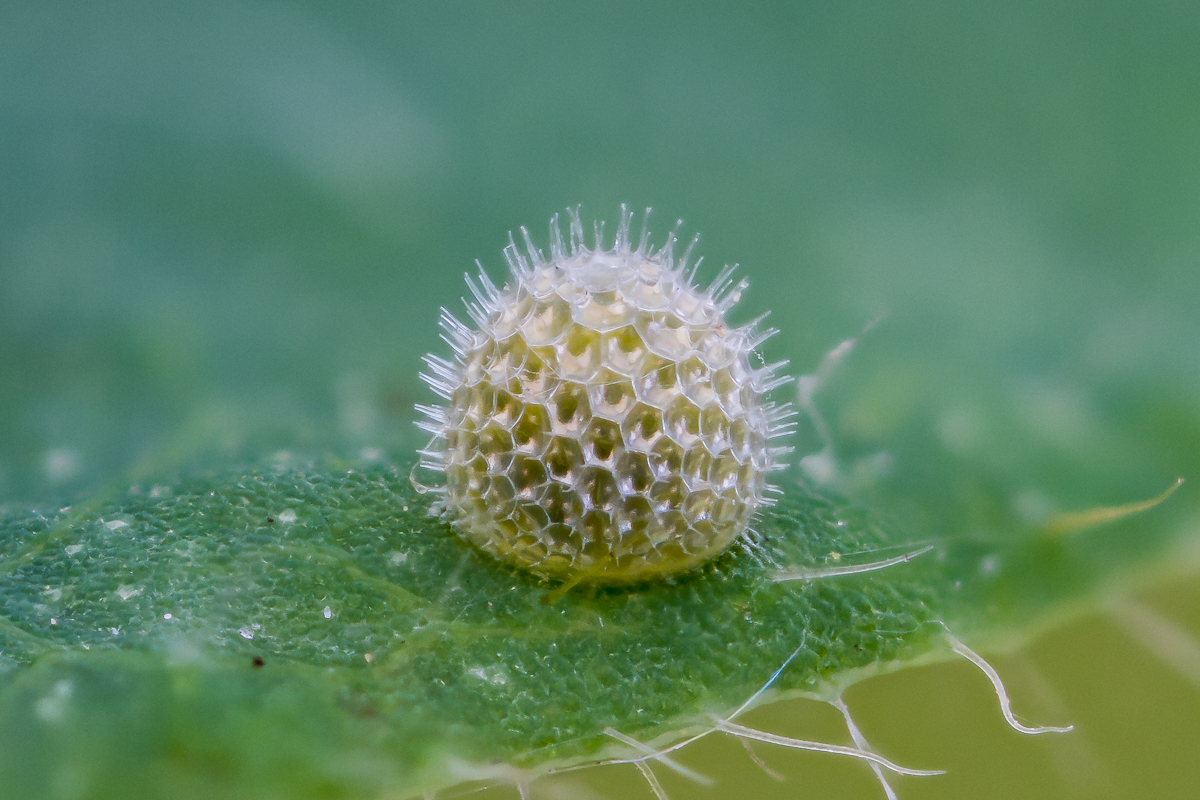
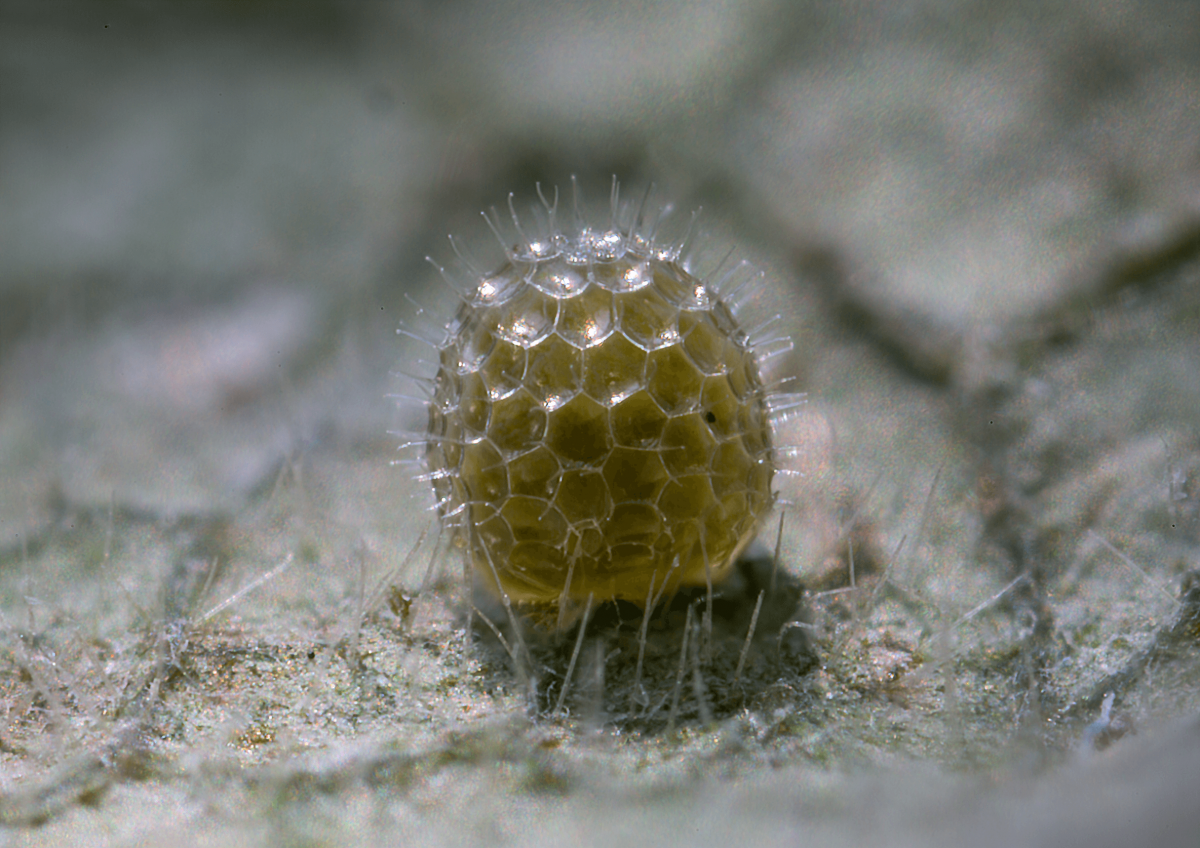
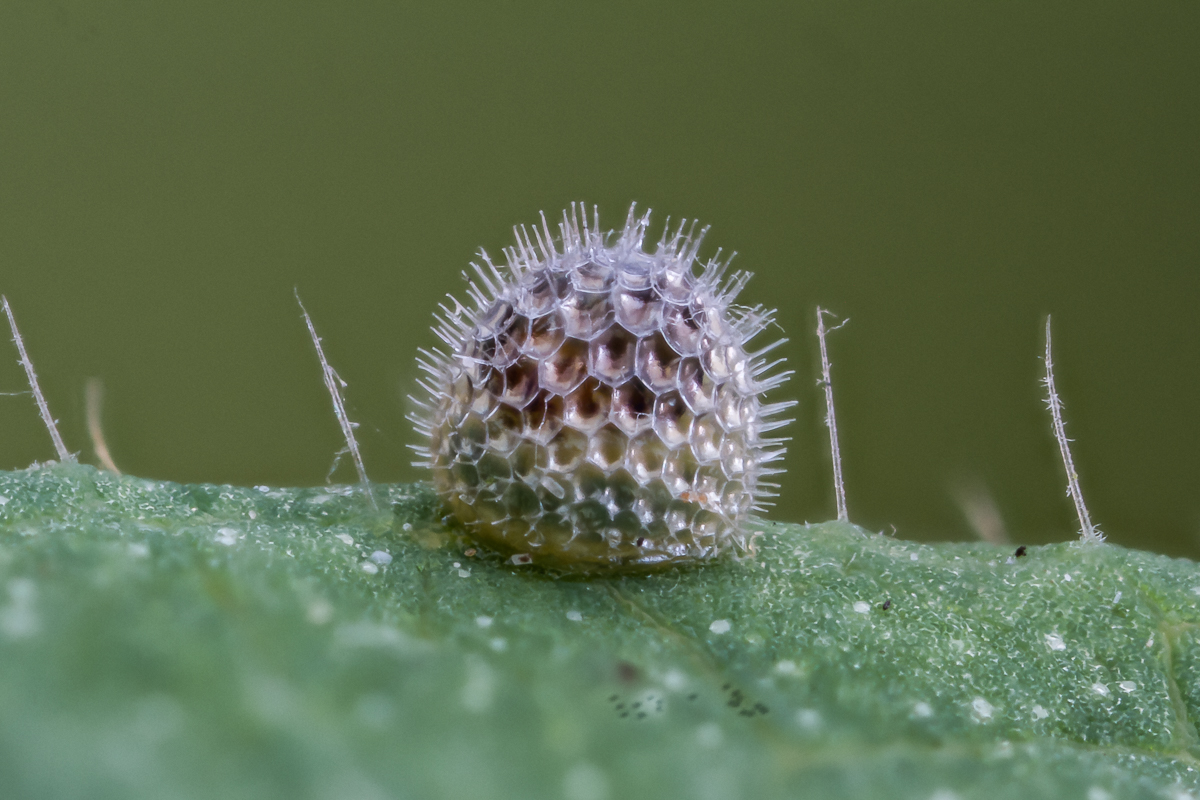
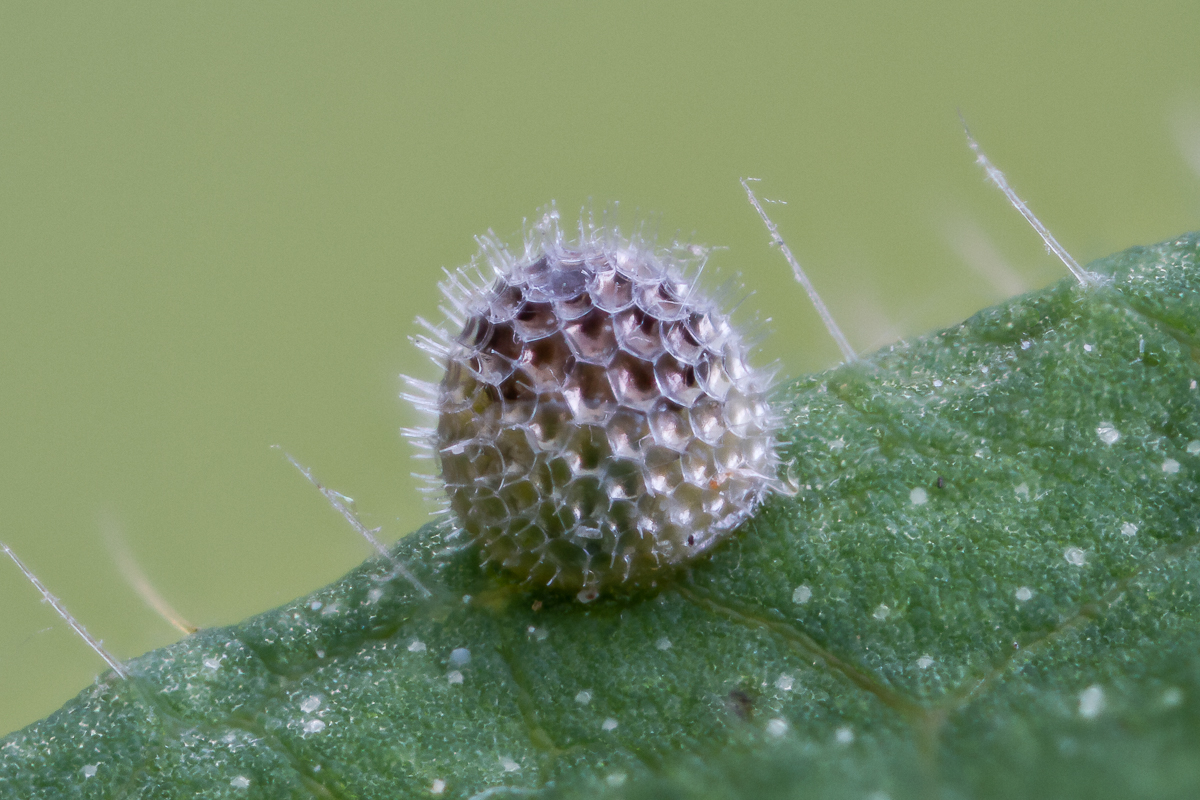
Eggs are laid singly on the upperside of a leaf of the foodplant, close to the leaf edge. Most eggs are laid less than two metres from the ground. The egg is a curious shape, looking rather like a miniature golf ball covered in miniscule hairs. This stage lasts about a week.
"The egg is laid singly on the edge of the upper surface of the leaf; the usual mode of depositing is for the butterfly to sit across the leaf, then curving the abdomen until it touches the opposite edge, when it deposits one egg only, and immediately flies off to another leaf. Occasionally two eggs may be found on one leaf, which is due to two butterflies selecting the same leaf. On July 14th, 1901, six captured females were placed on a plant of honeysuckle; by the 17th about four dozen eggs were laid; these began hatching on the 22nd, remaining six or seven days in the egg state. Those found laid by wild females on July 11th started hatching on the 17th, the egg state lasting six days. The egg is spherical, 0.91 mm. diameter. It is beautifully adorned with hexagonal cells exactly resembling honeycomb; from the angle of each cell rises a moderately long, sharp, transparent spine, giving the egg much the appearance of an echina. It is of an olive-green colour, semi-transparent and very glassy. Before hatching it becomes paler, with the dark head of the larva showing through the shell." - Frohawk (1924)
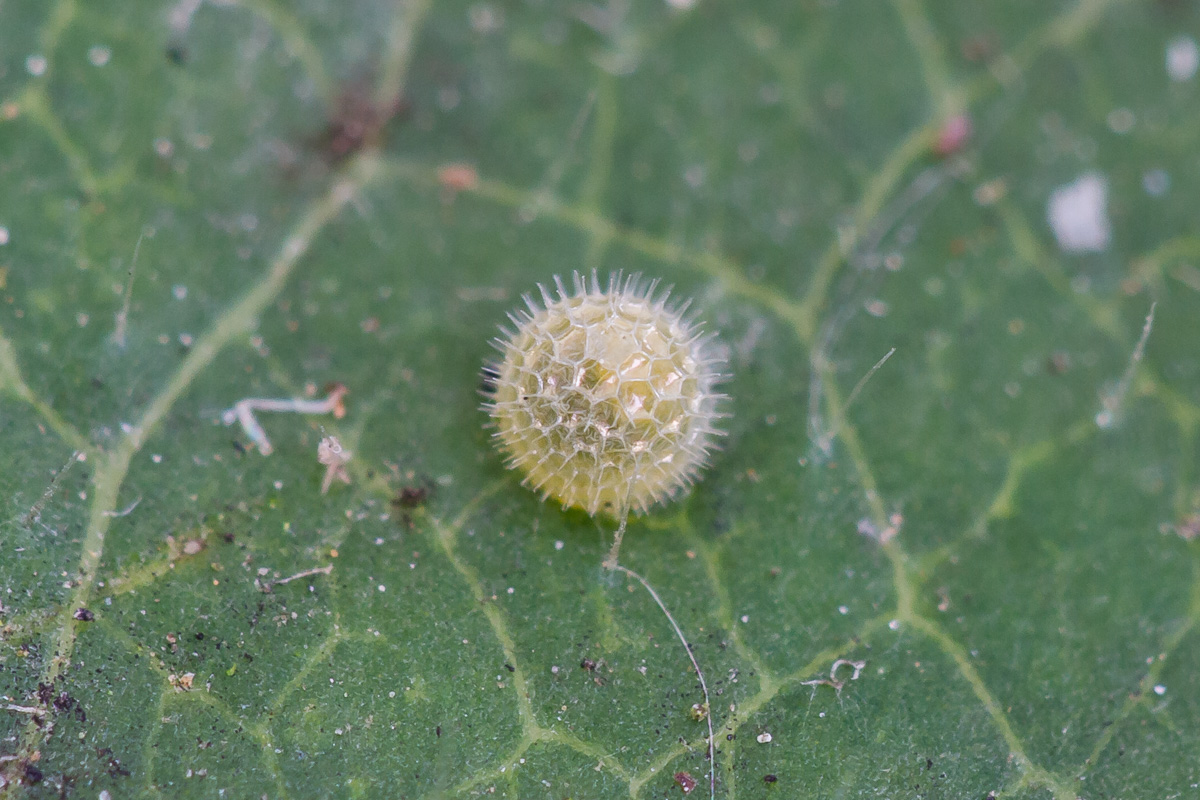
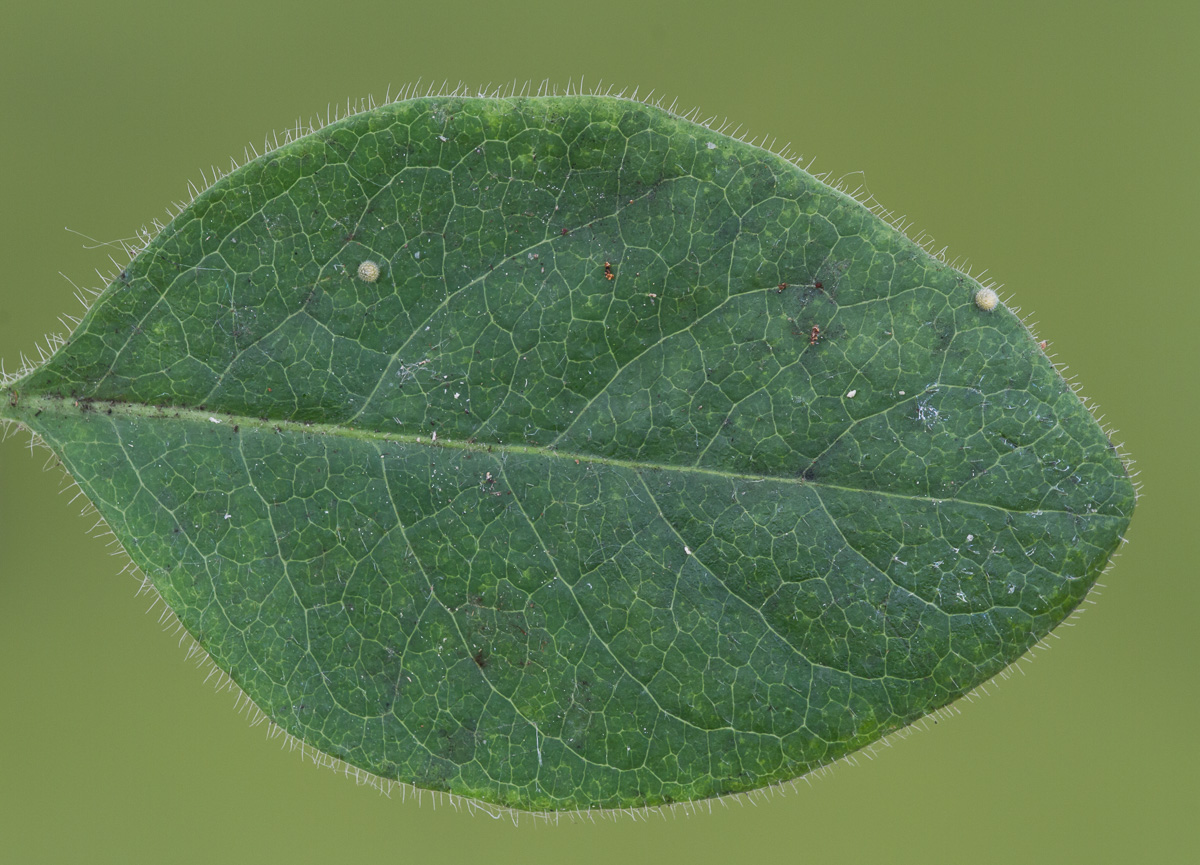
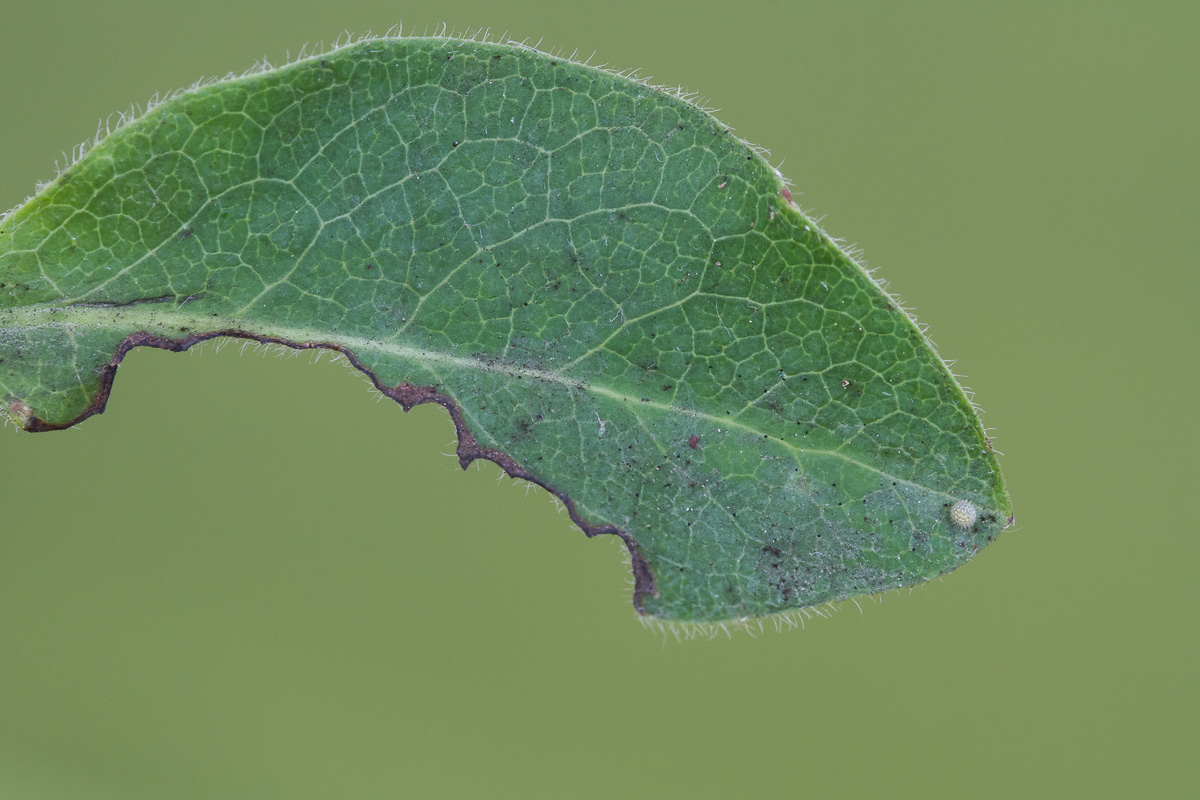
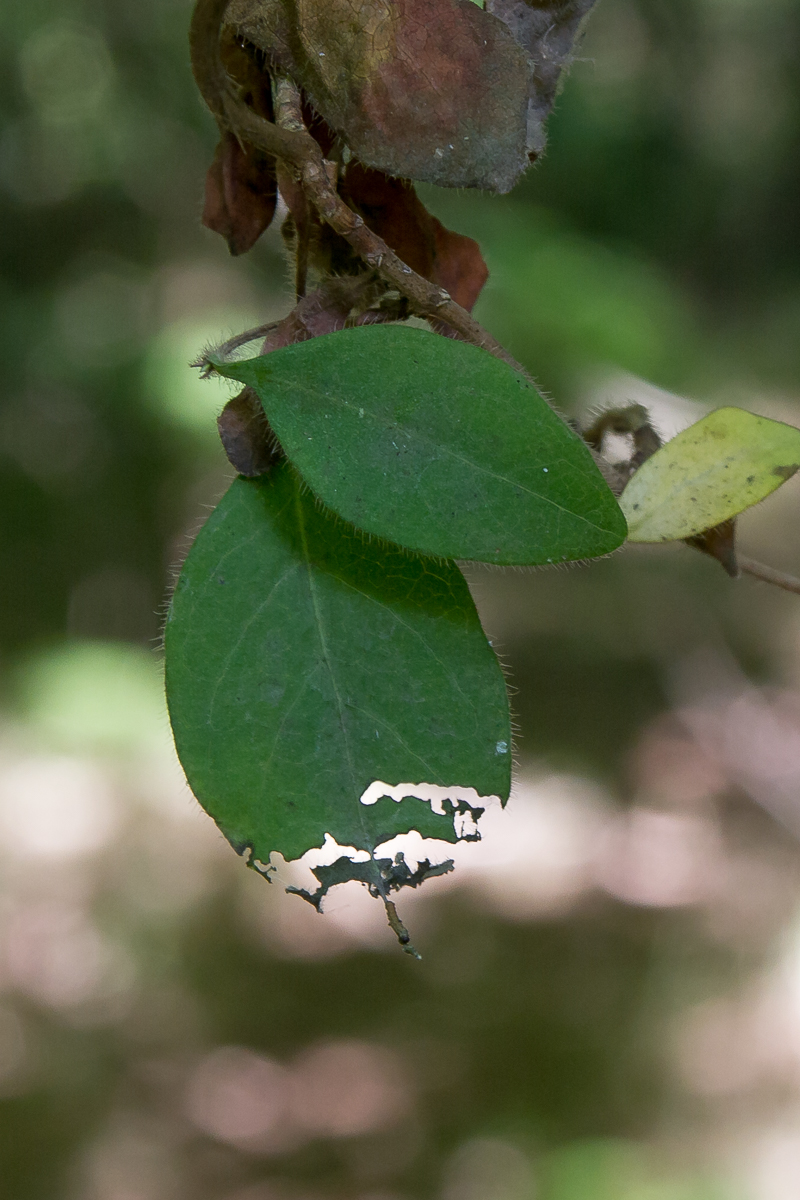
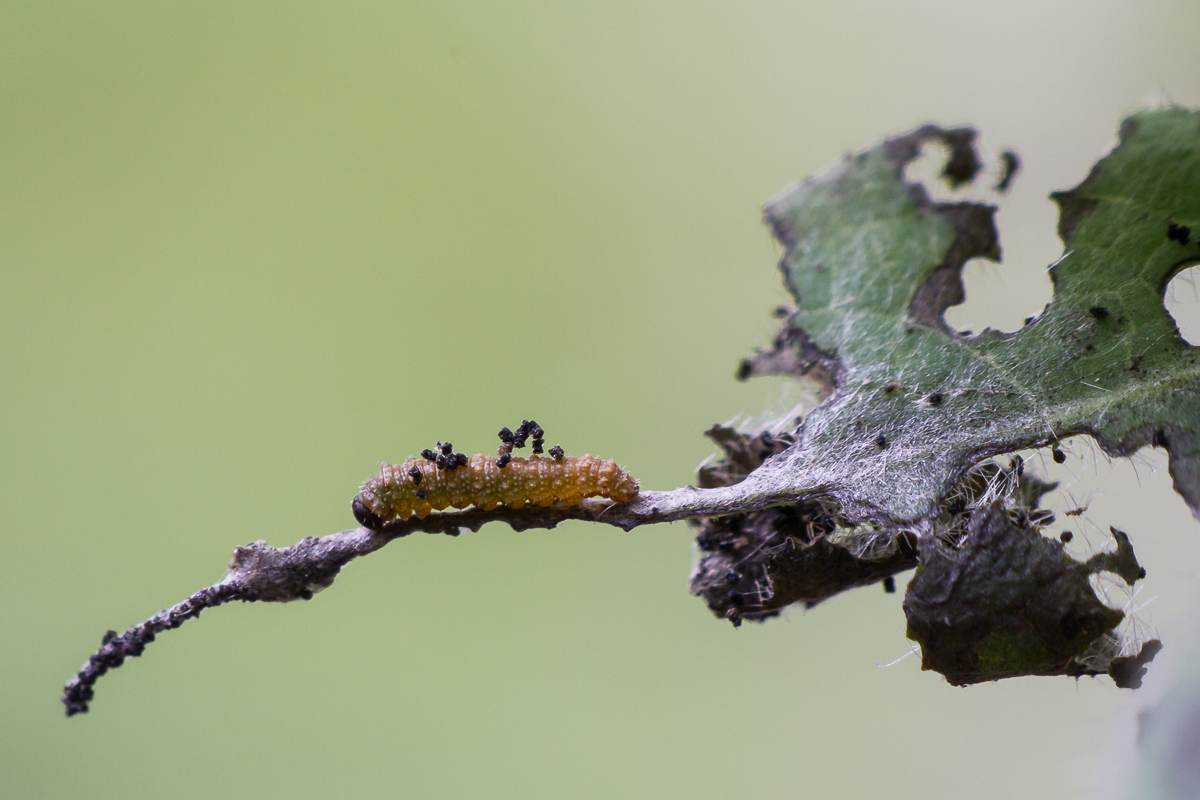
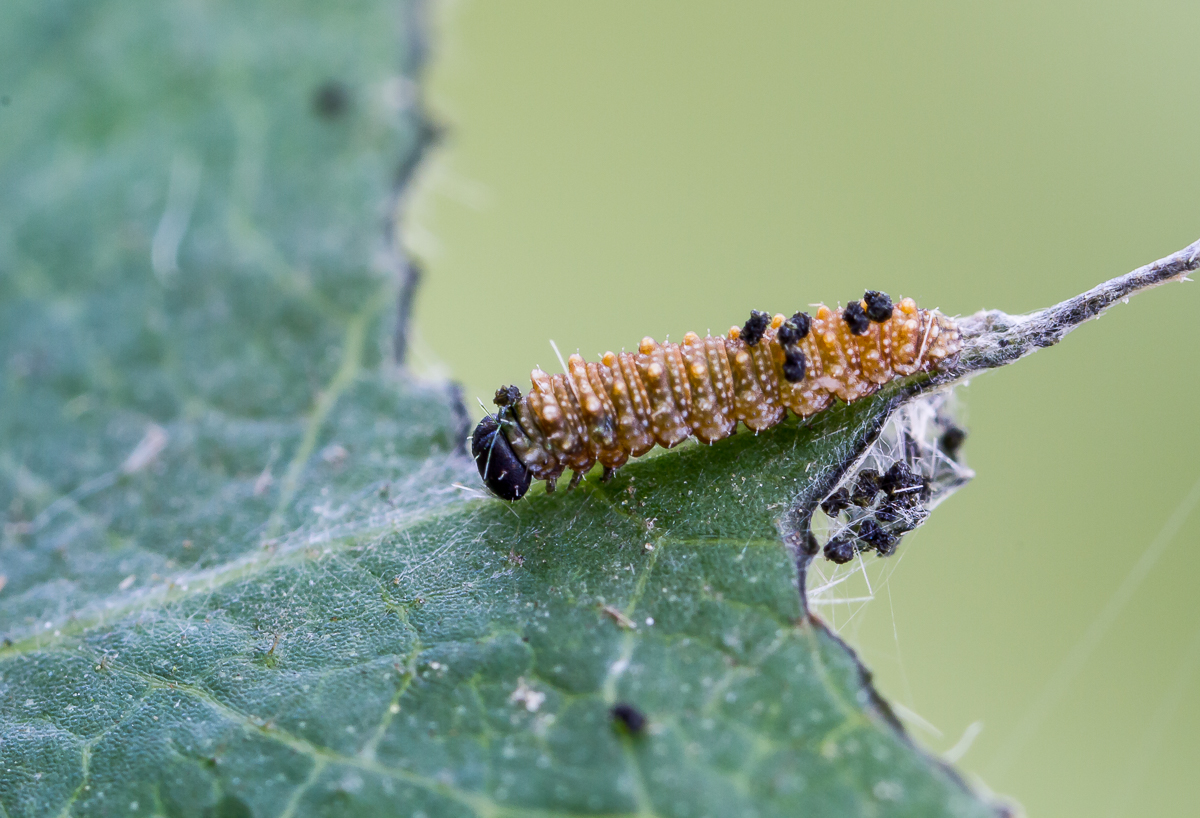
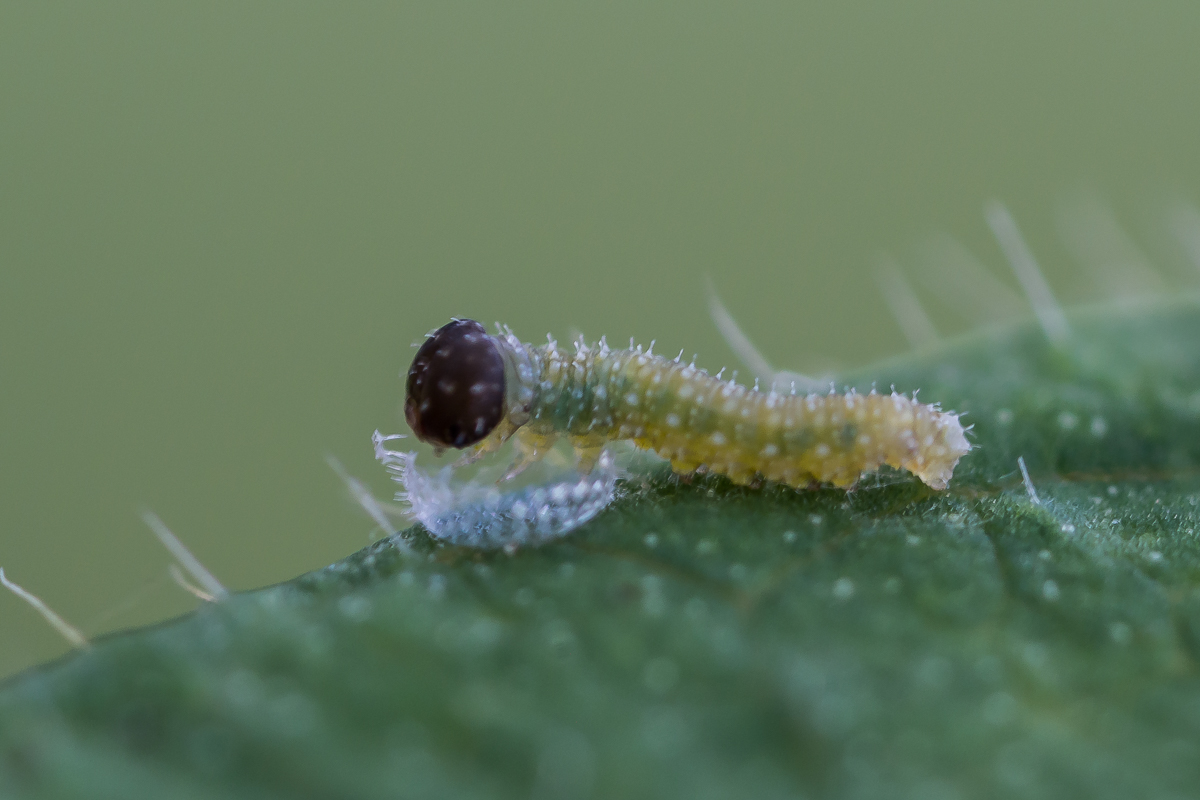
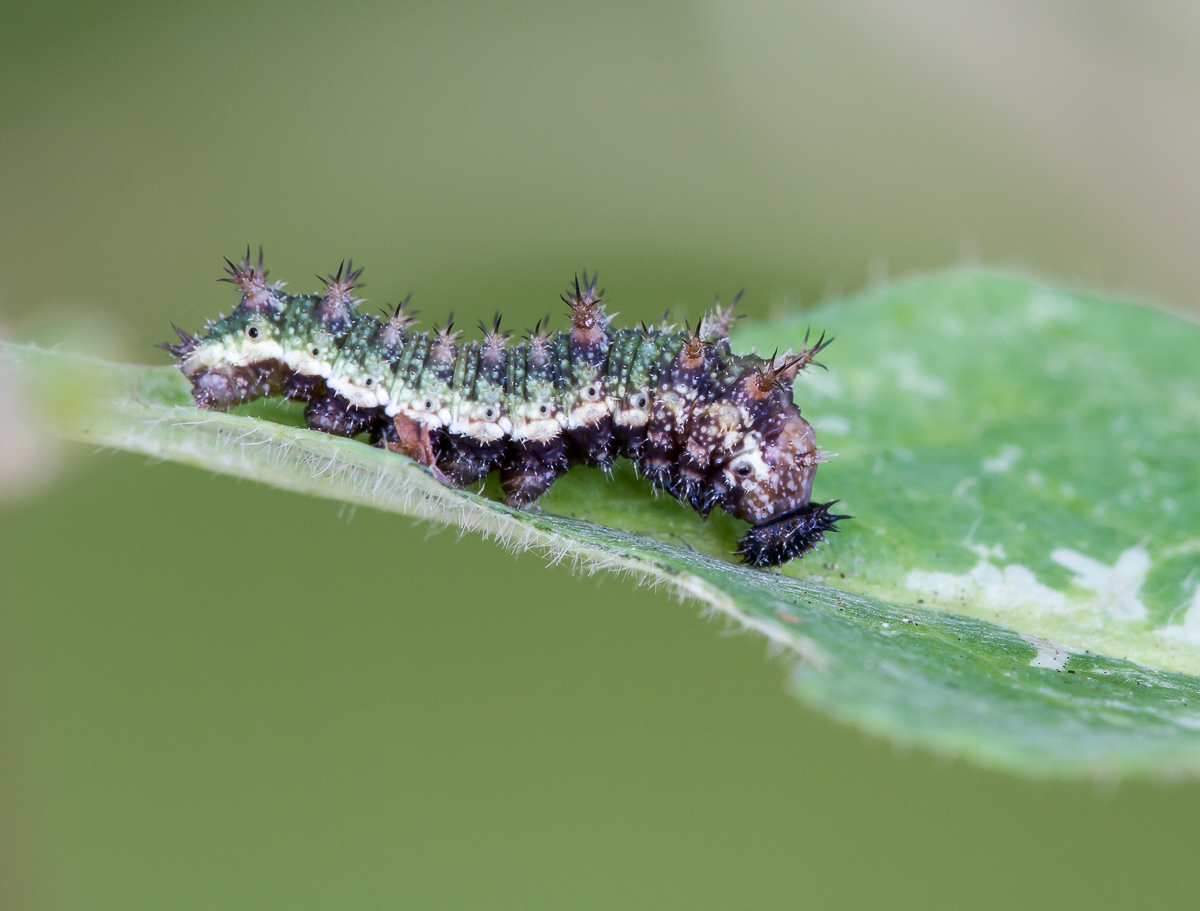
On emerging from the egg, the light brown larva eats the shell before moving to the leaf tip to feed. Here is feeds on each side of the midrib on which it rests, leaving the midrib intact, producing characteristic feeding damage that is quite easy to spot. The larva initially decorates itself with faeces that it uses for camouflage, although this is abandoned after a week or so, after which the larva rests quite openly on the midrib.
Toward the end of the summer after the second moult, the larva builds a winter retreat, known as a hibernaculum. This is constructed by securing a leaf to the twig with silk (so that the leaf remains attached to the foodplant even after it has died), removing the edges of the leaf, and then folding what remains of the leaf edges together, forming a compartment within which the larva overwinters.
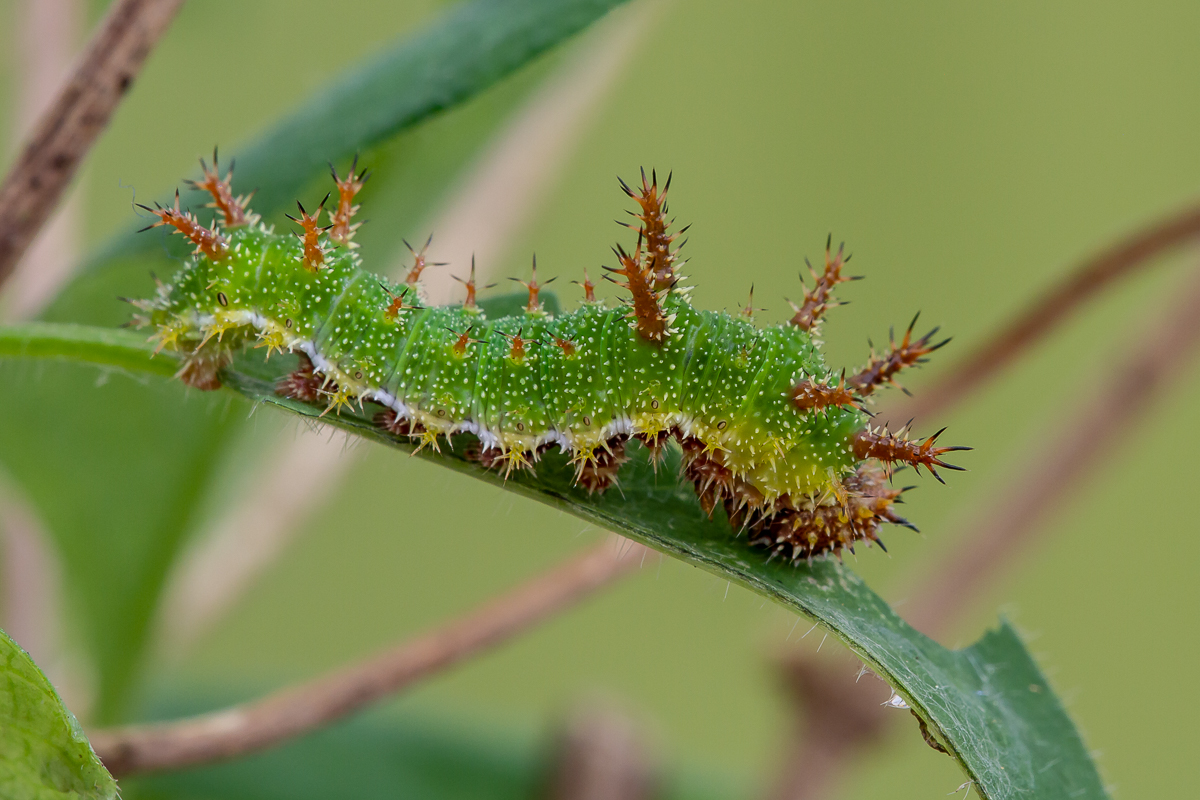
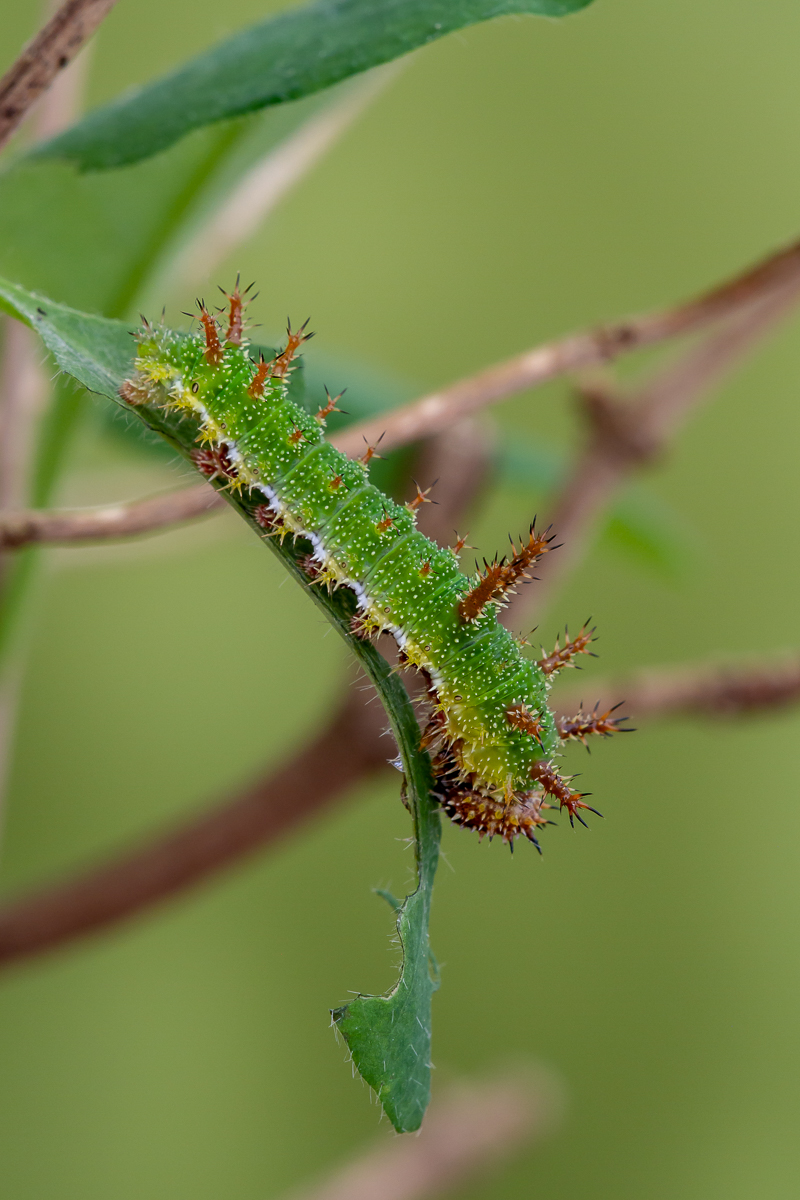
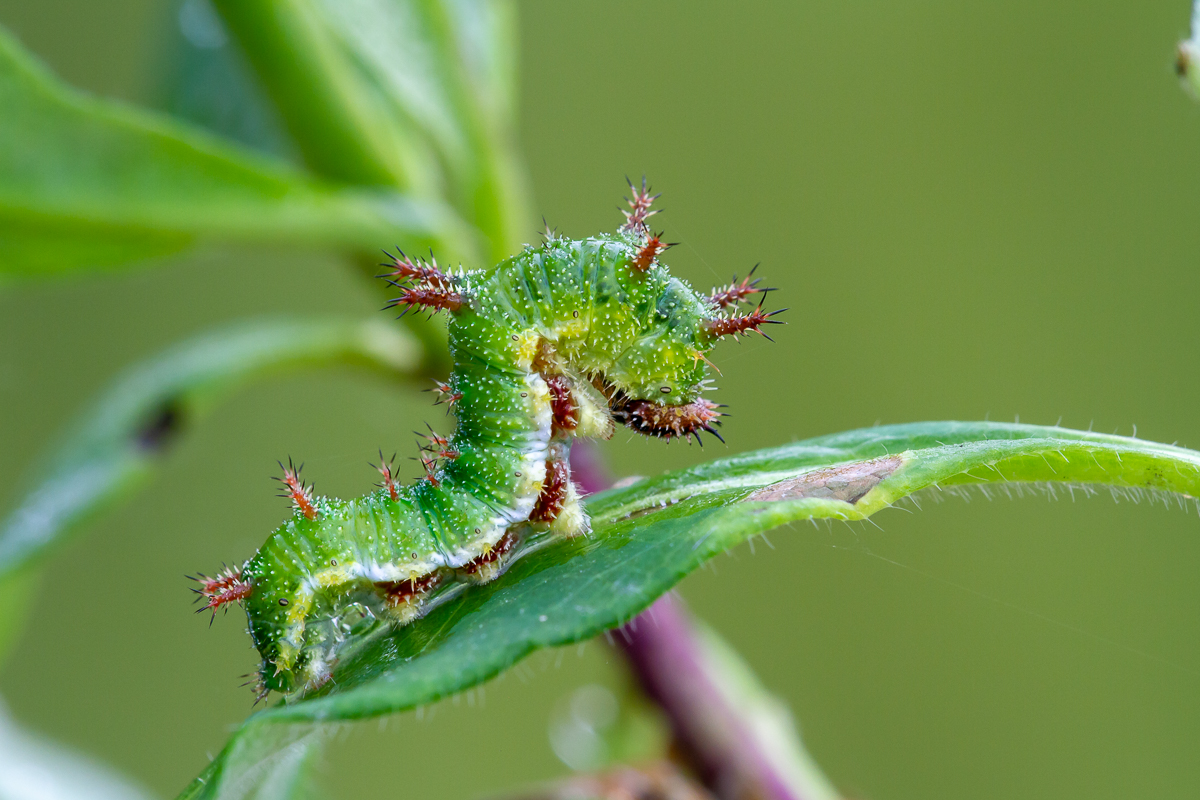
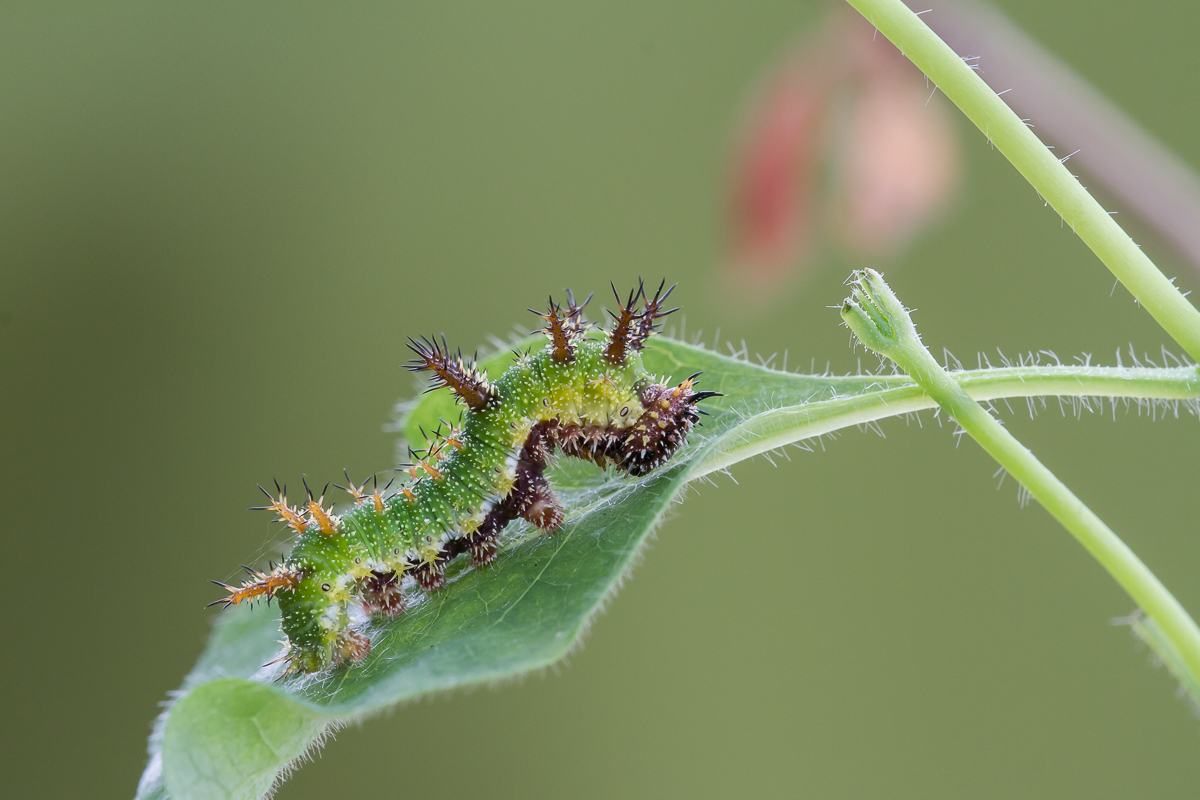
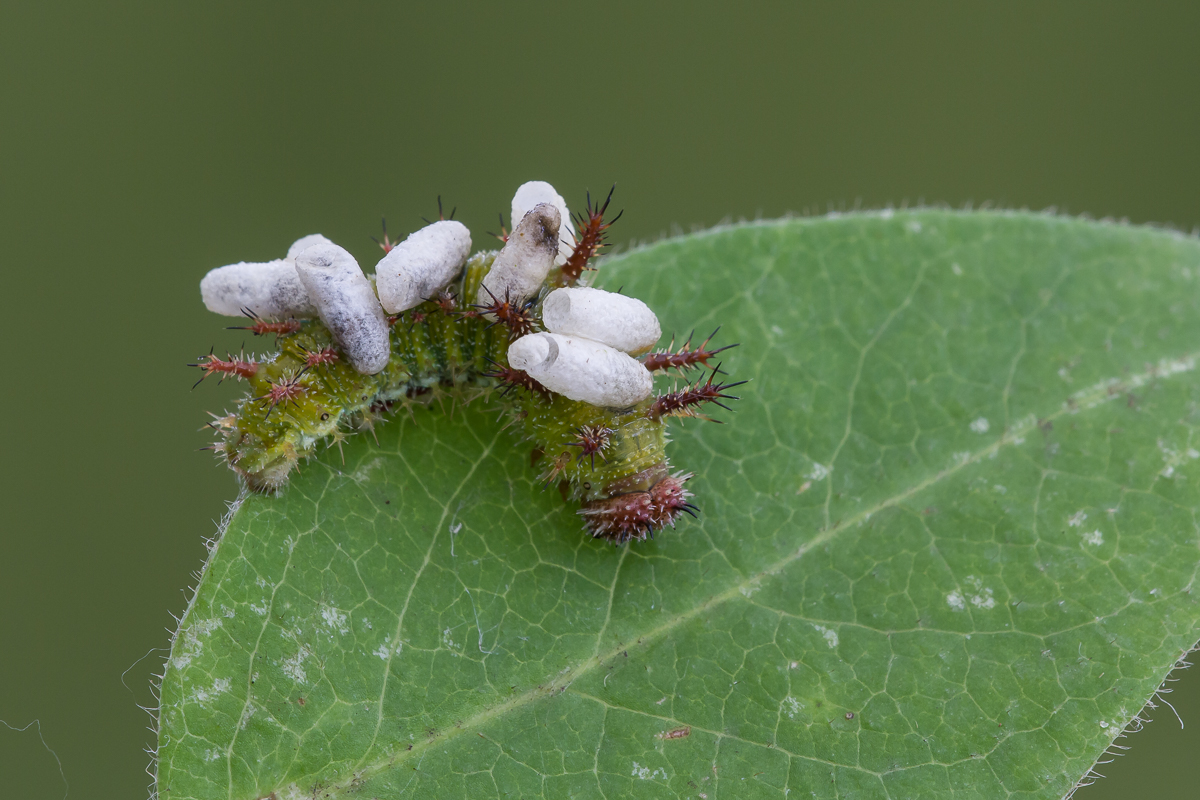
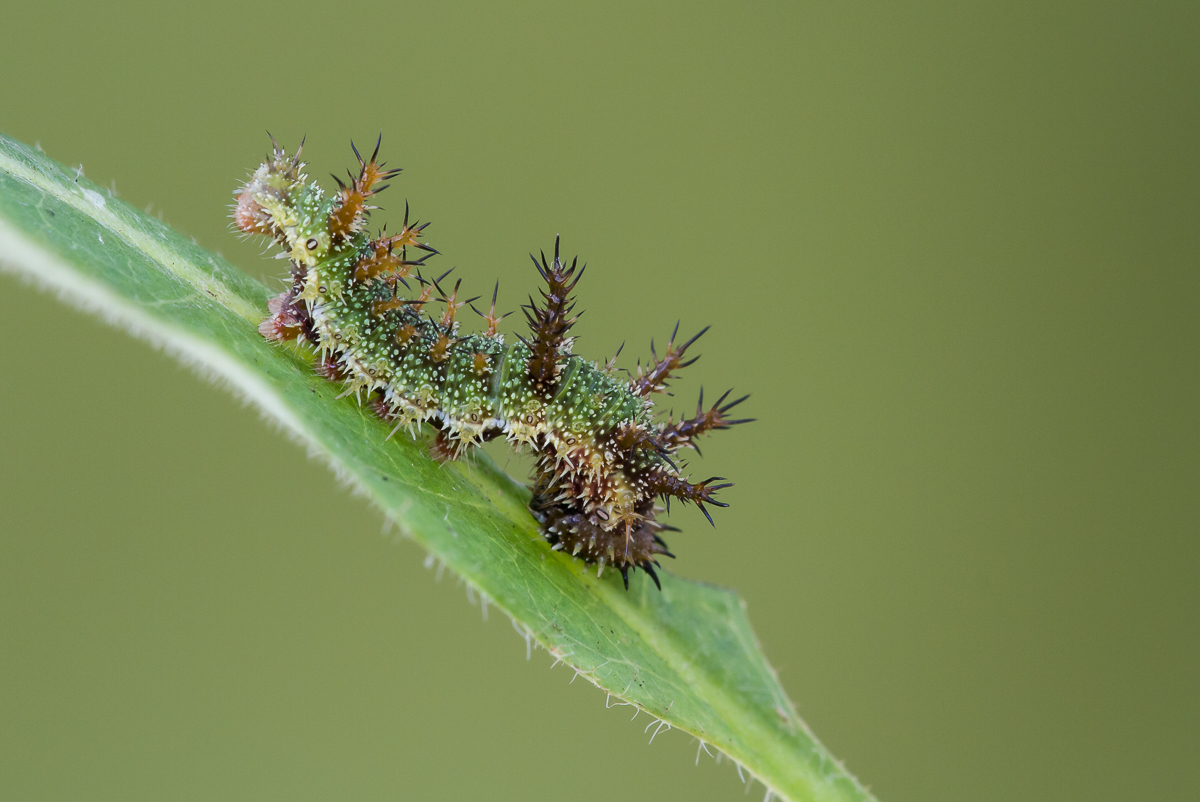
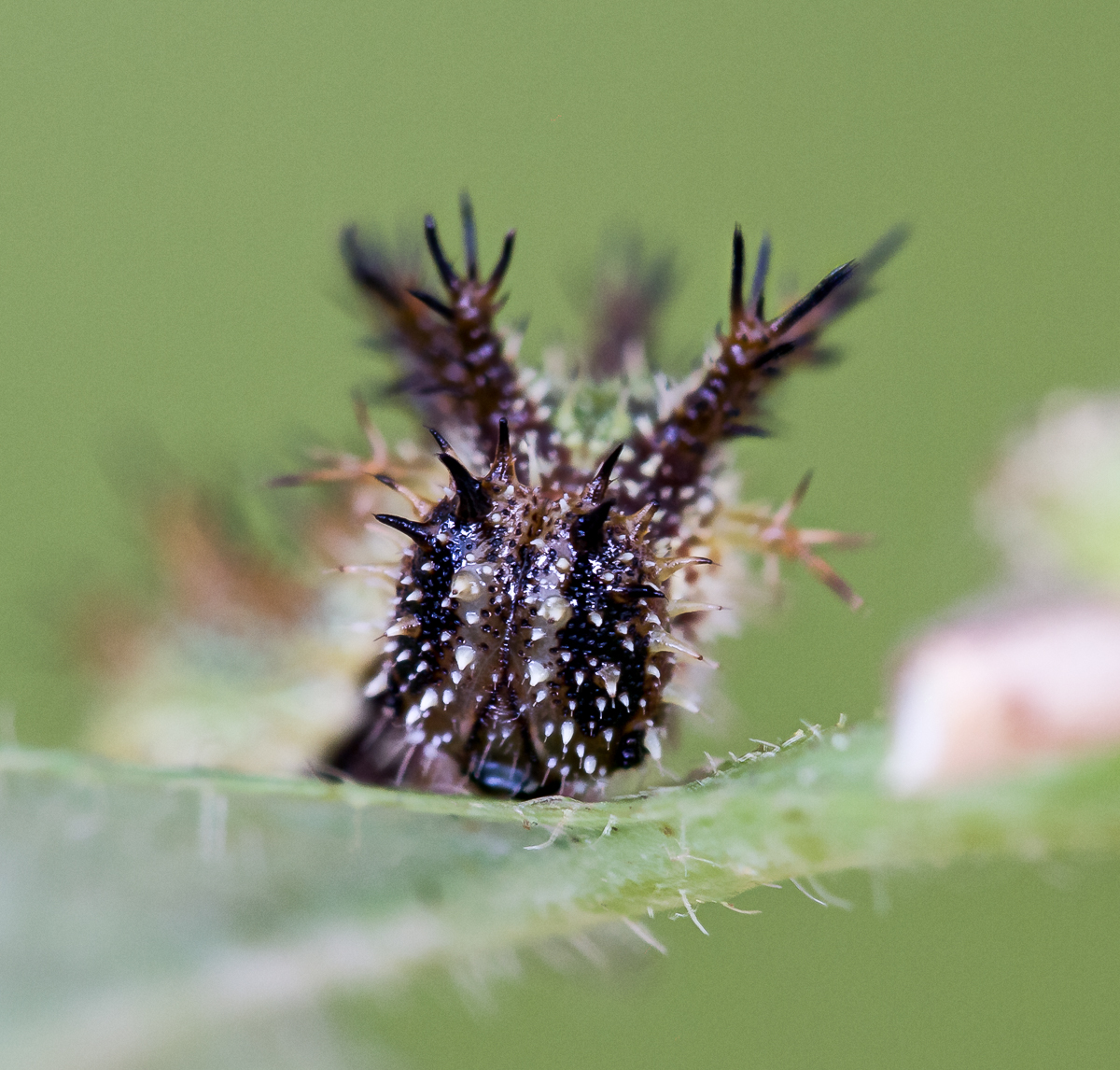
The larva emerges from the hibernaculum in the spring and, at the final moult, turns green in colour and starts to feed on the leaf edges rather than from the tip. The full-grown and exotic larva is a spectacular beast that would not look out of place in an Amazonian rainforest. It also has a curious habit of resting along the centre of a leaf with both front and back ends raised. There are 5 instars in total.
The primary larval foodplant is Honeysuckle (Lonicera periclymenum). snowberries (Symphoricarpos spp.) is also used.
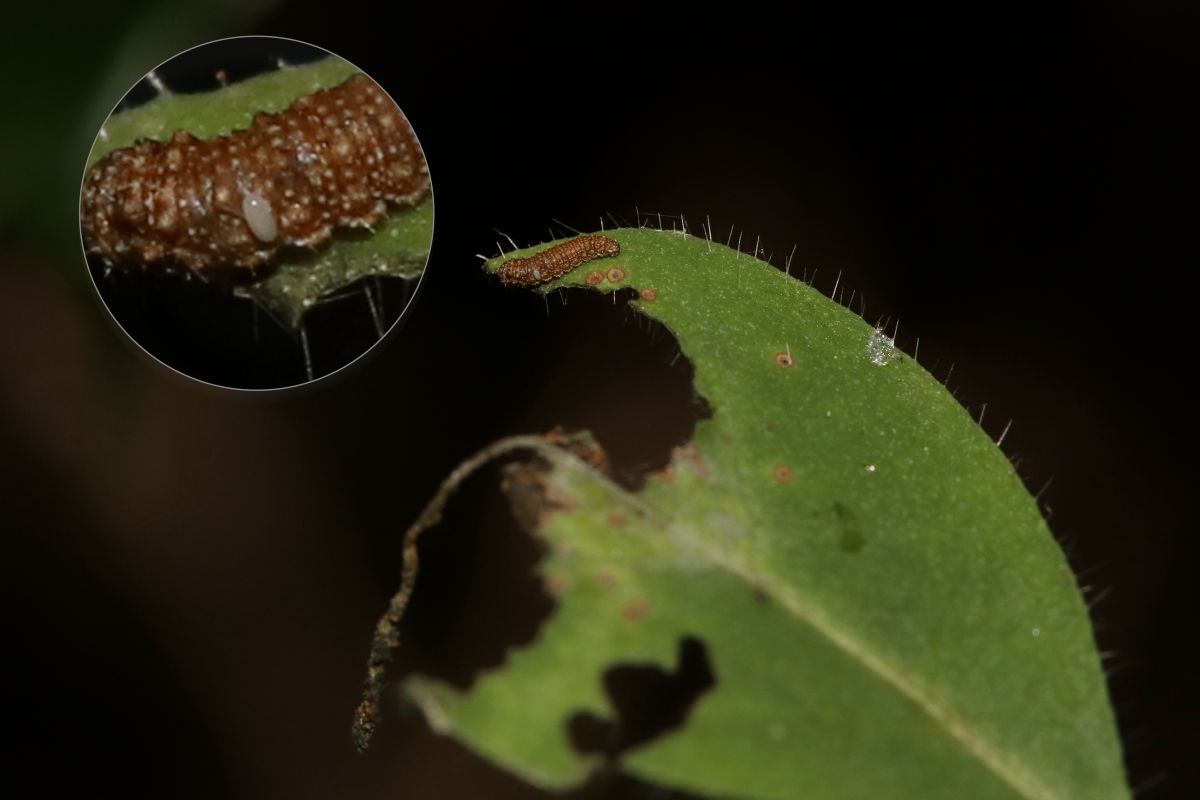

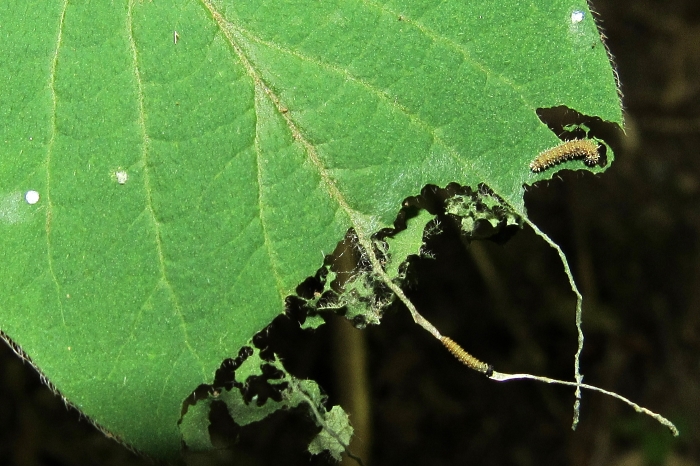
"The young larva, as soon as it emerges, feeds on the empty eggshell. Directly after emergence it measures 2.12 mm. long. The body is nearly cylindrical; the head is very large in proportion, being much wider than the first segment; it is black, granular, and bears numerous tiny white, clubbed hairs. The body is pale olive-ochreous, each segment transversely wrinkled, forming three deep sub-divisions; the first is much the widest, occupying the anterior half of the segment, and bears six whitish tubercles, three on either side; they terminate in a glassy white club-shaped process; two on the dorsal surface, one above the spiracle and one below; another beside the last placed posteriorly, forming a pair on each segment, also another similar sub-dorsal process on the second wrinkle; immediately in front of this on the edge of the large division is a big bulbous swelling, and a small one in front of the spiracle; on the smaller wrinkles are other small swellings or warts, all are whitish. The spiracles are dusky, prominent, and with pale shining bases; the claspers bear two straight simple white spines with swollen bases, placed on a shining dusky disc. The whole surface is covered with rather coarse black granulations; the legs are blackish. Before the first moult it attains 3.2 mm. long; colour, ochreous, with pale warts, the largest are on the anterior segments. The larva commences feeding at the tip of the leaf, eating downwards, leaving the midrib, on which it spins a layer of silk, and rests at the extremity after each meal. The larvae which hatched on August 2nd, 1891, moulted first time on August 11th, being nine days in the first stage." - Frohawk (1924)
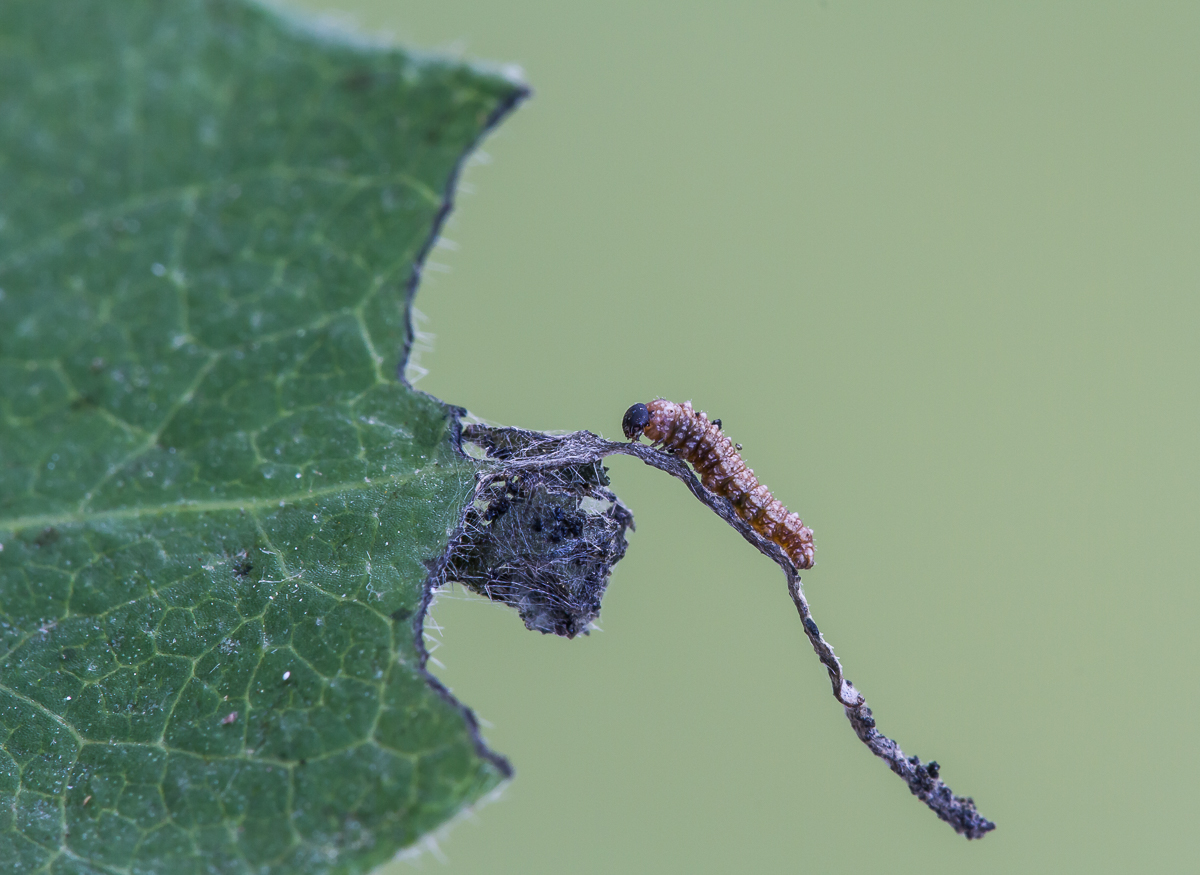
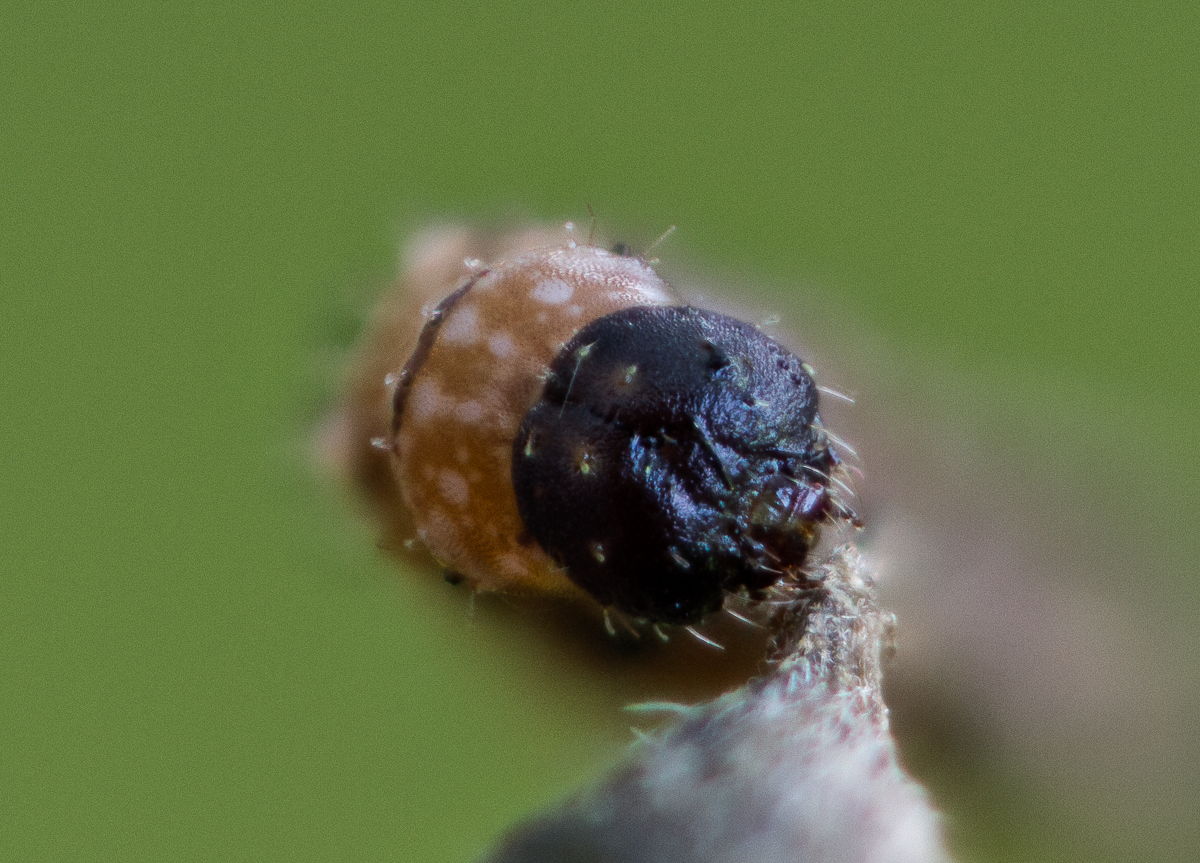
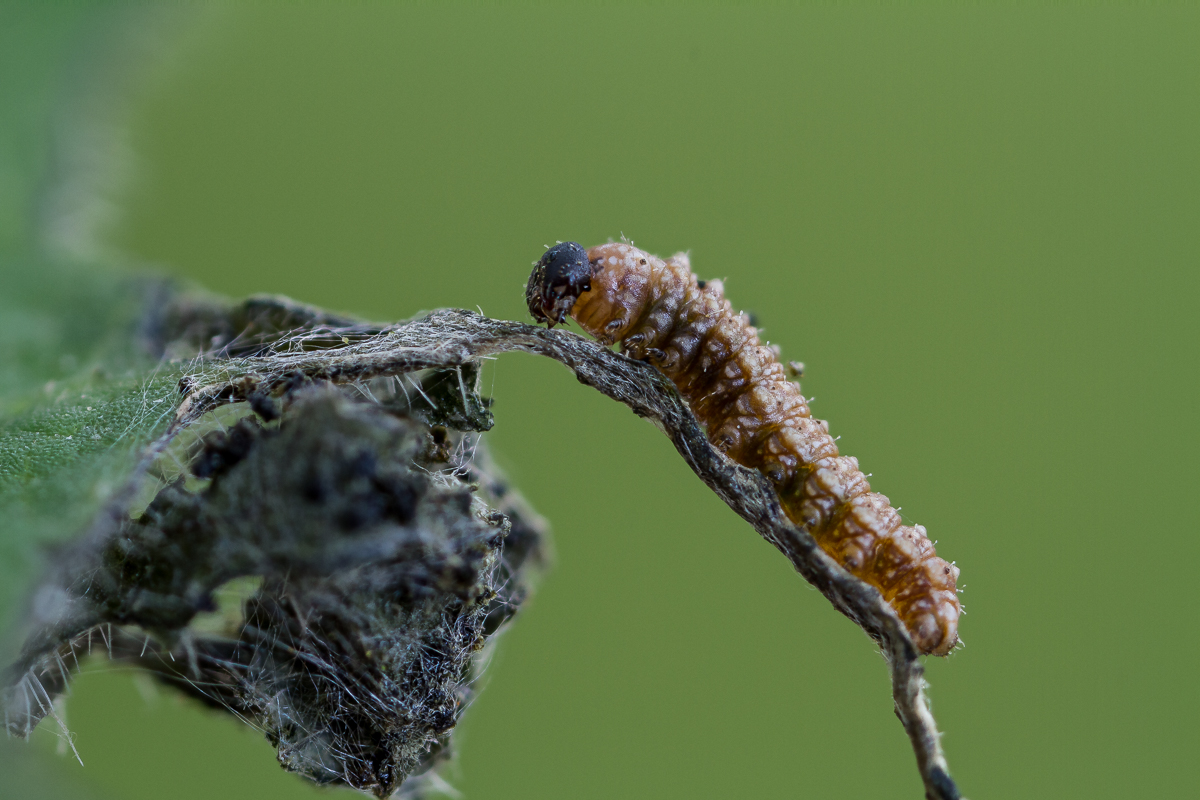
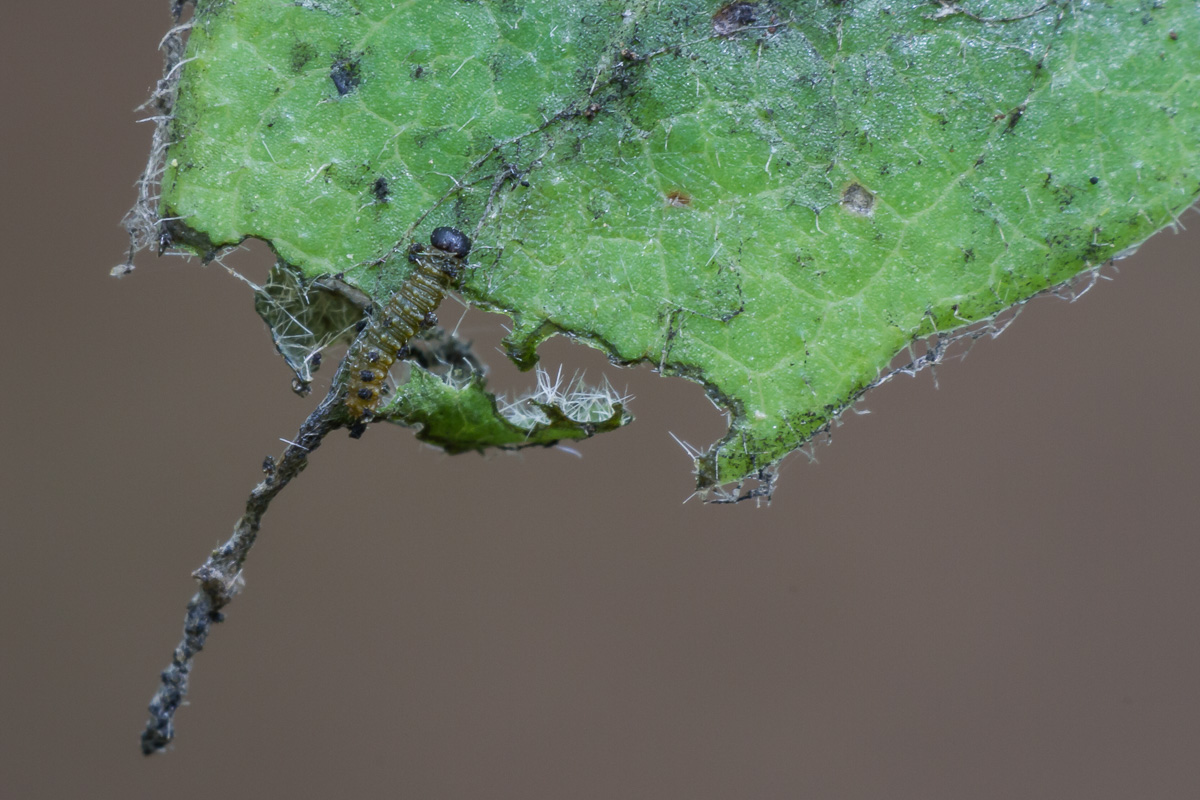
"After first moult, and shortly before second moult, it is 6 mm. long; colour, pale ochreous on the dorsal surface, becoming paler on the side and blending into whitish; a white lateral stripe bordering on the brown of the ventral surface, which is striated with white. There are four longitudinal series of short, stout, pale ochreous tentacles, each bearing short white spines; there is also a series of whitish branched spines along the white lateral line; the body is also covered with minute whitish warts, each furnished with a spine, giving the entire surface a rough appearance. The head is dull black, granular, and with very short whitish bristles. During the moulting period it rests on the midrib of the leaf, over which a layer of silk is spun. If touched by anything it becomes greatly agitated, whisking itself from side to side, and jerking its posterior extremity up and down in a kicking manner." - Frohawk (1924)
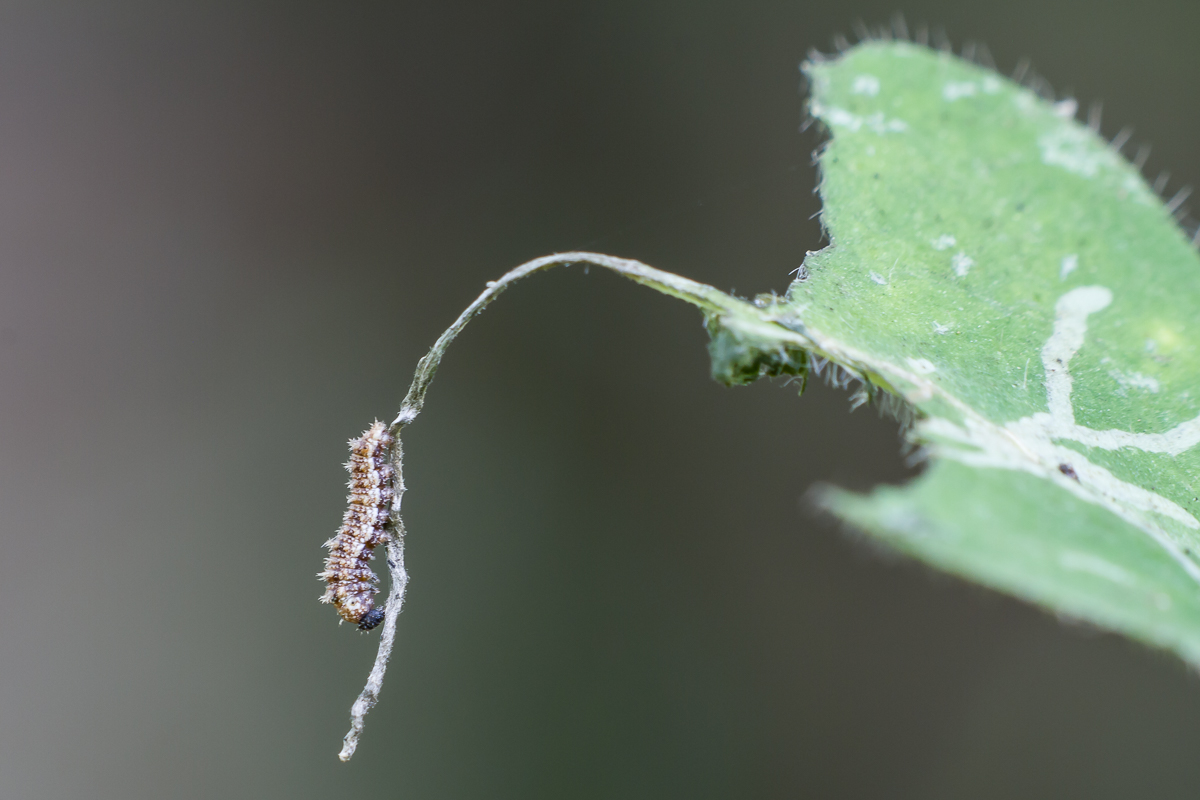
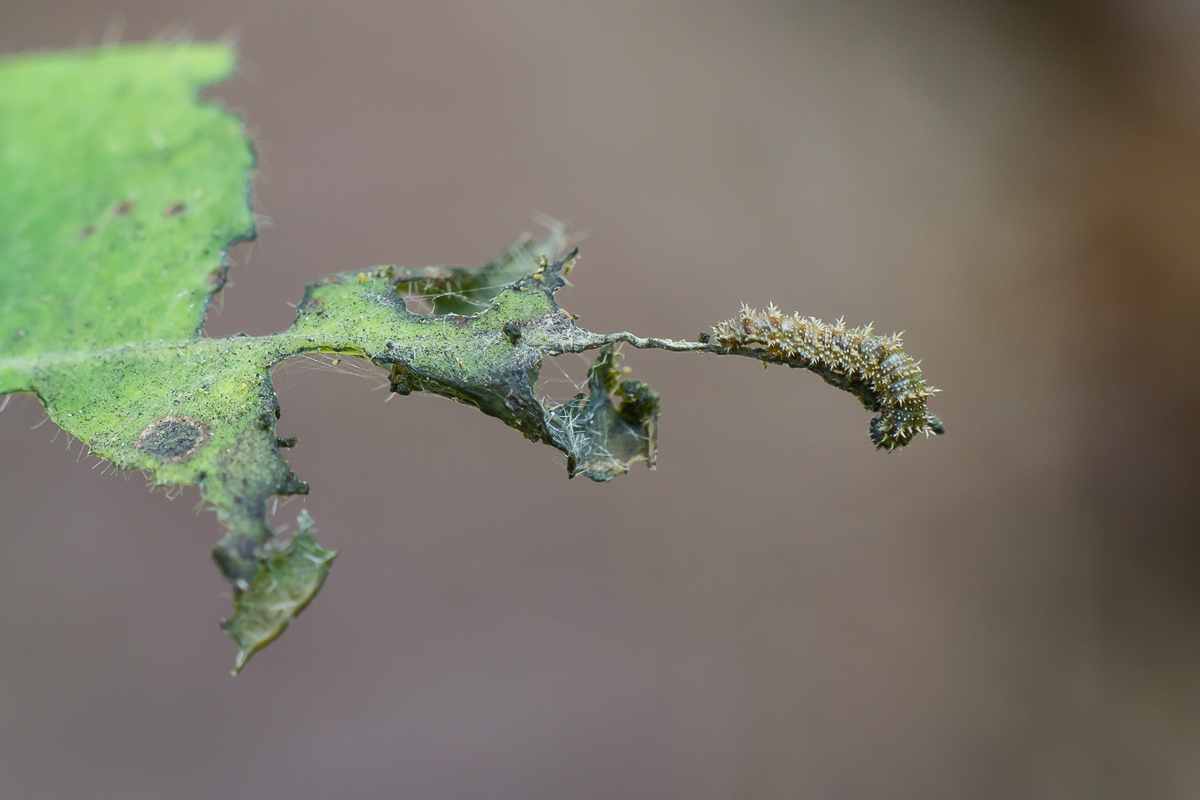
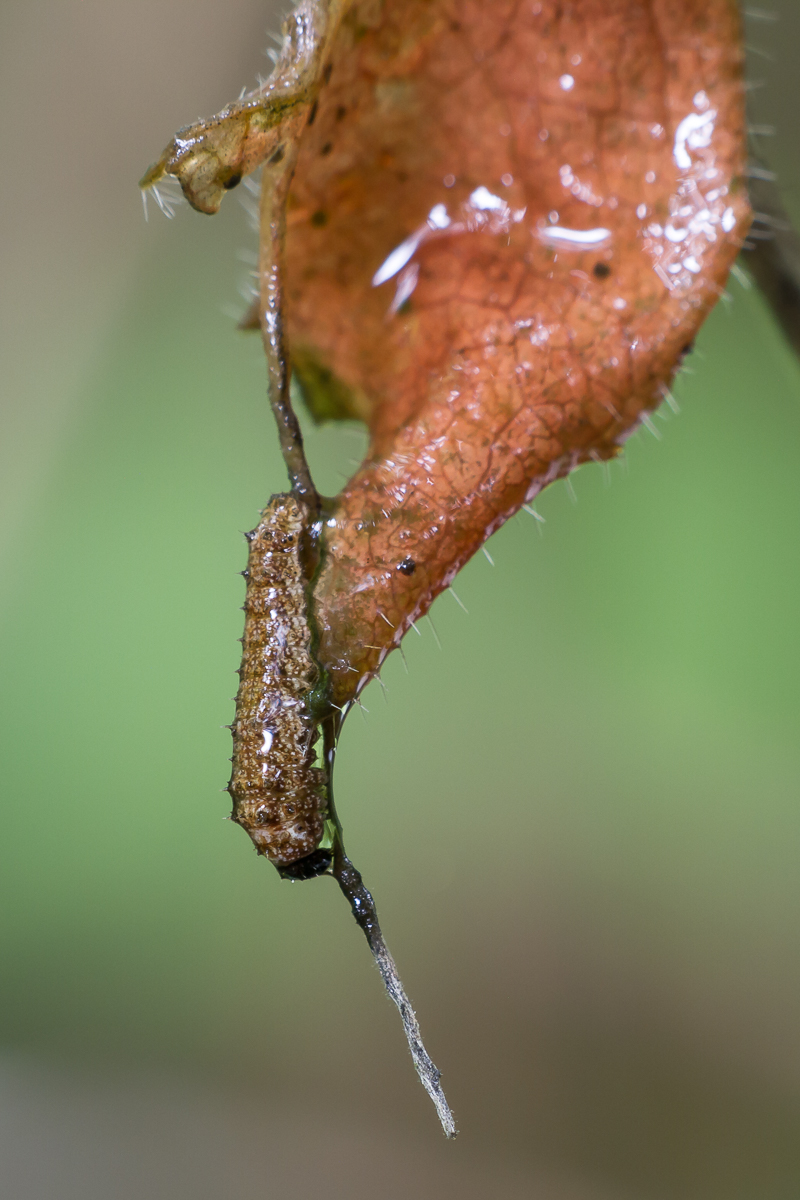
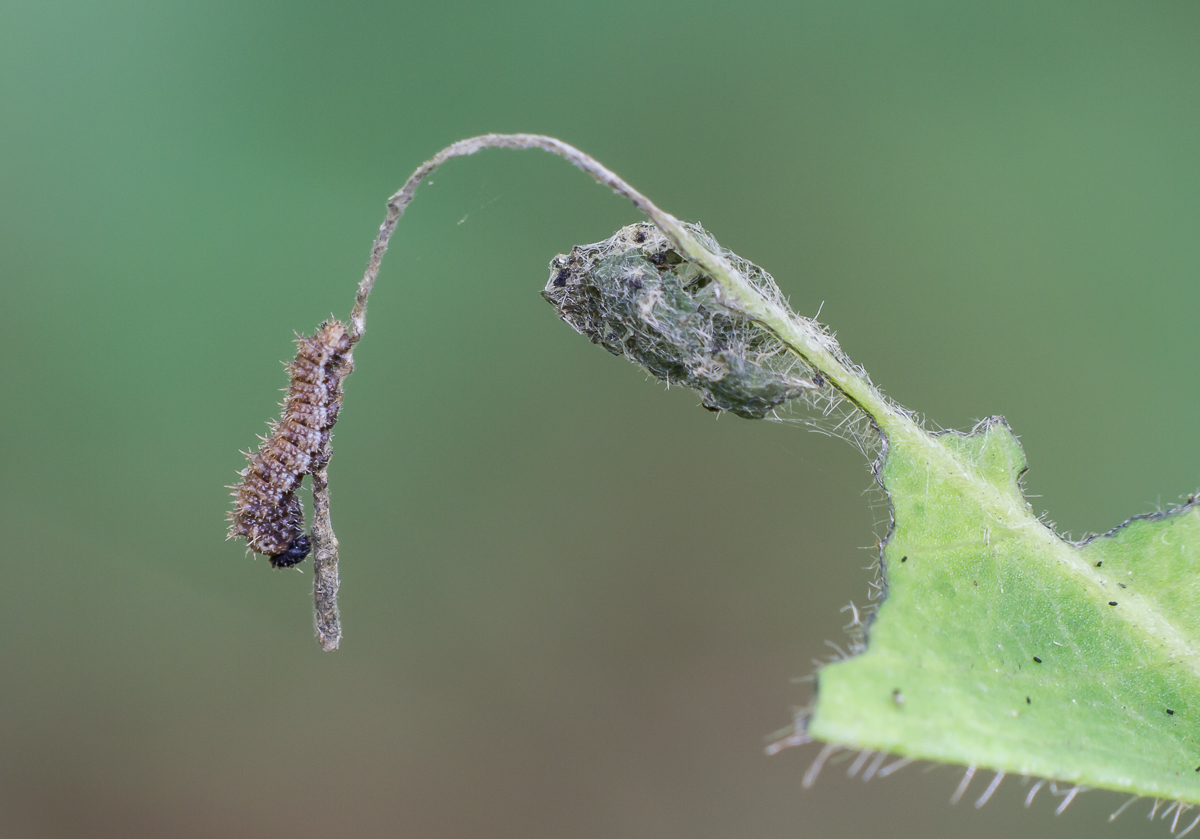
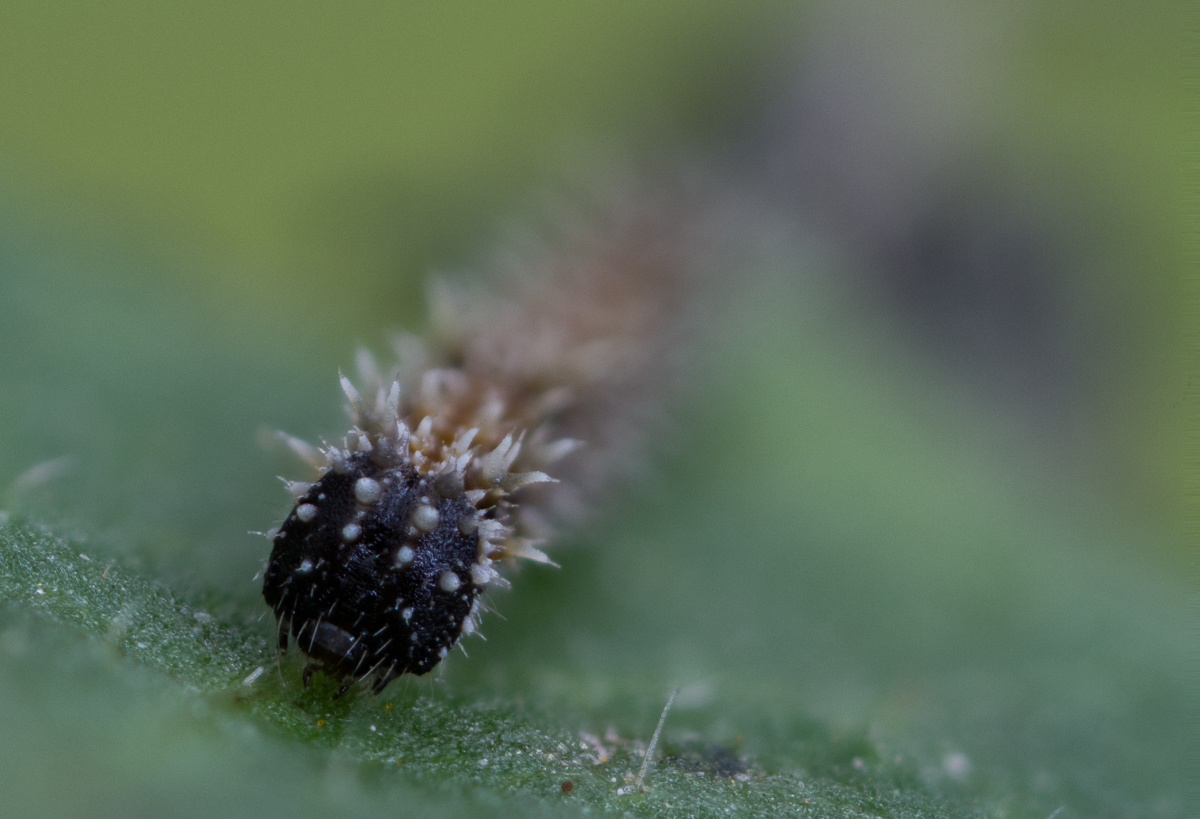
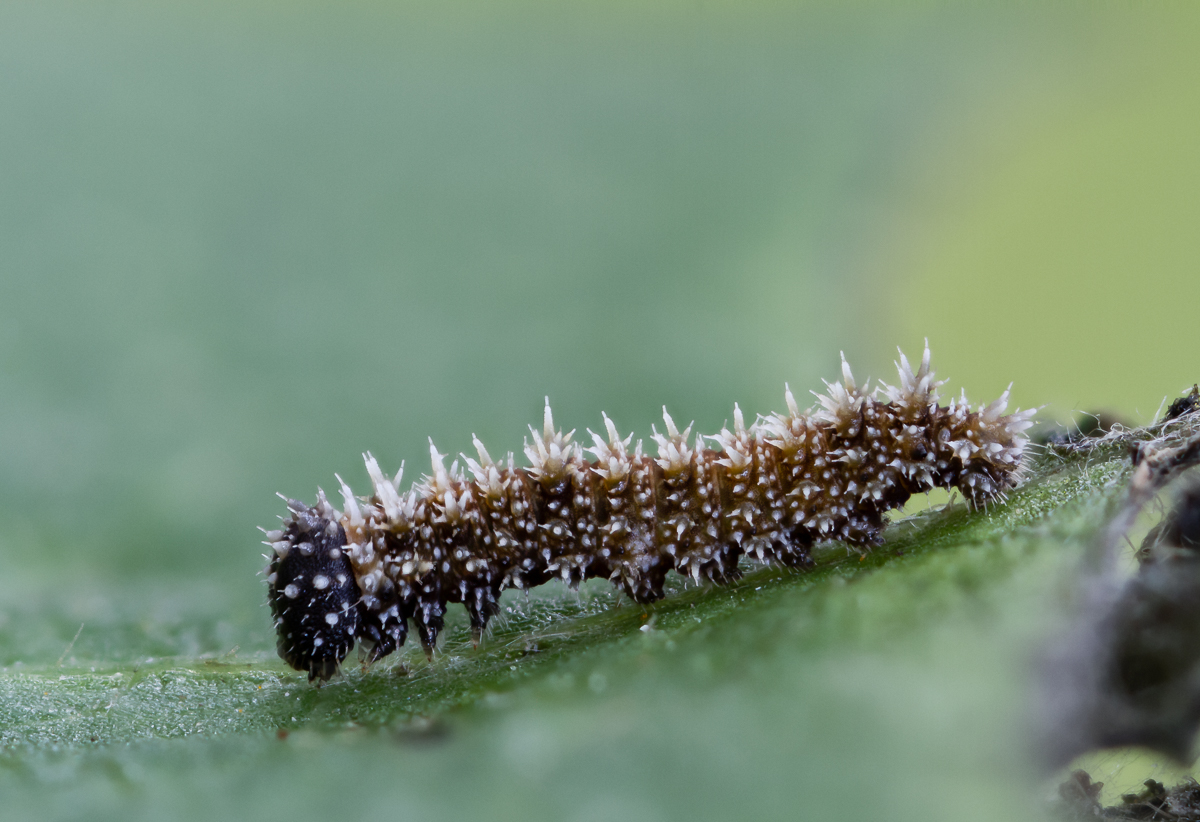
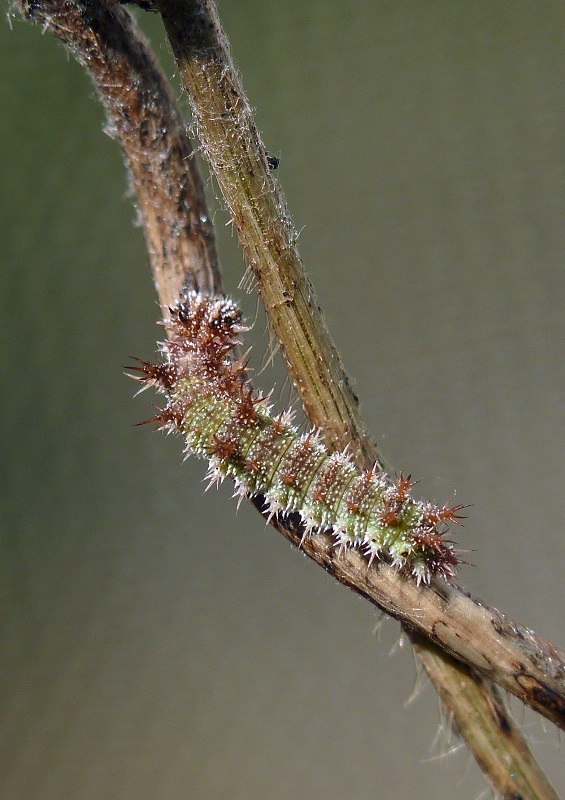
"The second moult occurred early morning August 18th, 1901. The dorsal surface is tawny, with a dark brown sub-dorsal longitudinal band, and pale along the spiracular region, and a white lateral stripe; the under surface is rich deep brown; the body is covered with numerous milk-white spines. Those on the dorsal surface are largest and most strongly branched and duller in colour, those on the lateral line are whitish; the head is brown, palest on the crown, and is beset with white warts, each bearing a short white hair. On the crown the warts are developed into short spines or tubercles; the legs pale grey, the claspers ochreous. The first meal after moulting consists of its cast skin. On August 27th two of the larva prepared for hibernation, both having concealed themselves by spinning together the edges of the basal half of the leaves upon which they fed; having consumed the greater part of the leaf, they carefully draw the sides and tip together, and rest in a straight position along the midrib, with the head towards the end of the leaf; the base of the leaf stalk and some way down the stem is spun, or rather securely bound round with silk, firmly attaching the leaf to the stem. On March 20th, 1894, the author received from the New Forest ten larvae in their hibernacula, which were found the day before. Two had left the hibernacula and were resting on the stems close by; the remaining eight had not moved, all being partly concealed in the brown, withered leaves of honeysuckle. All were in precisely the same position, i.e., lying along the midrib of the leaf, the posterior end at the base of the leaf and head towards the apex. All had the posterior segments exposed, the edges of the leaf being drawn together about the middle of the body, so that the anterior half is hidden. The ruddy colouring of the larvae resembles the colouring of the withered leaf. Some which were placed in the sun left the hibernacula during the next day or two. All slowly backed out; at first they were very sluggish, and generally remained for some time on the stem close to the hibernaculum, afterwards moving off, and sometimes wandering a long way along the stem of the plant until they select a certain group of leaves; and then, choosing a particular leaf, they make their first meal after hibernating, eating a small portion off the edge; they then retreat, resting on the stem close by after each meal, always feeding off the same leaf, and return by the same path to the same resting-place. Two larvae which were kept in the shade since March 20th left their hibernacula on the 30th during fine warm weather, the shade temperature rising to 60 degrees Fahr. Directly after hibernation it measures 5 mm. long. When fixed for moulting third time it is 7.6 mm. in length, when the whole of the dorsal surface, spines, head and ventral surface are dark greyish-brown, with a broad whitish lateral stripe, on which are the black spiracles, the upper edge of the stripe fades into the dorsal ground colour." - Frohawk (1924)
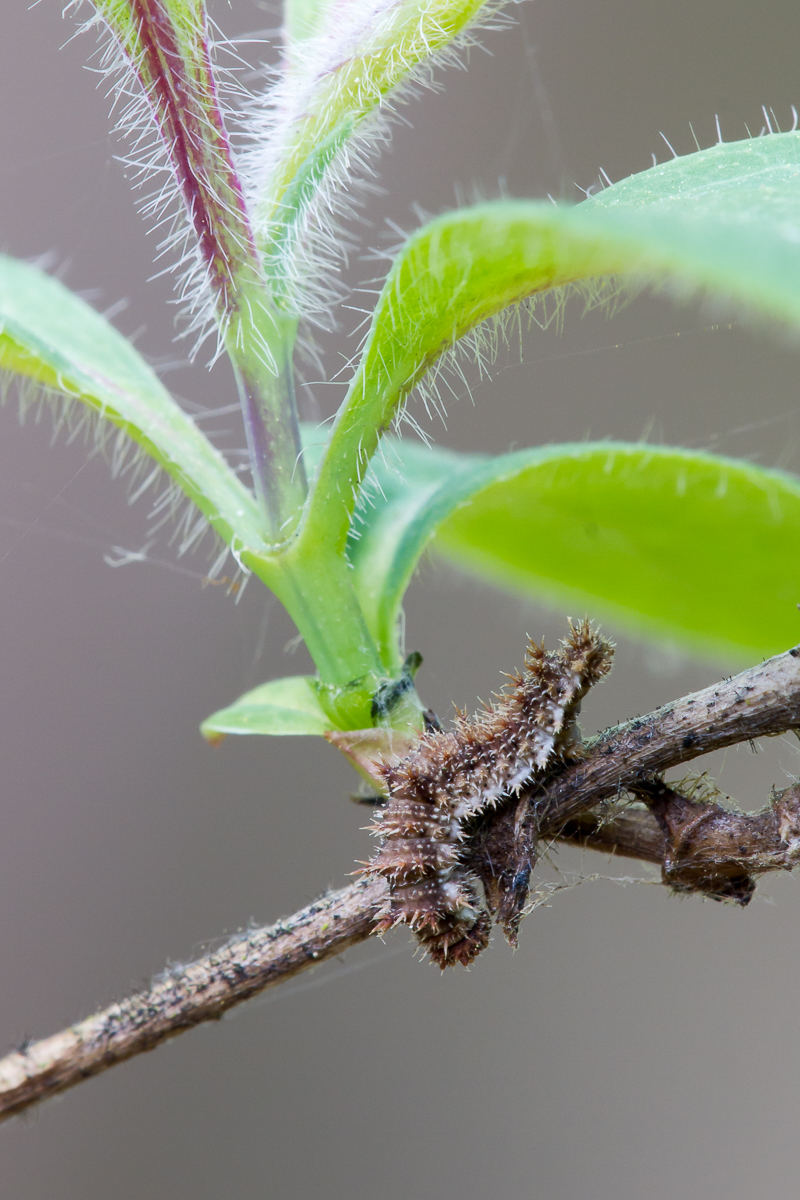
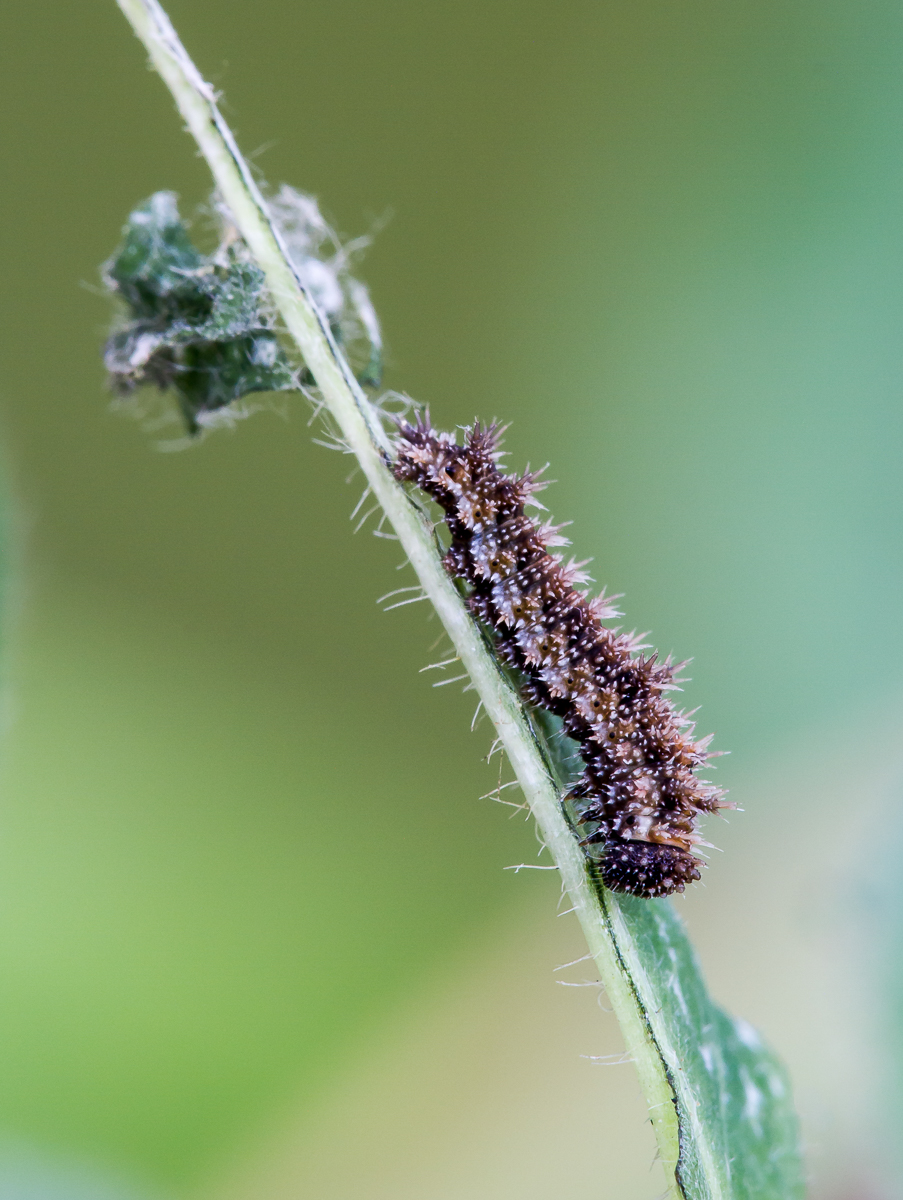
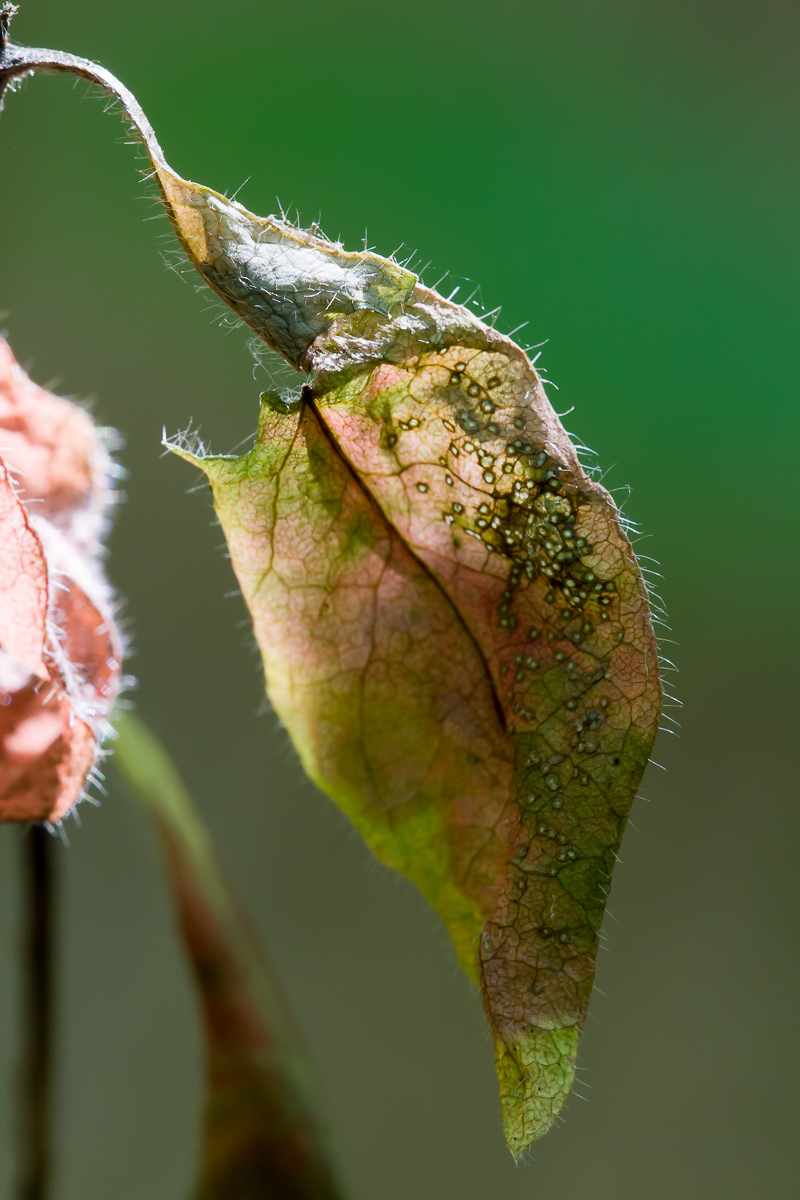
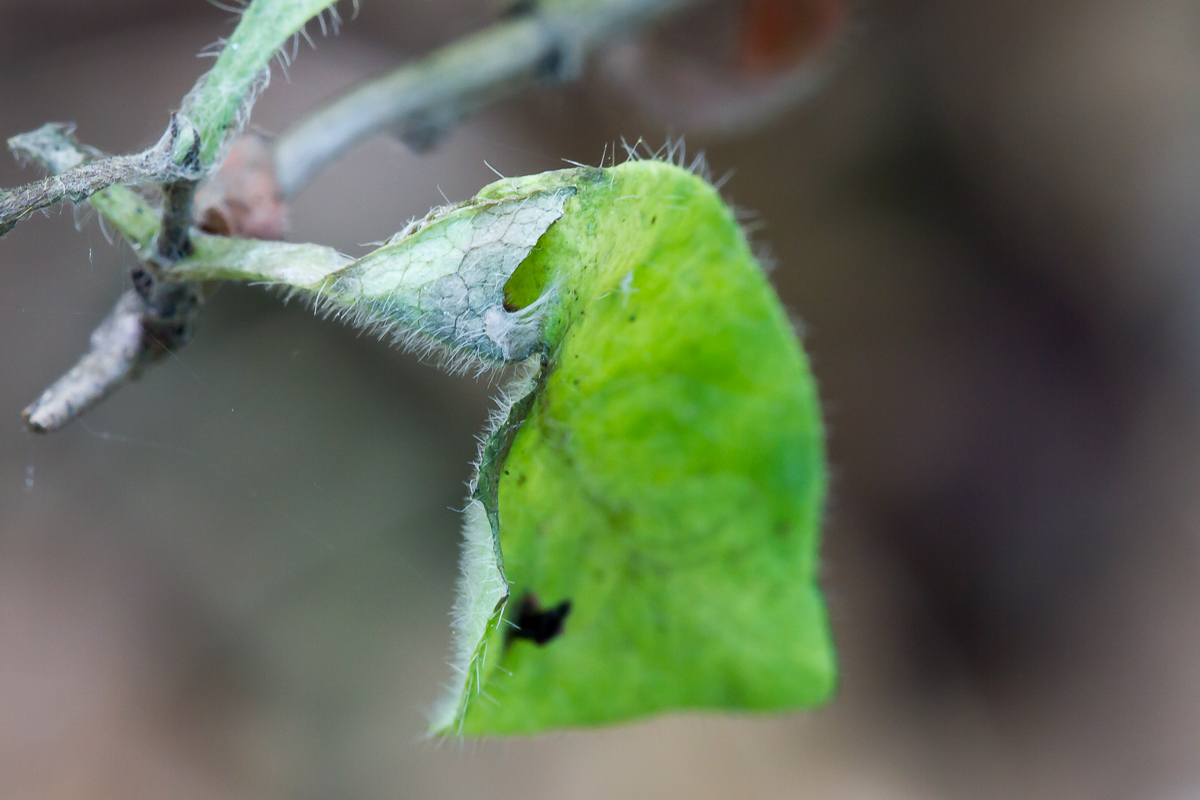
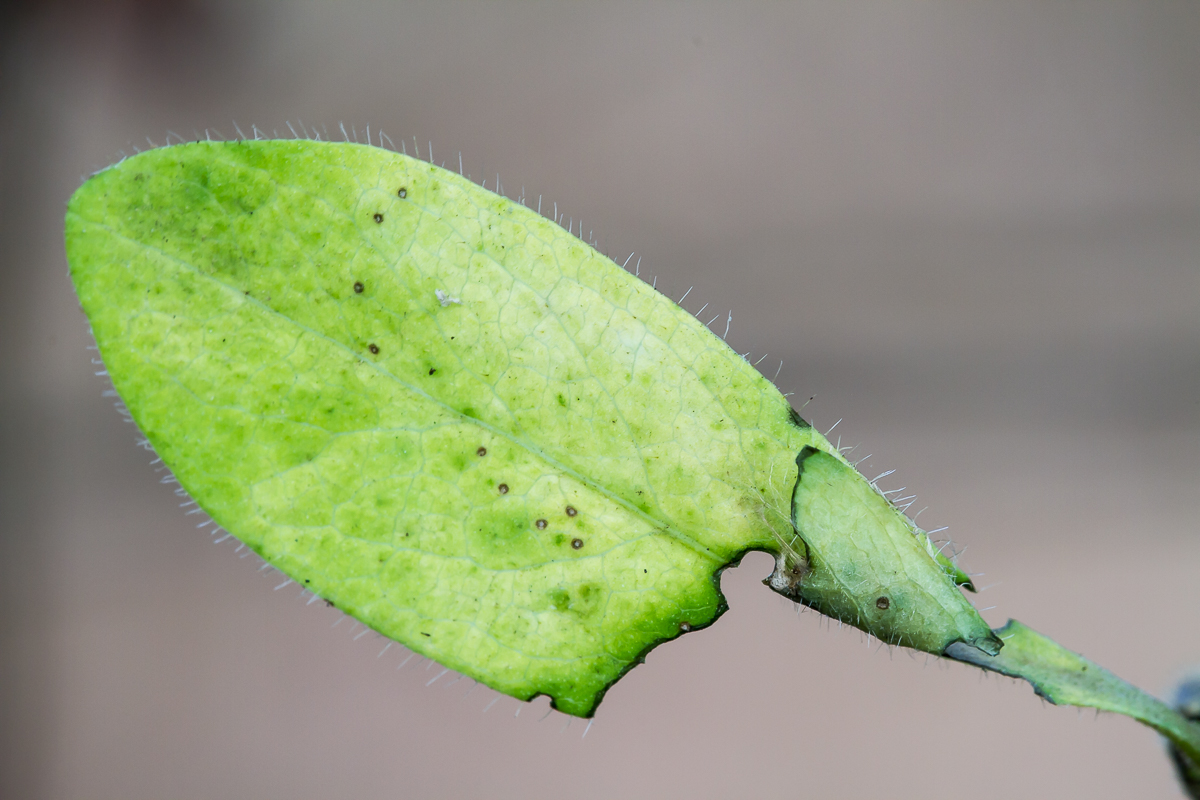
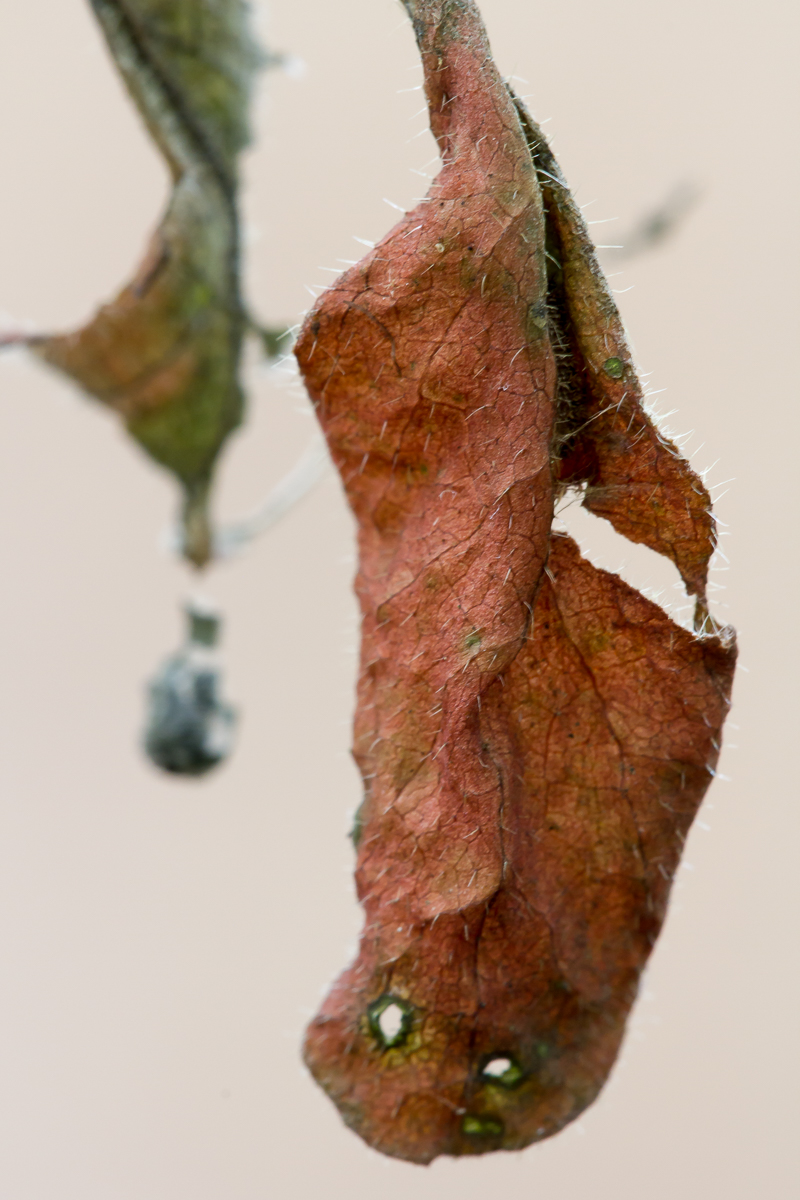

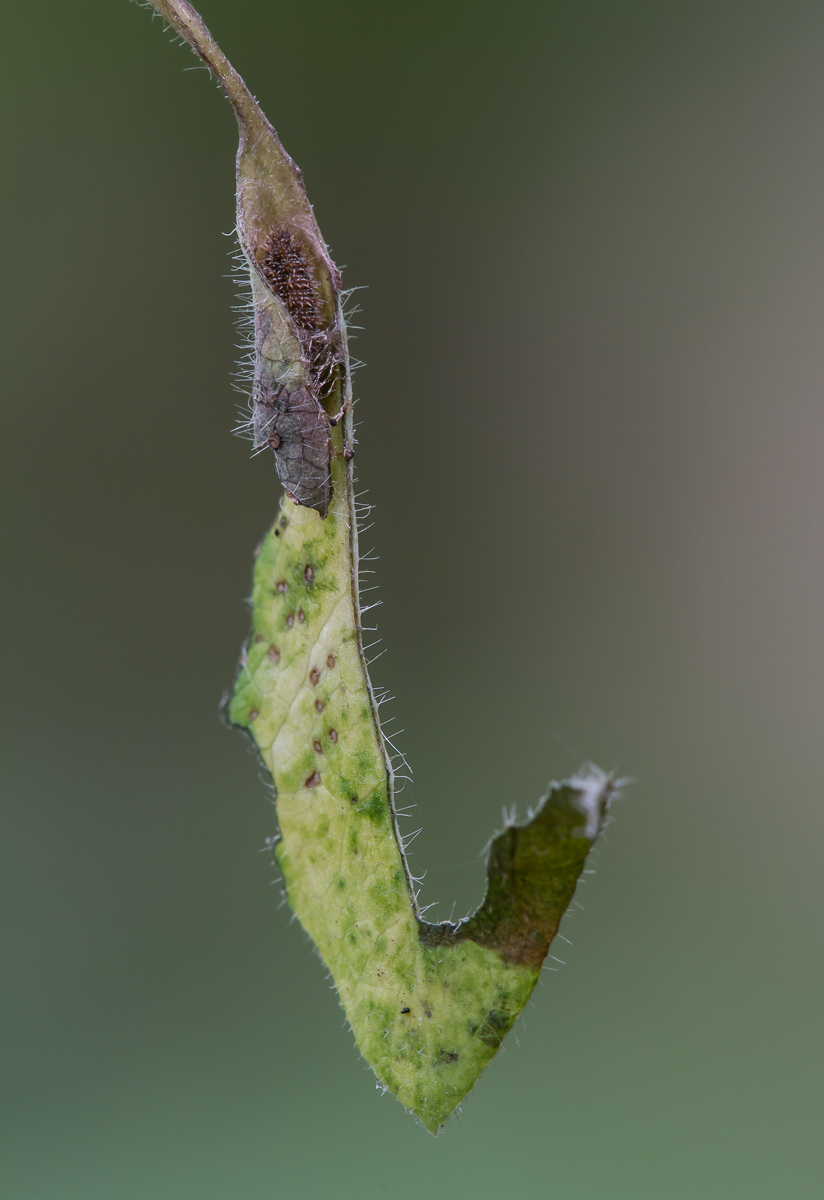
"Both larvae moulted third time April 9th, 1894; at first after moulting the colouring is similar to previous stage, but gradually it becomes greener day by day. They eat the cast skin. On the fourth day after the third moult, when at rest, it is 10.5 mm. long; at this age it rests either on the stalk of the leaf or on the stem close by the leaf, spinning a silken layer over the stem to rest upon, returning to the same place after each meal, and generally keeping to the same leaf until all but the stalk is consumed. The dorsal surface is olive-brown, which gradually fades into delicate green along the sub-dorsal region down to the spiracles, where it again fades into a lateral white stripe, which is sharply defined below by the dark chocolate-brown of the ventral surface. The dorsal spines are red-brown and strongly branched, the spiracular spines are creamy-white, the spiracles black, the legs pale ochreous and claspers pinkish. The head is sienna-brown and covered with short thick spines; many are white, some ochreous and others brown. Those on the crown are longest and darkest in colour. There is a super-spiracular series of very small, pale ochreous simple spines. The entire surface of the body is sprinkled with very short conical points, mostly of a greenish-white colour, on the dorsal and sub-dorsal area; those on the lateral and ventral surface are white. On the first segment the spines are absent; those forming the sub-dorsal series are largest on the second, third and fifth segments, and those on the fourth, sixth, seventh, eighth and ninth are very small and consist of three points only, the central one the longest, the three forming a figure thus; those on the last three anal segments are larger and branched. The larva crawls with a peculiar jerky motion." - Frohawk (1924)
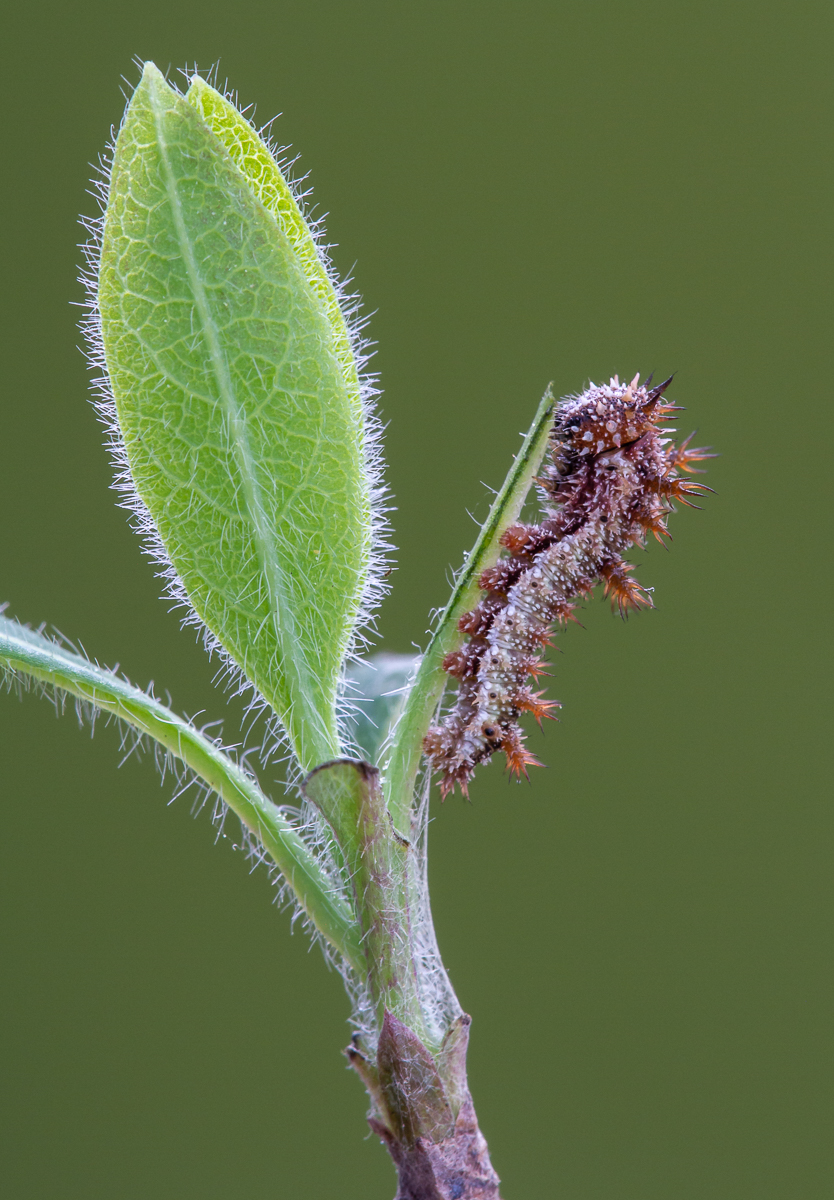
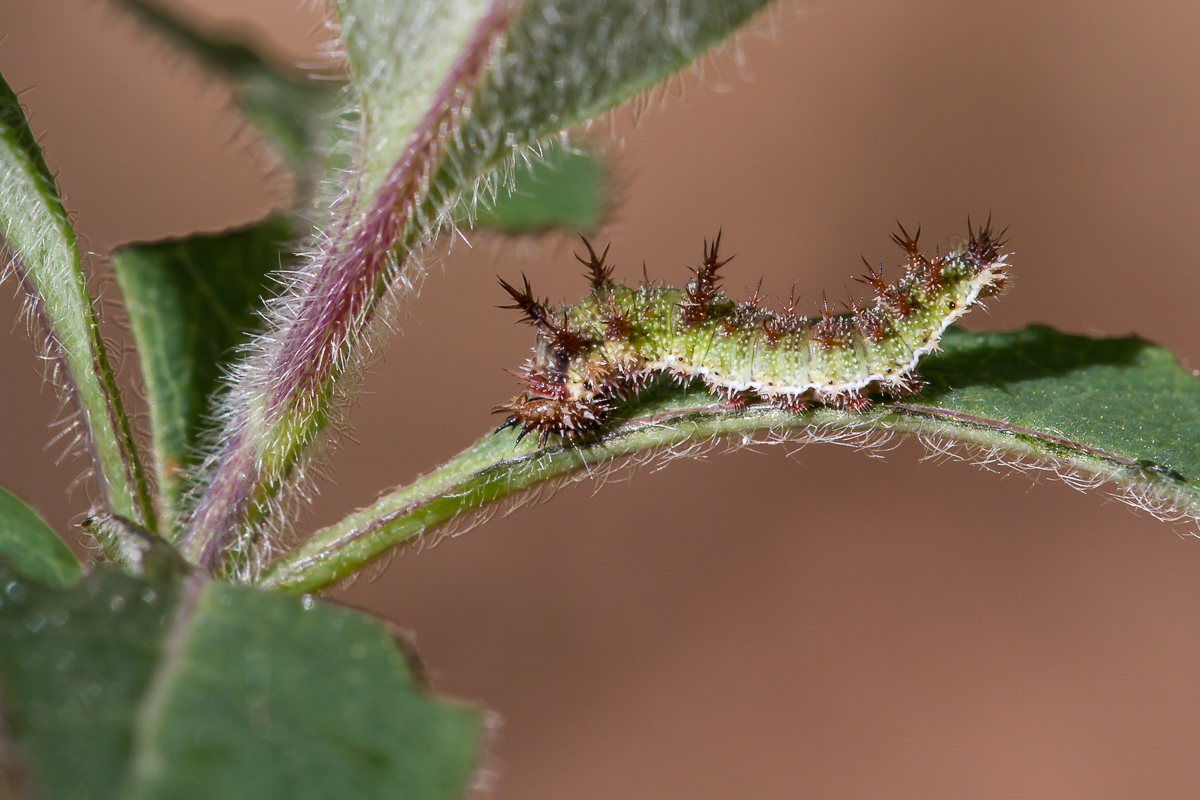
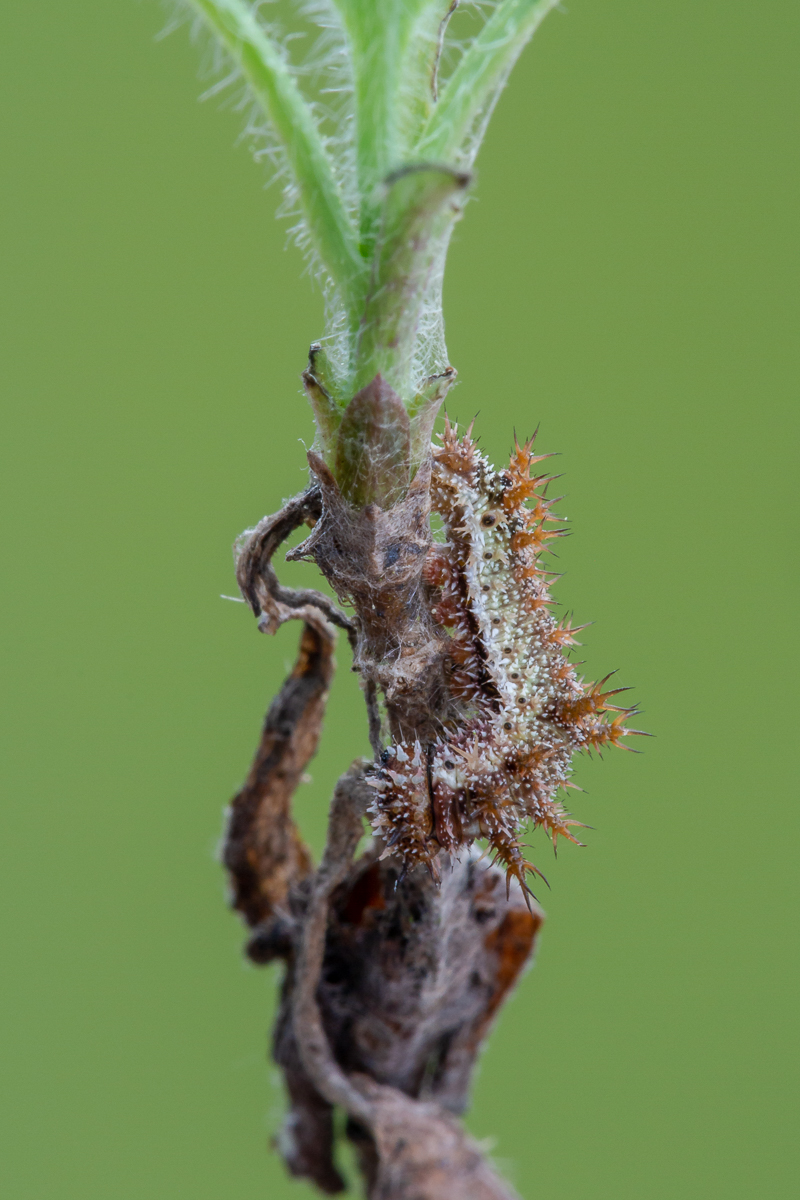
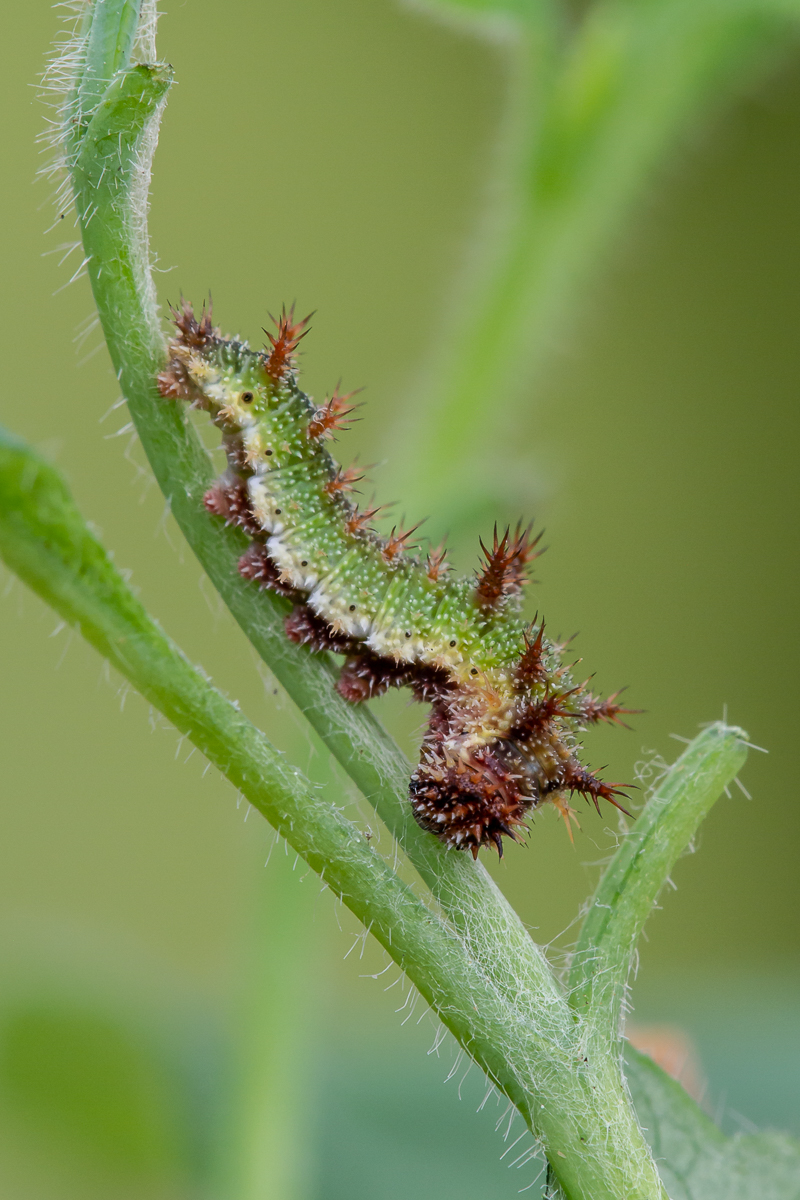
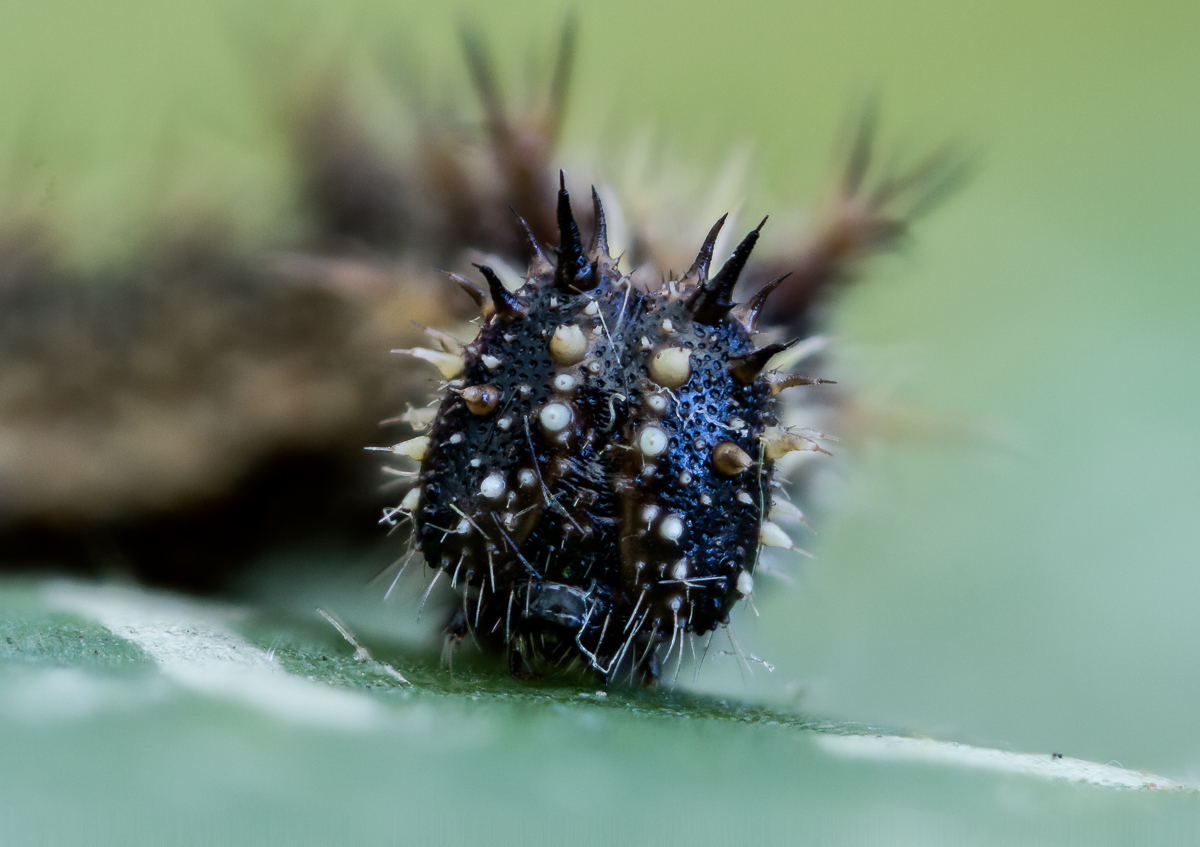
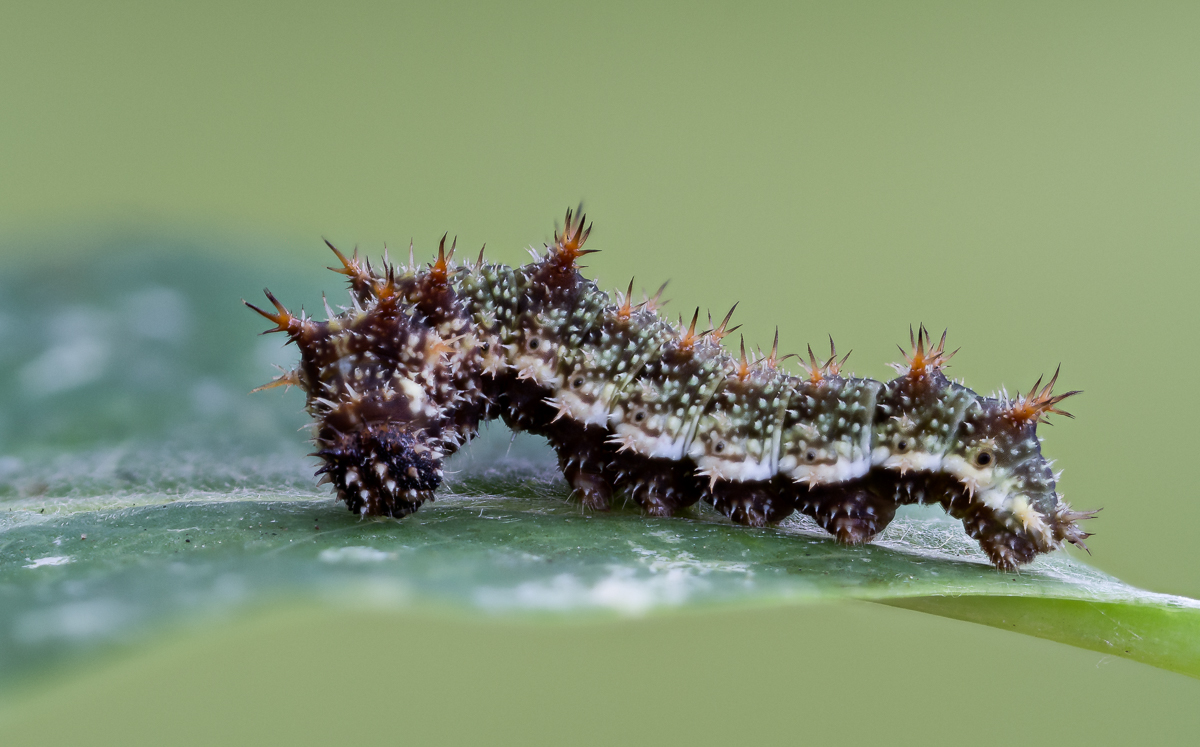
"One moulted fourth time on April 21st, and another on 23rd; both having been retarded by cold weather. After fourth and last moult, fully grown, it measures from 25.4 mm. to 28.6 mm. in length. The first segment is disproportionately small, and the second and third are larger than the rest. The segments have four sub-divisions; the first division on each segment is much the widest, and occupies the anterior half; the lateral ridge is strongly lobed. The second, third and fifth segments have each a pair of long sub-dorsal tubercles, usually of a coppery-red colour, but varying from amber-yellow to dull purplish-red. They bear numerous spines of various lengths; some are merely whitish points, while those at the apex are long with black points. Very much smaller, but similarly formed tubercles occur on the sixth, seventh, eighth and ninth segments. Those on the tenth and eleventh segments are much longer. Those on the anal segment are reduced to four green and black branched spines; above each spiracle is a minute greenish-white spined tubercle, and a larger yellower one below. The whole of the body is sprinkled with tiny white points, giving it a rather rough, granular appearance. The head is pinkish-brown, pitted and blotched with dark purplish-brown, and covered with white points and spines, the longest with black tips. It is cleft on the crown, and is larger than the first segment. The ground colour is green, with a white, dilated lateral stripe commencing on the fourth segment, where it is yellowish, and again becoming yellowish posteriorly; it is bordered below by a rich purplish band sprinkled with white spines. The claspers are very pale greenish-white and feet pinkish; the legs ochreous and black at the base. When fully fed and just previous to spinning up for pupation the tubercles turn pale ochreous, and the lateral purple band fades to dull green, and the whole colouring becomes paler throughout. The larvae usually attain full growth about the beginning of June, when they attach themselves by their hind claspers to a pad of silk spun on the stems of honeysuckle, or to the base of a leaf stalk, and hang suspended for pupation." - Frohawk (1924)
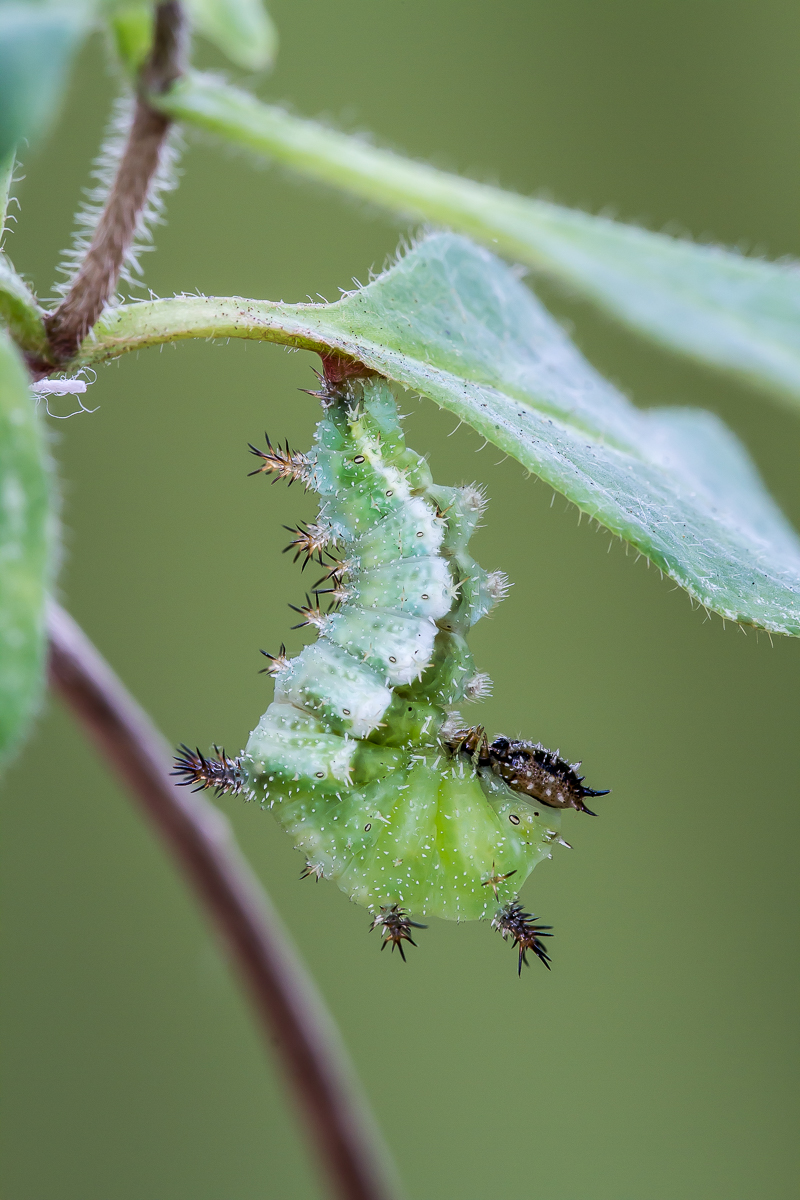
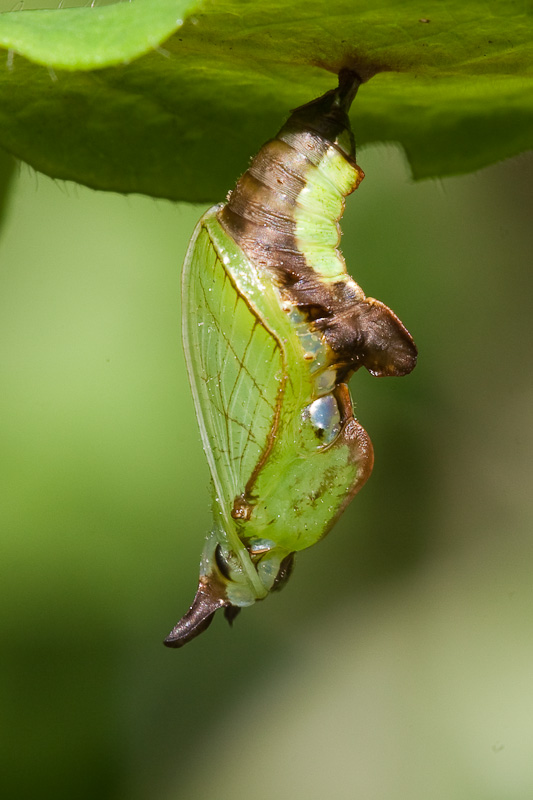
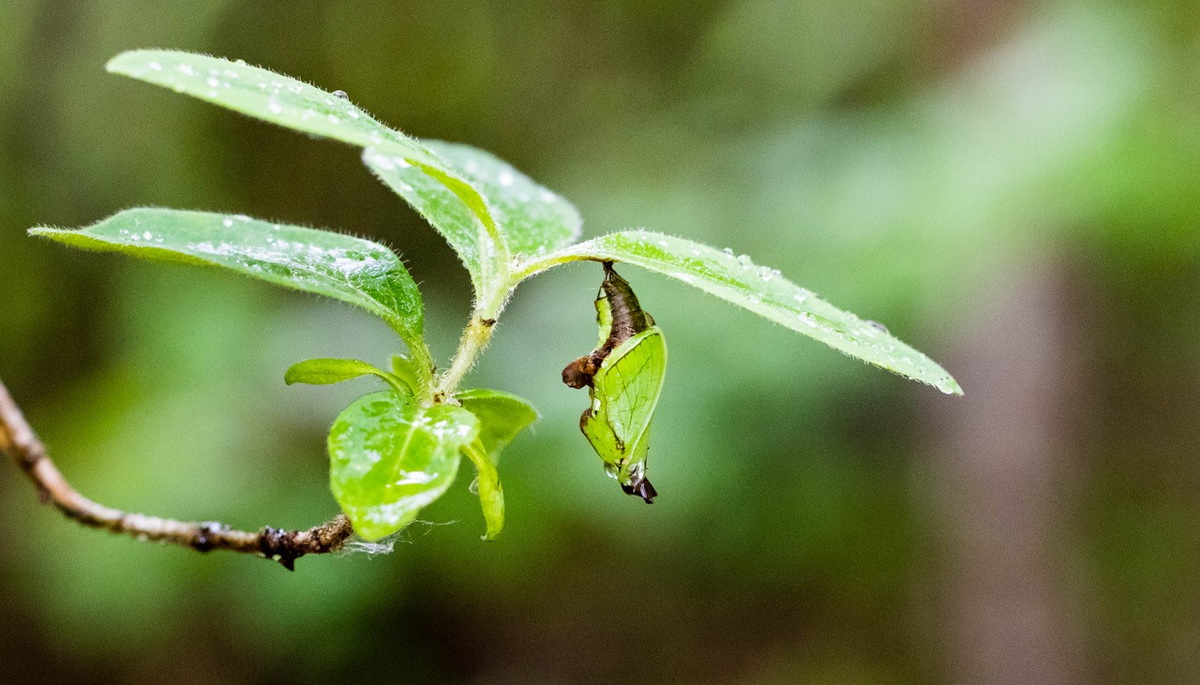
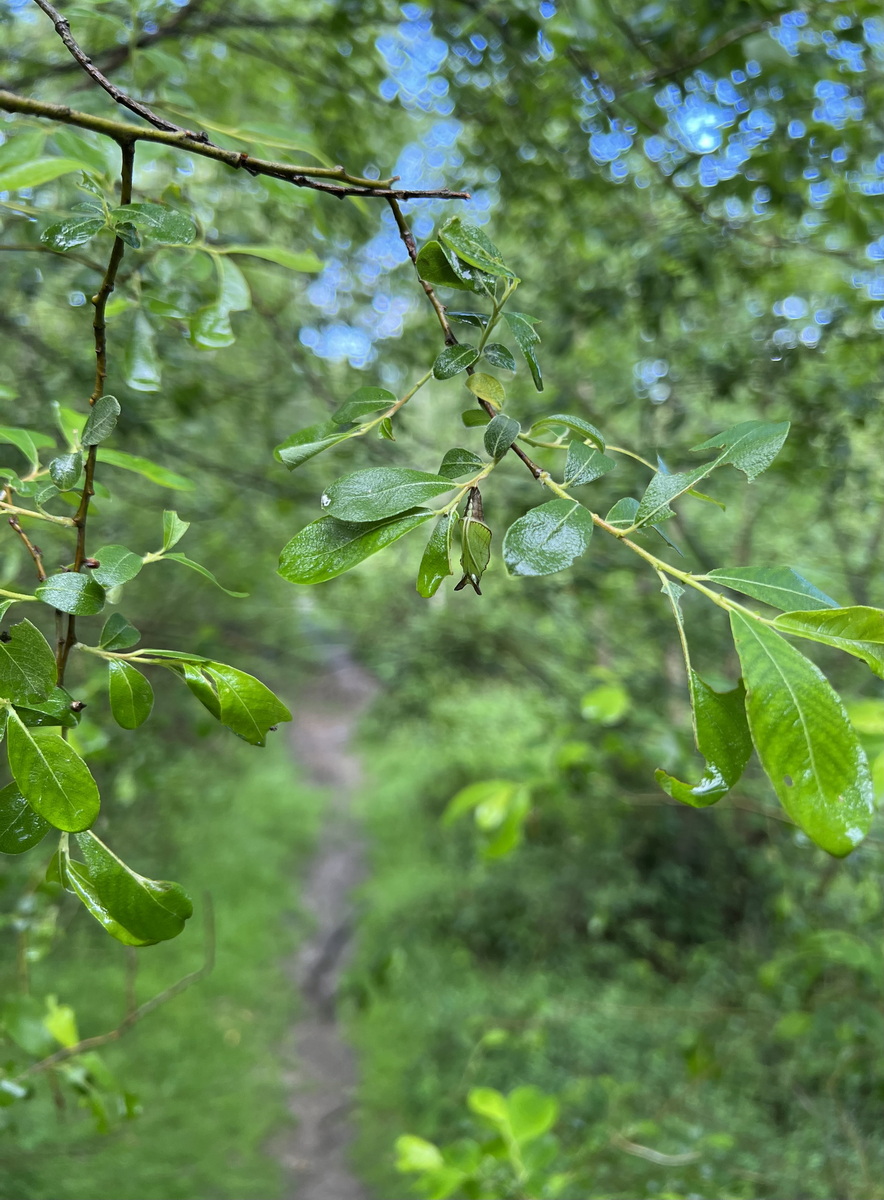
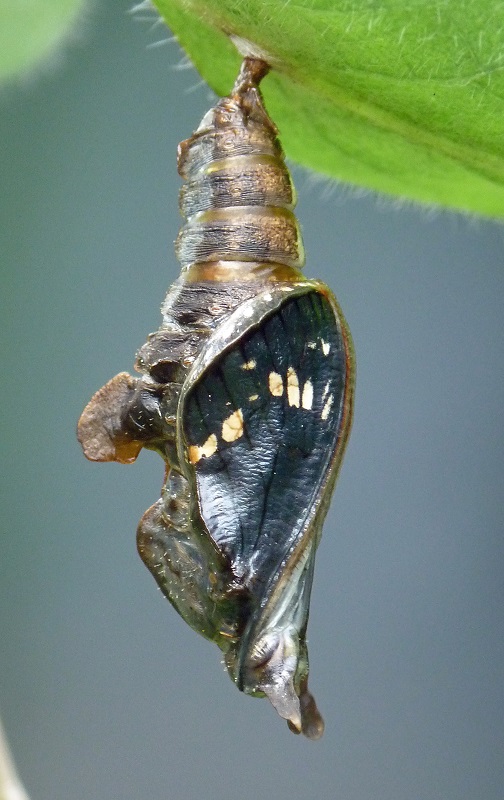
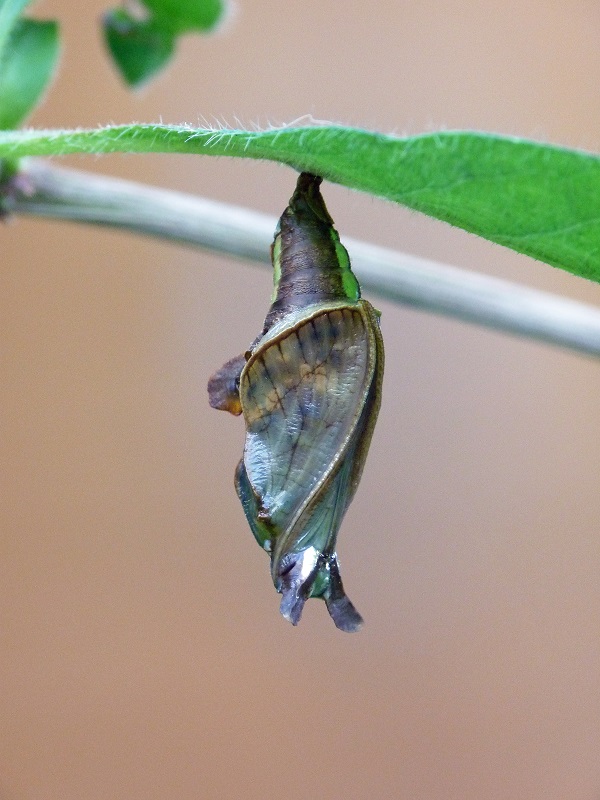
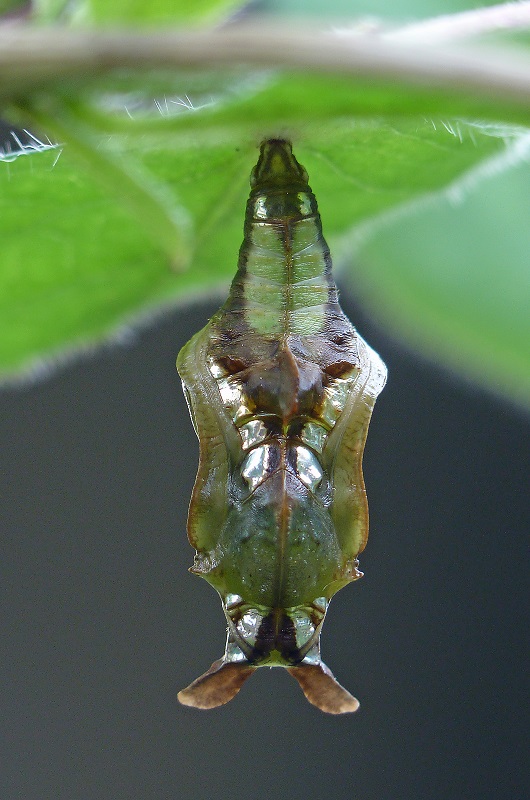
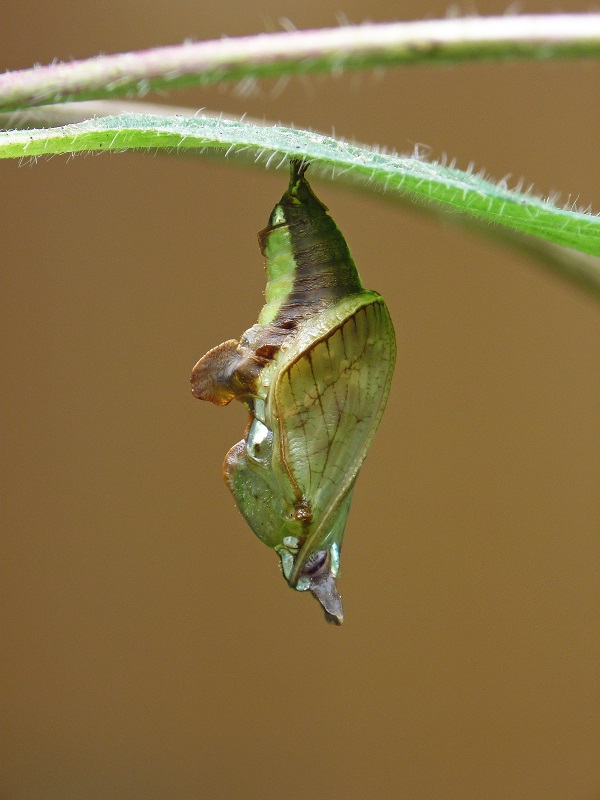
The pupa is typically formed upside down under a leaf or stem of the foodplant, secured by the cremaster. This stage is, again, a very curious shape, with two prominent horns on the head, and a curious protrusion at the back. This stage lasts 2 to 3 weeks.
"The pupa averages 2 2 mm. long. Lateral view: The head has a pair of projecting ear-like appendages; the thorax rises to a lobed keel, meta-thorax sunken. The second abdominal segment rises to a very prominent medio-dorsal keel, the abdomen then forming a concavity to the posterior edge of the seventh segment. The eighth and ninth segments taper abruptly, the wings rather swollen at the middle. The pupa bears a close resemblance to a profile portrait of "Punch." Dorsal view: Head with long, ear-like, diverging lobes, slightly hollowed dorsally; a projecting angle at base of wing; the whole inner and hind margin forming a projecting lateral ridge, sunken in outline at the middle, bulging near the apex; the abdomen tapering and terminating in a ridged cremaster, amply furnished with hooks. The ground colour is light green; the side of the abdomen, the second and third segments and whole of dorsal keel are all olive-brown, which colour also extends down the thoracic keel and spreads over the pro-thorax and ear-like lobes; the wings and neuration are likewise outlined with brown. An oblique, reticulated, sub-marginal olive line crosses the wing, also a few olive streaks and a few pale olive speckles are spread over the head, thorax and limbs. It is beautifully adorned with brilliant burnished silver-gilt on the head, pro-thorax, meta-thorax, first abdominal segment and edges of the second and third segments; the edges of the green on the abdomen also washed with silver, as well as brilliant silver oblong patches on the medio-ventral abdominal surface, and below the eyes and base of tongue. Excepting the wings the whole surface is sparsely sprinkled with minute, transparent, club-shaped hairs. The whole arrangement of the pattern and colouration is exceedingly beautiful, and undoubtedly serves greatly as a protection, from the general similarity of the pupa to a partly dead and shrivelled honeysuckle leaf with beads of dew or raindrops sparkling in the sunlight. It is suspended by the cremastral hooks, which are of a deep amber colour, to a pad of light coppery-coloured silk. Before emergence it turns to a bronze-black all over, losing almost all the metallic lustre of silver-gilt; the white wing markings of the imago show pale amber colour through the pupal skin. The pupal state lasts about thirteen days." - Frohawk (1924)


The following links provide additional information on this butterfly.