UK Butterflies
Building a Community of Responsible Butterfly Enthusiasts in Britain & Ireland
Building a Community of Responsible Butterfly Enthusiasts in Britain & Ireland

Wingspan
♂ 58 mm, ♀ 63 mm
Checklist Number
58.006
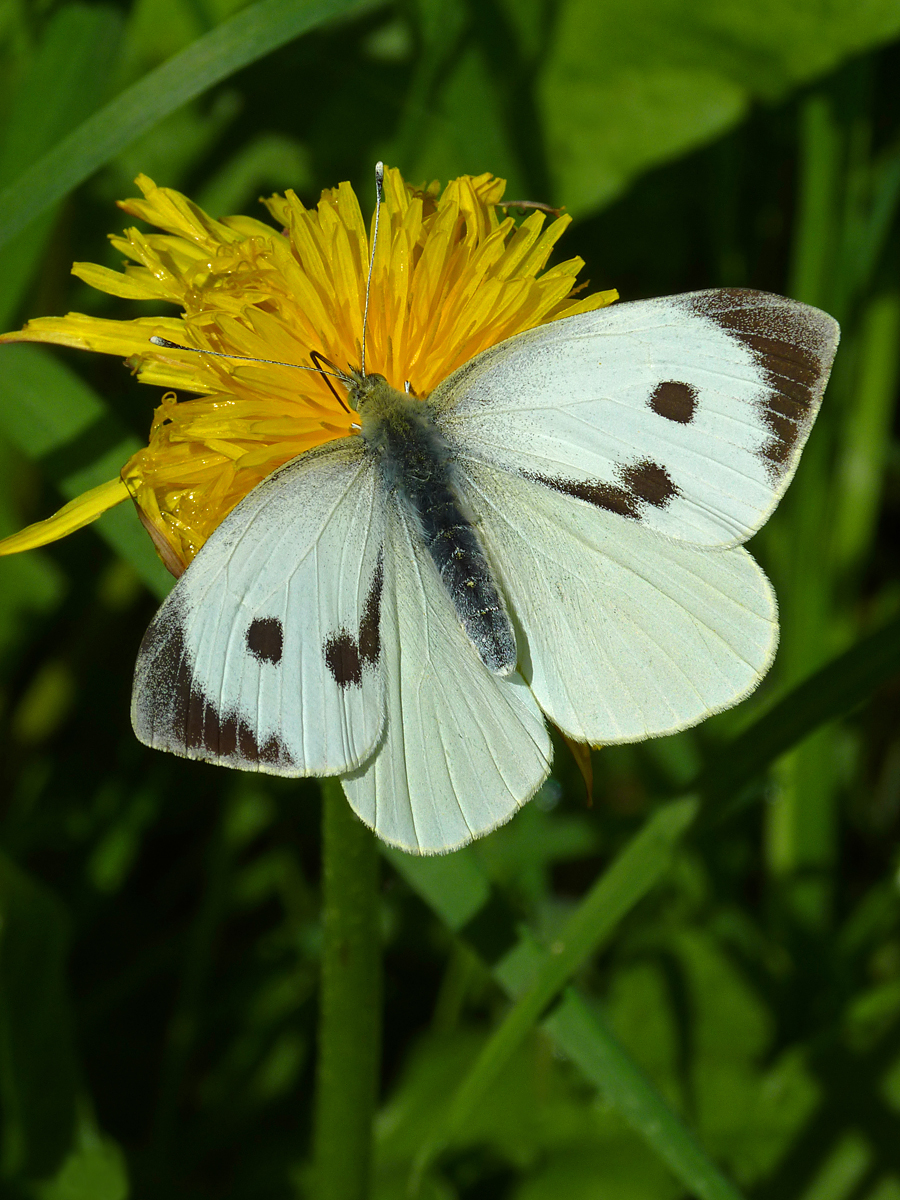
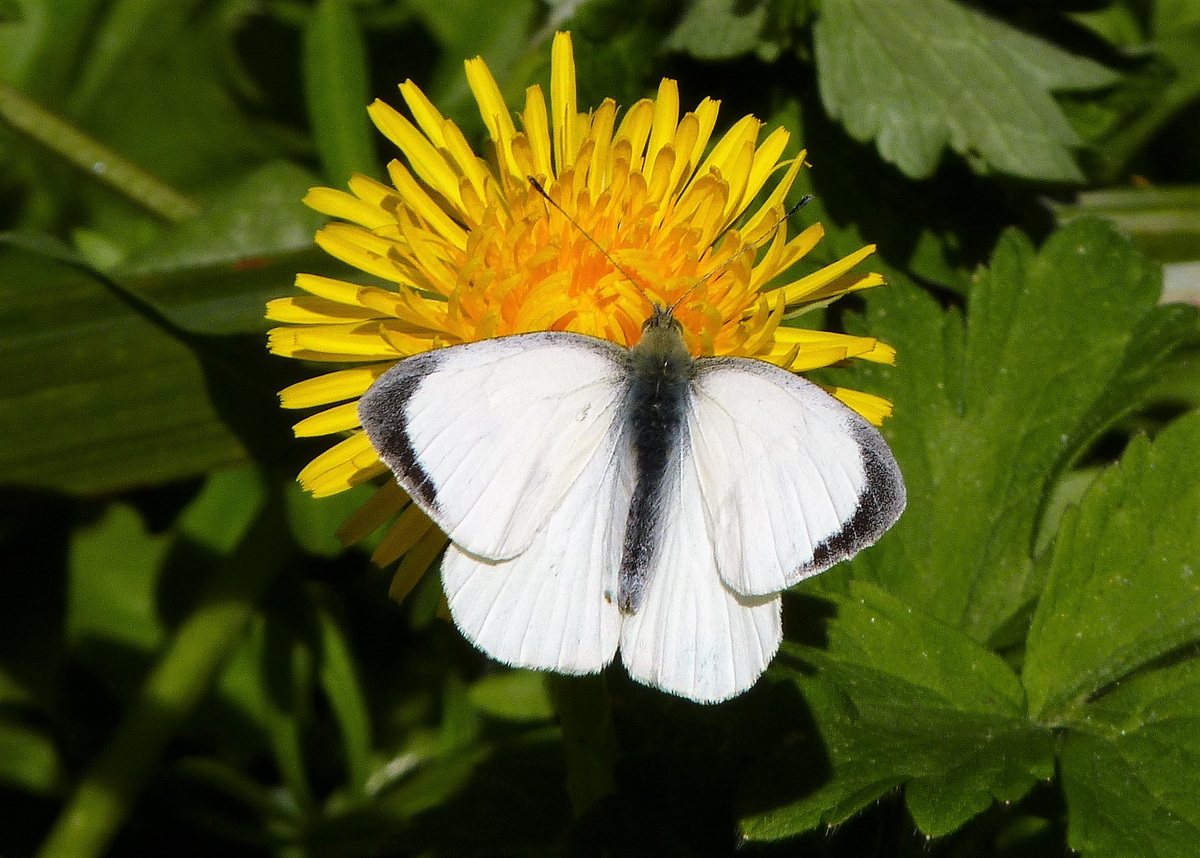
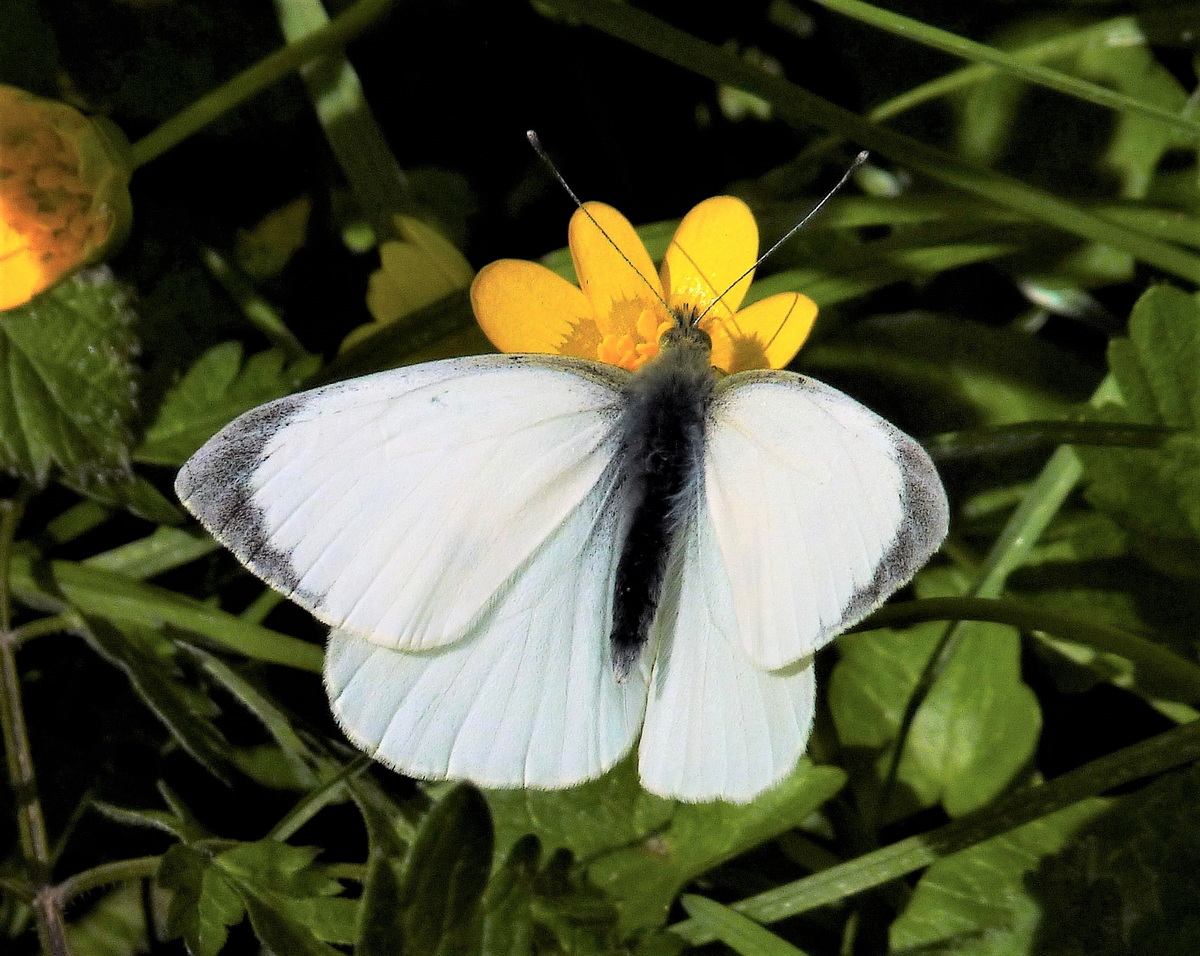
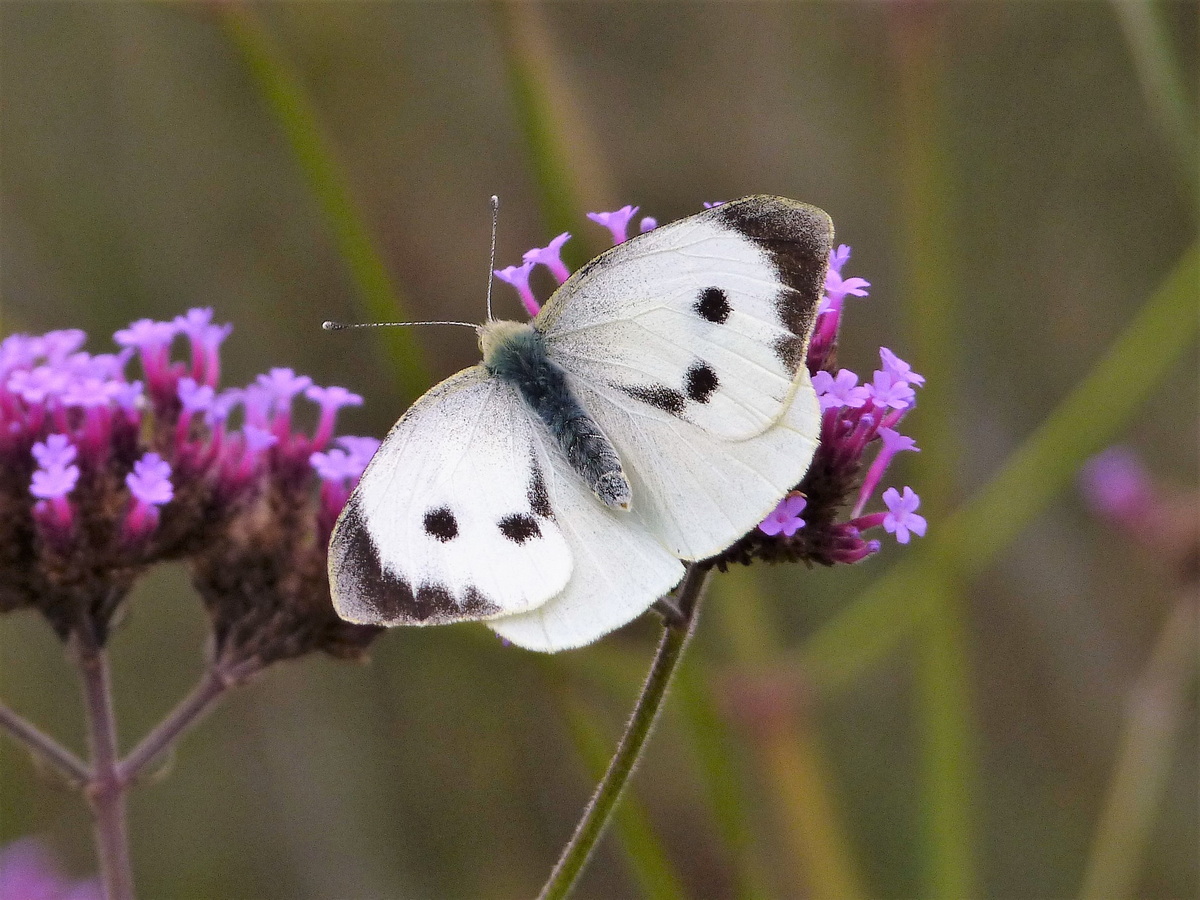
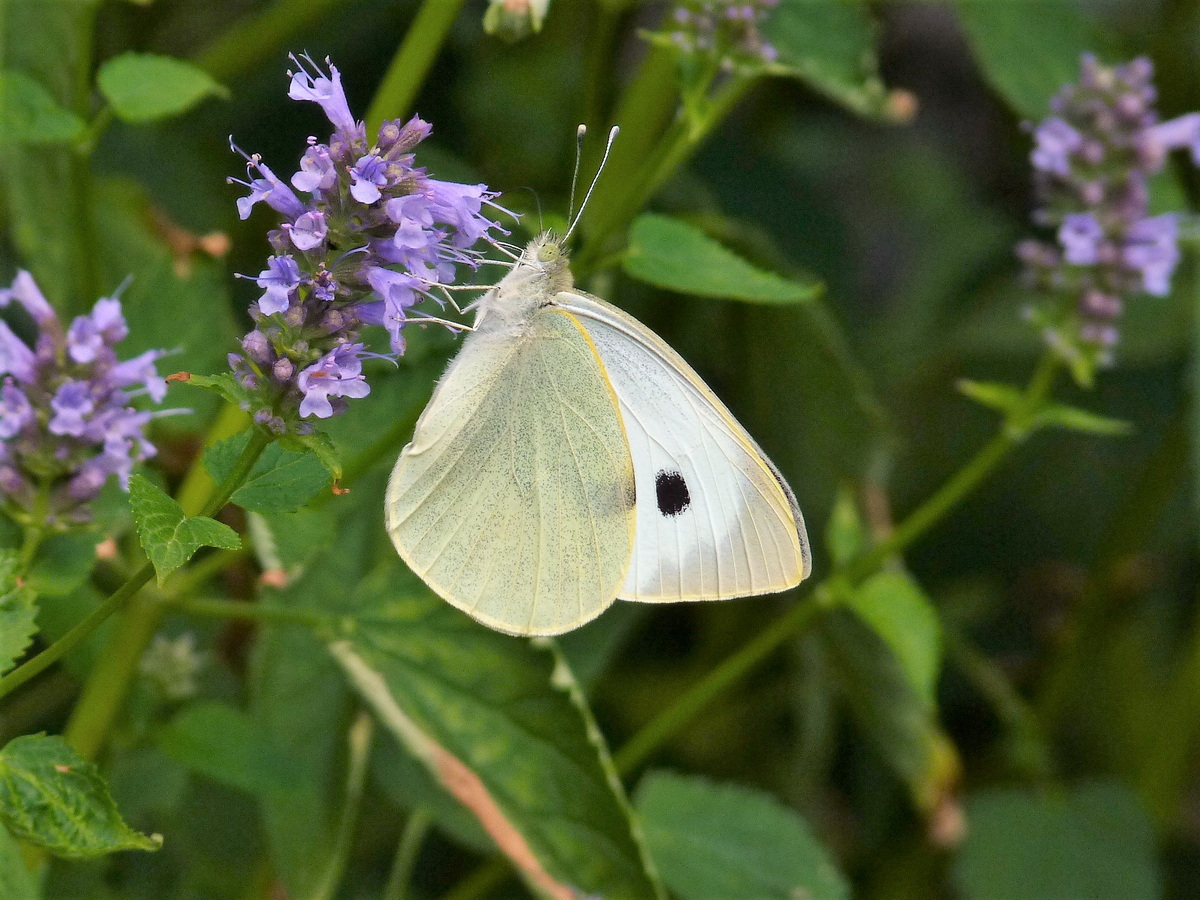
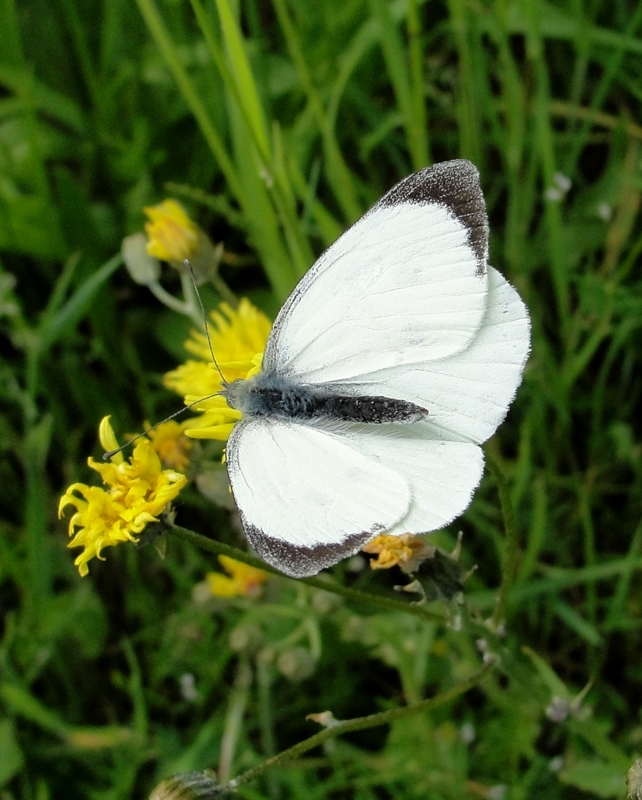
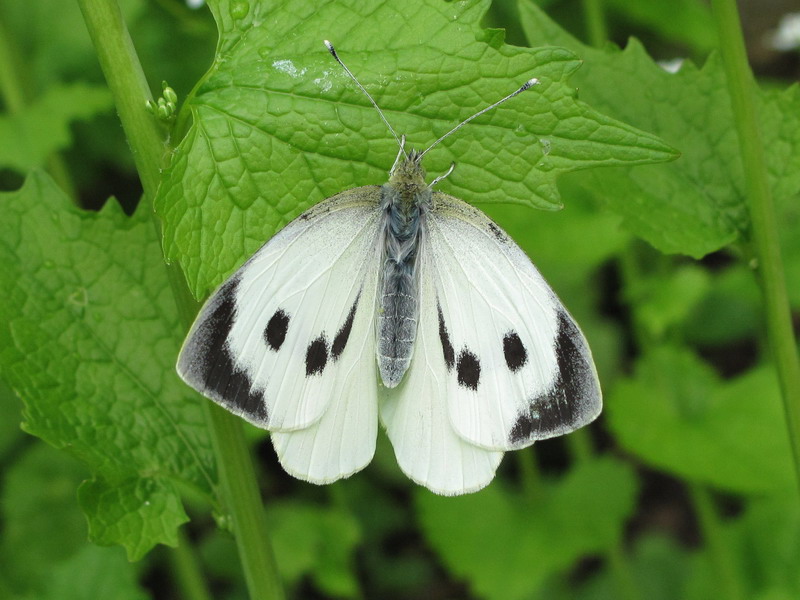
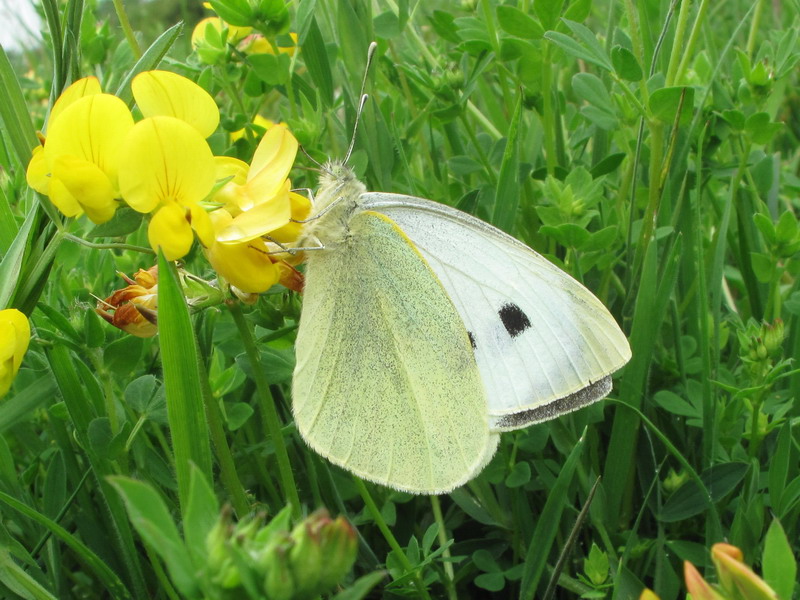
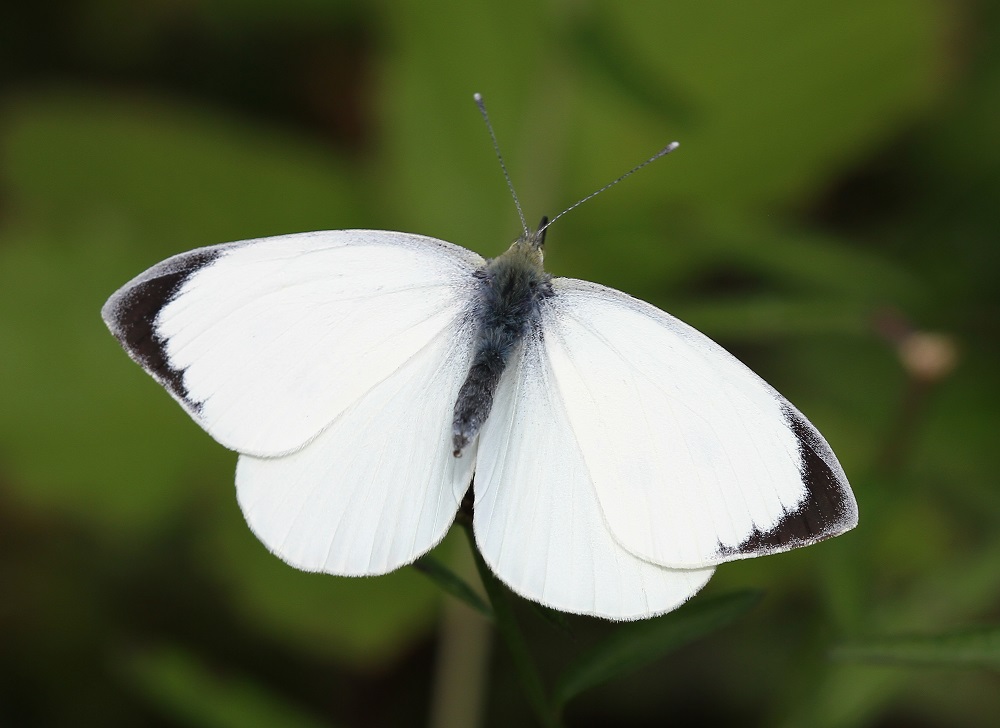
The Large White is one of two species (the other being the Small White) that can claim the title of "Cabbage White" that is the bane of allotment holders all over the British Isles. The larva of this species can reach pest proportions, and decimate cabbages to the point that they become mere skeletons of their former selves. The female is distinguished from the male by the presence of 2 black spots, together with a black dash, on the forewing upperside. This is one of the most widespread species found in the British Isles and can be found almost anywhere, including Orkney and Shetland. This species is also known to migrate to the British Isles from the continent, augmenting the resident population in the process.
This species was first defined in Linnaeus (1758) as shown here (type locality: Sweden).
Males of the spring brood have greyer wingtips than those of the summer brood. Similarly, females of the spring brood are lighter in colour than those of the summer brood, which have very pronounced black markings.


| Family: | Pieridae | Swainson, 1820 |
| Subfamily: | Pierinae | Duponchel, 1835 |
| Tribe: | Pierini | Swainson, 1820 |
| Genus: | Pieris | Schrank, 1801 |
| Subgenus: | ||
| Species: | brassicae | (Linnaeus, 1758) |
Description to be completed.
The distribution data (2000-2009) has been made available through the generosity of Butterfly Conservation and any subspecies distribution is taken from Riley (2007). Click here to see the distribution of this species together with site information overlaid.
This species is found in a wide variety of habitats and can turn up almost anywhere, including gardens, allotments, parks, meadows, open grassland, and hedgerows.
Despite a slight decline in its fortunes, this widespread and common butterfly is not currently a species of conservation concern.
The table below shows the occurrence (distribution) and abundance (population) trends, using information from The State of the UK's Butterflies 2015 (Fox, 2015). Any UK BAP status is taken from the UK Biodiversity Action Plan (UK BAP) (2007 review).
1976-2014 (%) | 1976-2014 (%) | 2005-2014 (%) | 2005-2014 (%) |  -3 -3 |  -30 -30 | +2 | -28 |
|---|
This butterfly normally has 2 broods each year, and there is often a 3rd brood. The first brood emerges in April, with a peak in May. In typical years, their offspring emerge in July and fly through August and into early September.

The Large White has a powerful flight and is able to migrate over large distances. It is one of our most widespread species, and a common sight in gardens throughout the British Isles.
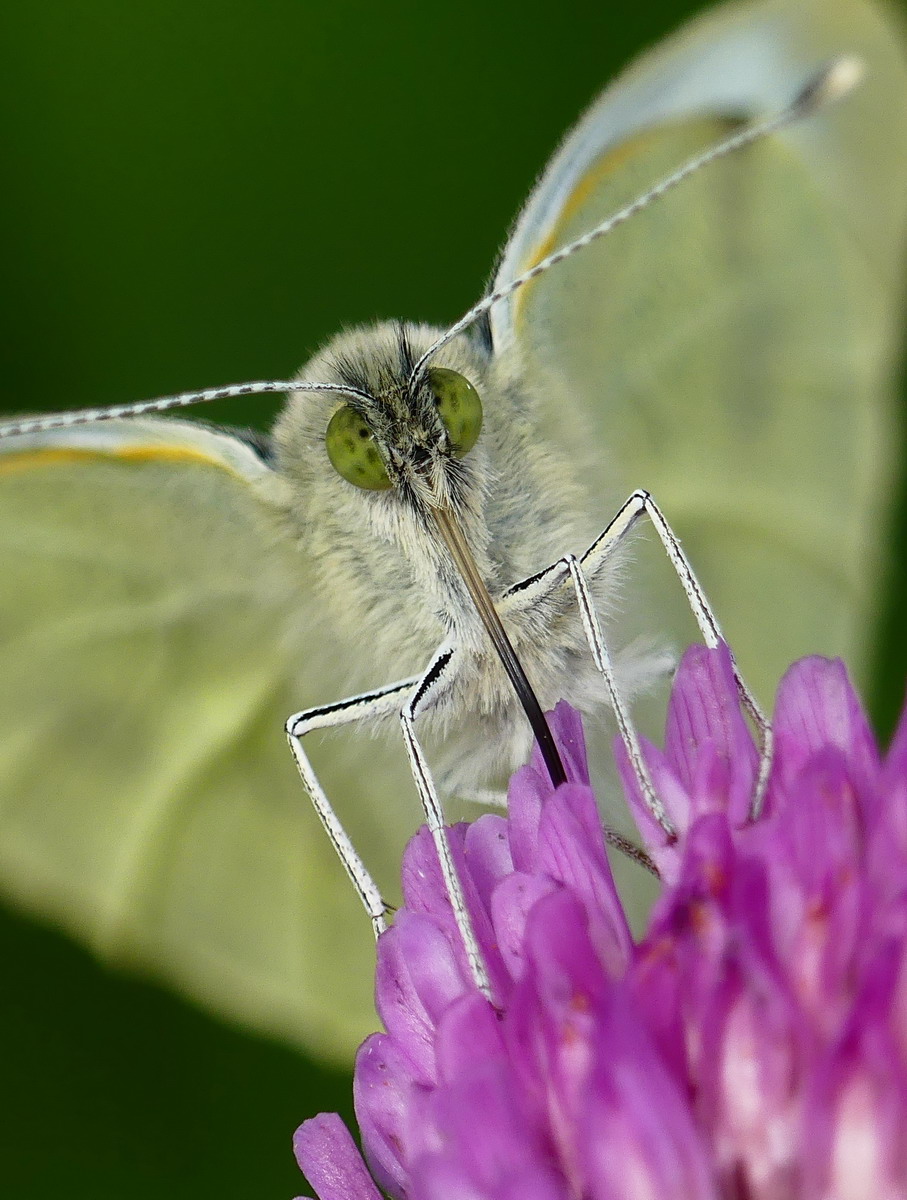
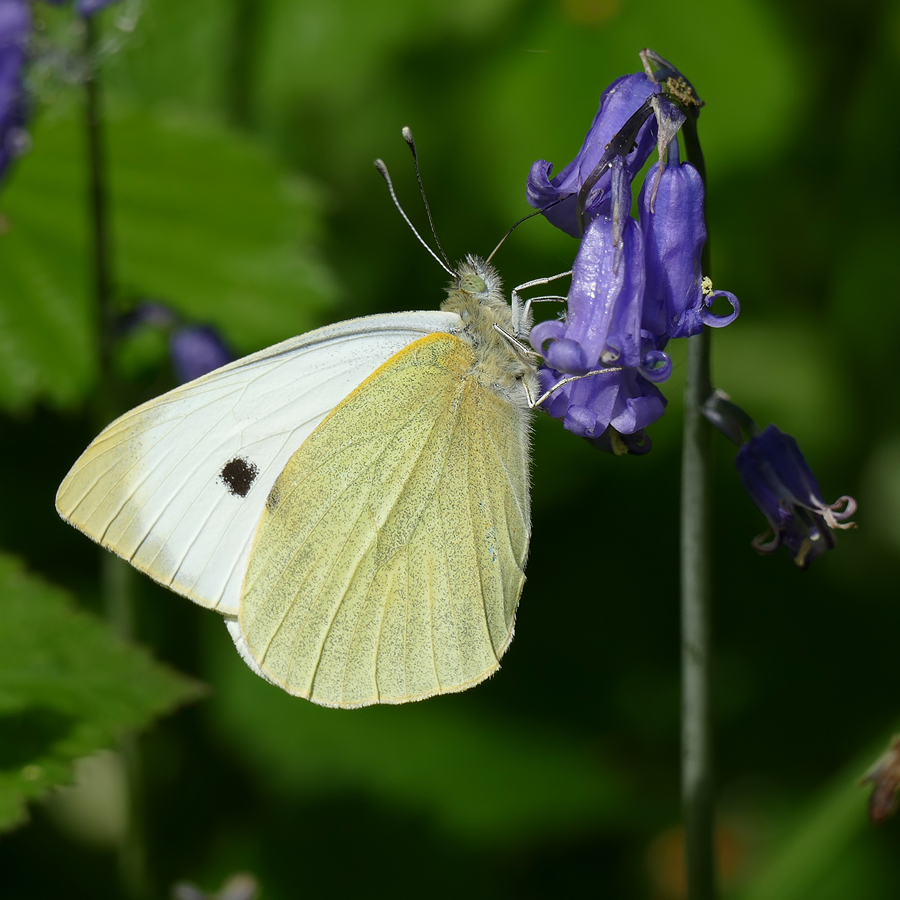
Adults feed primarily on Bluebell (Hyacinthoides non-scripta), Buddleja (Buddleja spp.), Bugle (Ajuga reptans), Common Fleabane (Pulicaria dysenterica), dandelions (Taraxacum spp.), Devil's-bit Scabious (Succisa pratensis), Field Scabious (Knautia arvensis), Hemp-agrimony (Eupatorium cannabinum), knapweeds (Centaurea spp.), Ragged-Robin (Silene flos-cuculi), ragworts (Jacobaea spp.), thistles (Carduus spp. and Cirsium spp.), Wild Marjoram (Origanum vulgare) and Wild Teasel (Dipsacus fullonum).
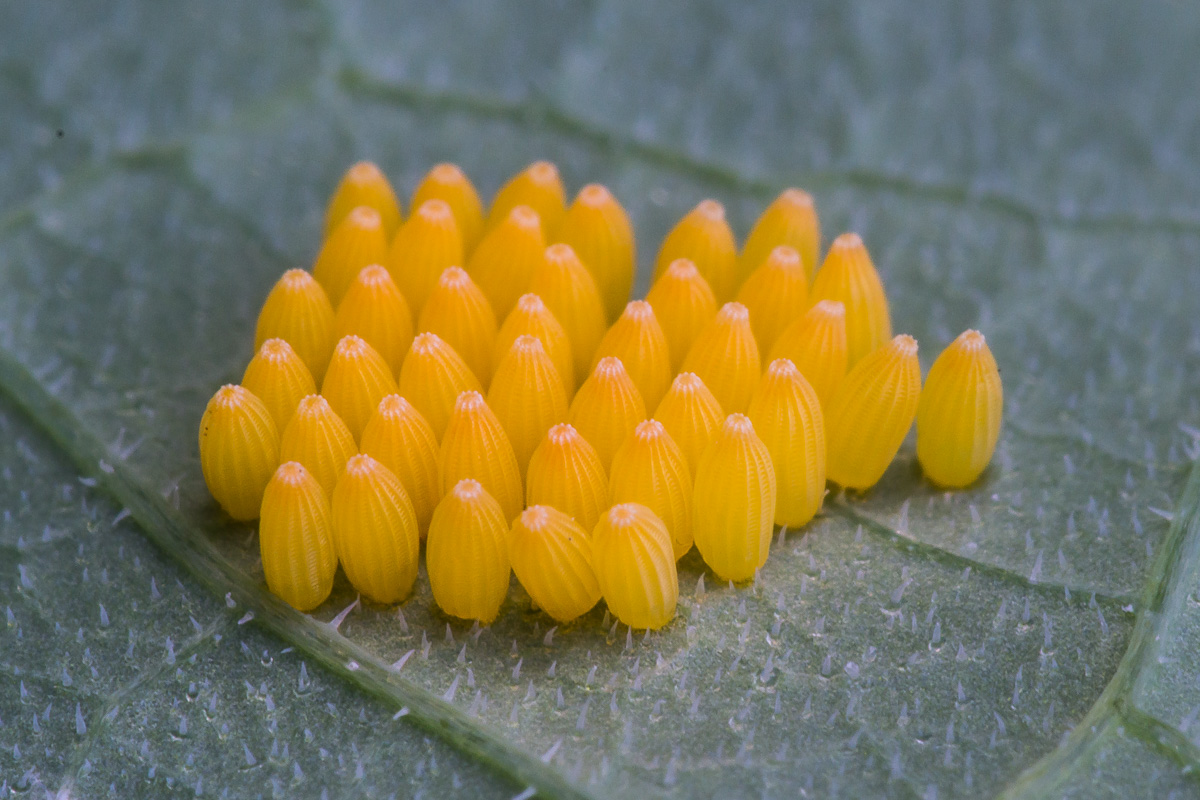
The yellow skittle-shaped eggs are laid on both surfaces of a leaf, in groups of 40 or so, and often up to 100 - laid at a rate of 4 per minute. Each egg is laid directly on the foodplant (rather than on top of other eggs) and also abuts other eggs, resulting in an organised egg mass. An individual female may lay up to 600 eggs in total. The eggs hatch in a week or two, depending on temperature.
"This butterfly lays its eggs on many kinds of cruciferous plants, such as cultivated cabbages, mustard, turnips, radish and cress, especially the common garden Tropeeolum major [Nasturtium], in the months of May and June and again in August and early September. The eggs are laid on both surfaces of the leaves in groups varying from about forty to one hundred in a group. On August 3rd, 1903, a female brassicae was observed during an interval of bright sunshine (during stormy weather) fluttering over a bed of cabbages. After a few minutes it settled on the upper side of one of the leaves, closed its wings and commenced depositing. The eggs are laid at regular intervals of ten seconds between each, the actual time of deposition of each egg is four seconds. After each egg is laid the abdomen is raised and hidden between the closed wings for ten seconds; the whole process for depositing each egg occupies fourteen seconds. This individual remained for just half an hour on the leaf without moving her position, during which time about one hundred eggs were laid in a group — a single layer laid neatly packed side by side all in one plane. On May 30th, 1909, a captive female enclosed on a small cabbage plant laid a group of forty-one eggs on the underside of one of the leaves; these hatched on June 16th, remaining seventeen days in the egg state, this long period being due to the continuous cold weather from June 2nd, while other eggs laid on August 10th hatched early on the morning of August 15th, being in the egg state only four and a half days owing to the exceptionally warm weather, making a difference of twelve and a half days in the time occupied by the two broods as influenced by the temperature. The egg as laid stands erect, it is 1.21 mm. high; the shape is elliptical with an elongated apex, which is granular at the extreme point. There are from seventeen to nineteen fine longitudinal keels running from the crown to the base, the intervening spaces are concave and transversely fluted by about forty fine ribs. When first laid the colour is a rich cream-yellow, but to the naked eye the whole batch appear bright primrose-yellow, making them very conspicuous when on the upper surface of a dark green cabbage leaf. When three days old the colour is a clear citrine-yellow, the crown whitish and semi-transparent; they remain the same colour until about thirty hours before hatching, when they become opaque with a leaden-coloured crown, caused by the dark head of the larva showing through the shell; they then remain unchanged until hatching." - Frohawk (1924)




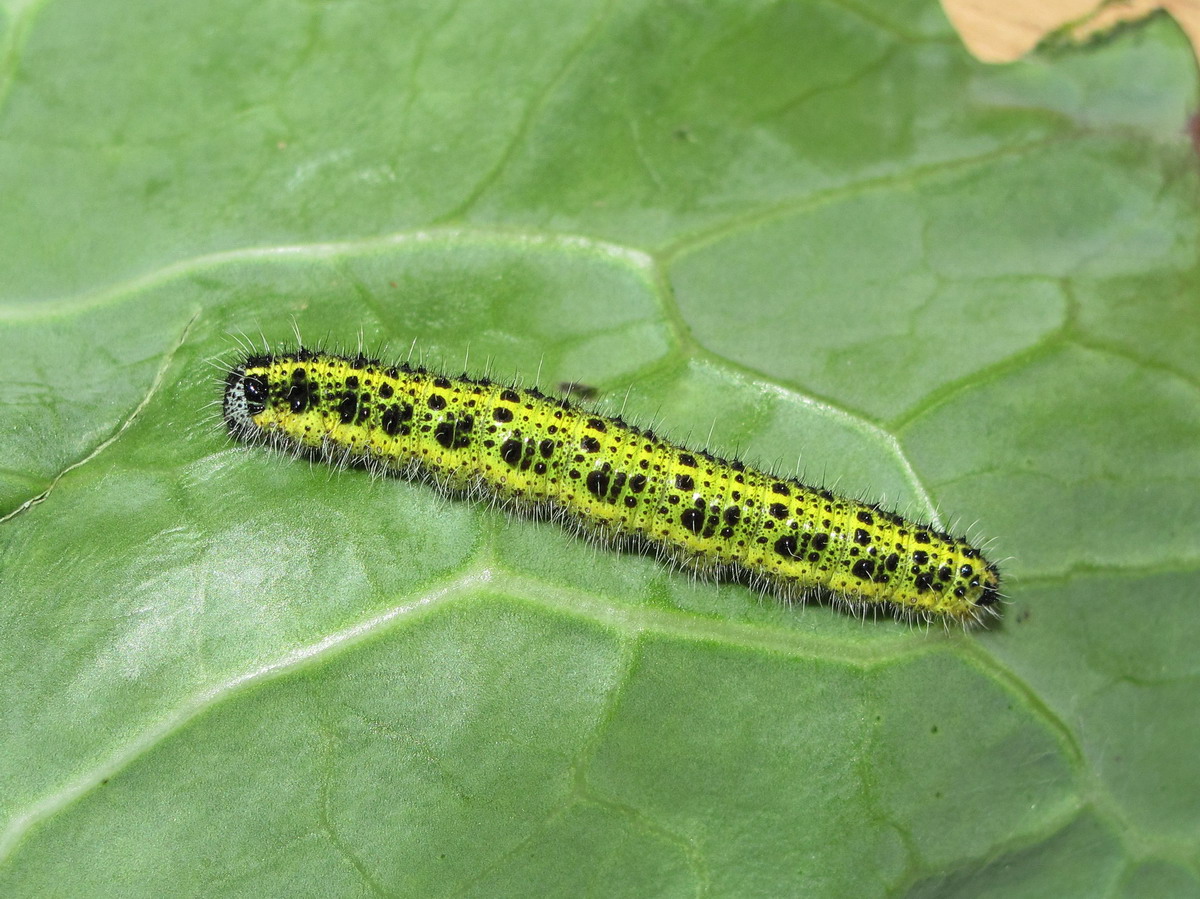
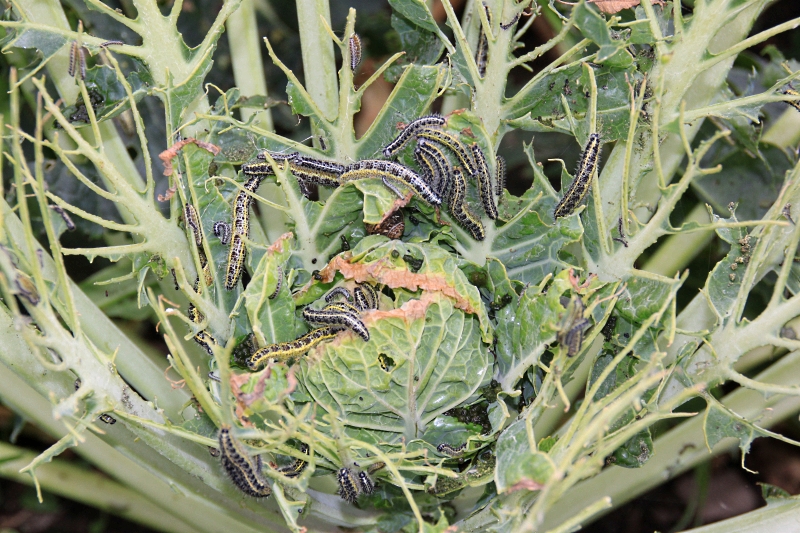
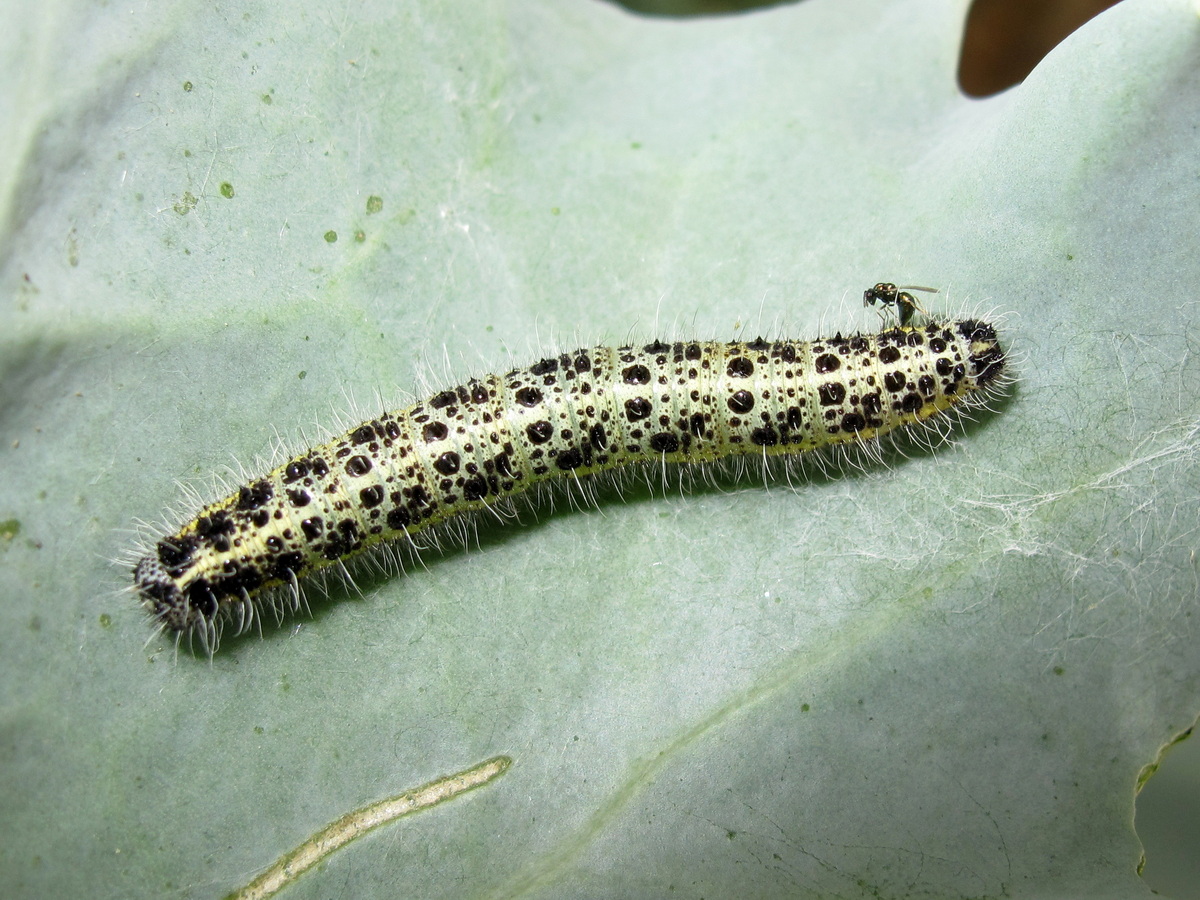
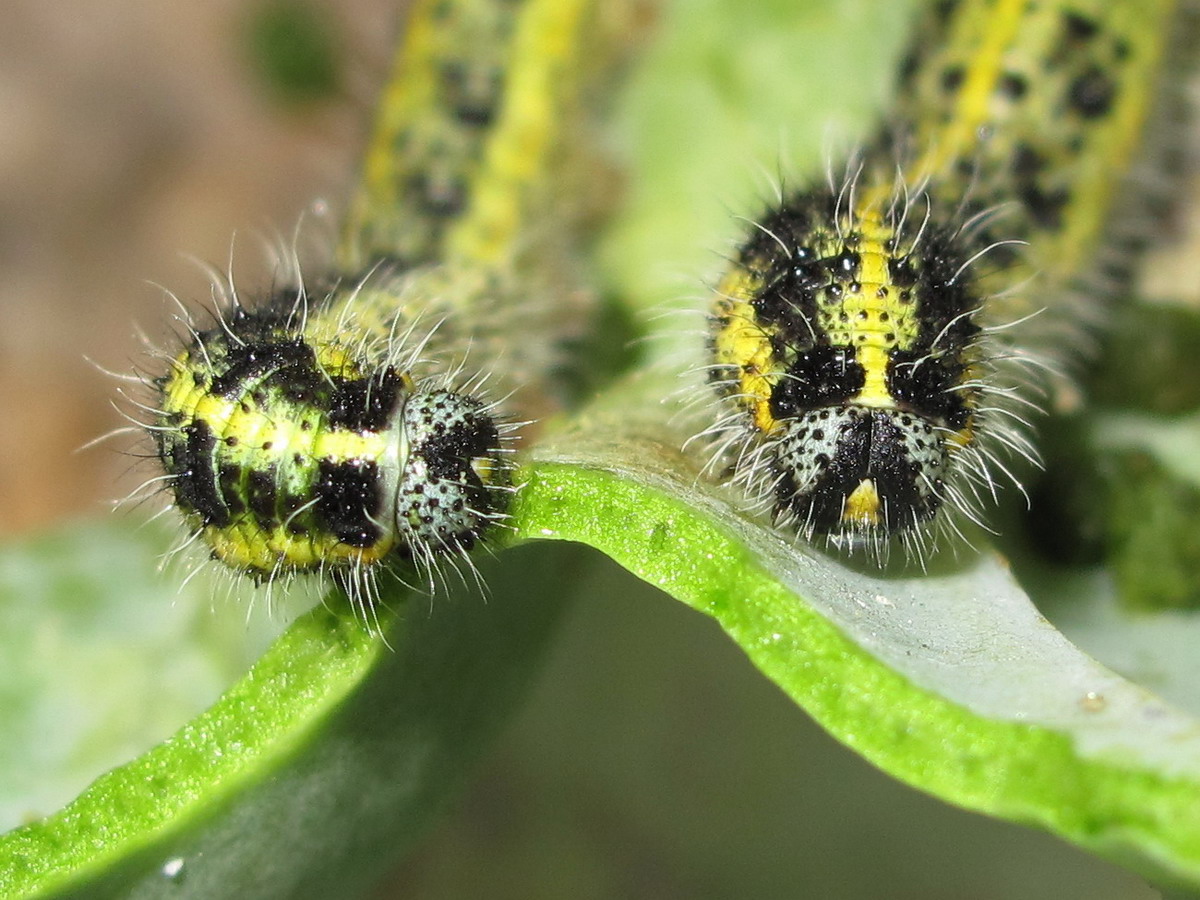
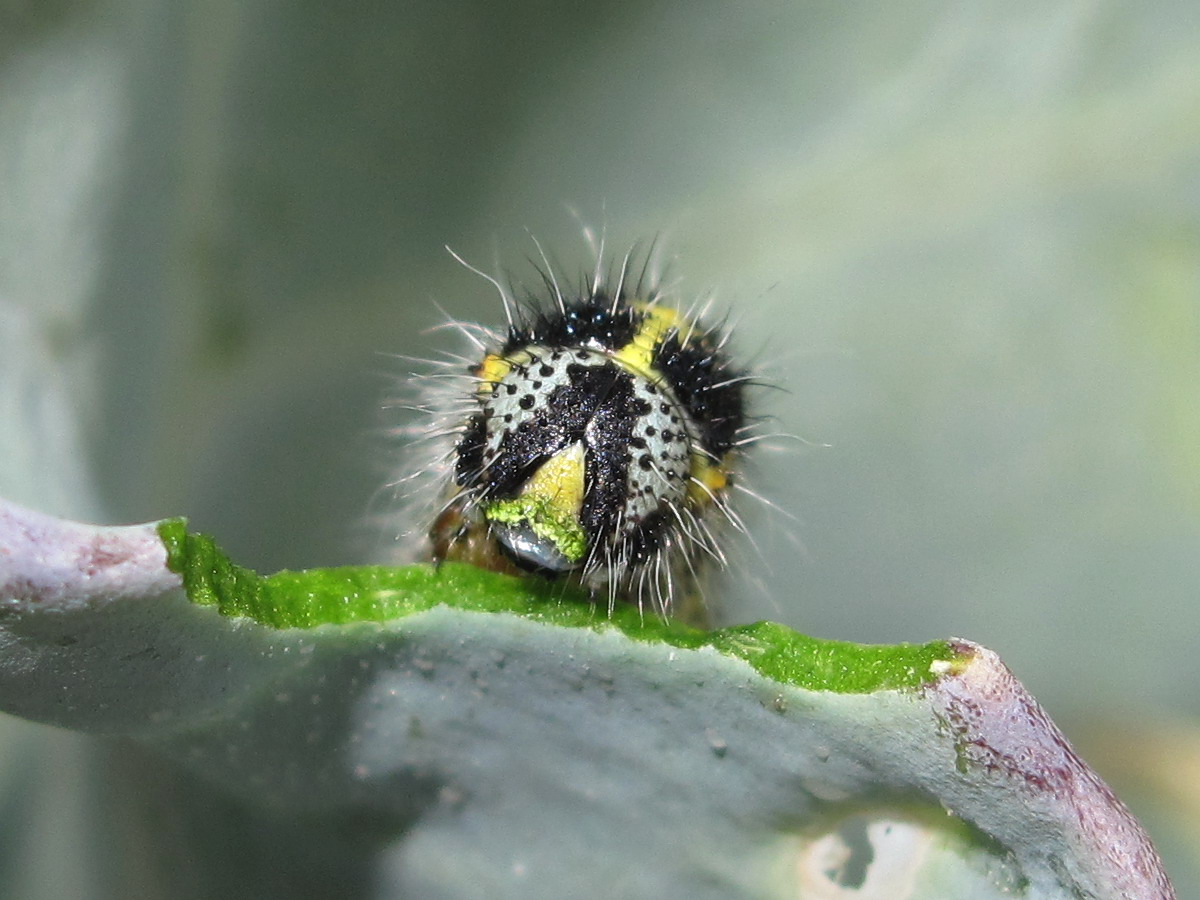
The larva eats its eggshell on hatching and is gregarious, feeding alongside its siblings until fully-grown. The larvae accumulate poisonous oils in their bodies as they feed, which explains why would-be predators are deterred from feeding on such visible larvae. Unlike our other "cabbage white", the Small White, the larvae of the Large White prefer to feed on the outer leaves of the foodplant, whereas the larvae of the Small White prefer to feed on leaves closer to the heart of the foodplant. The larva has 4 moults in total.
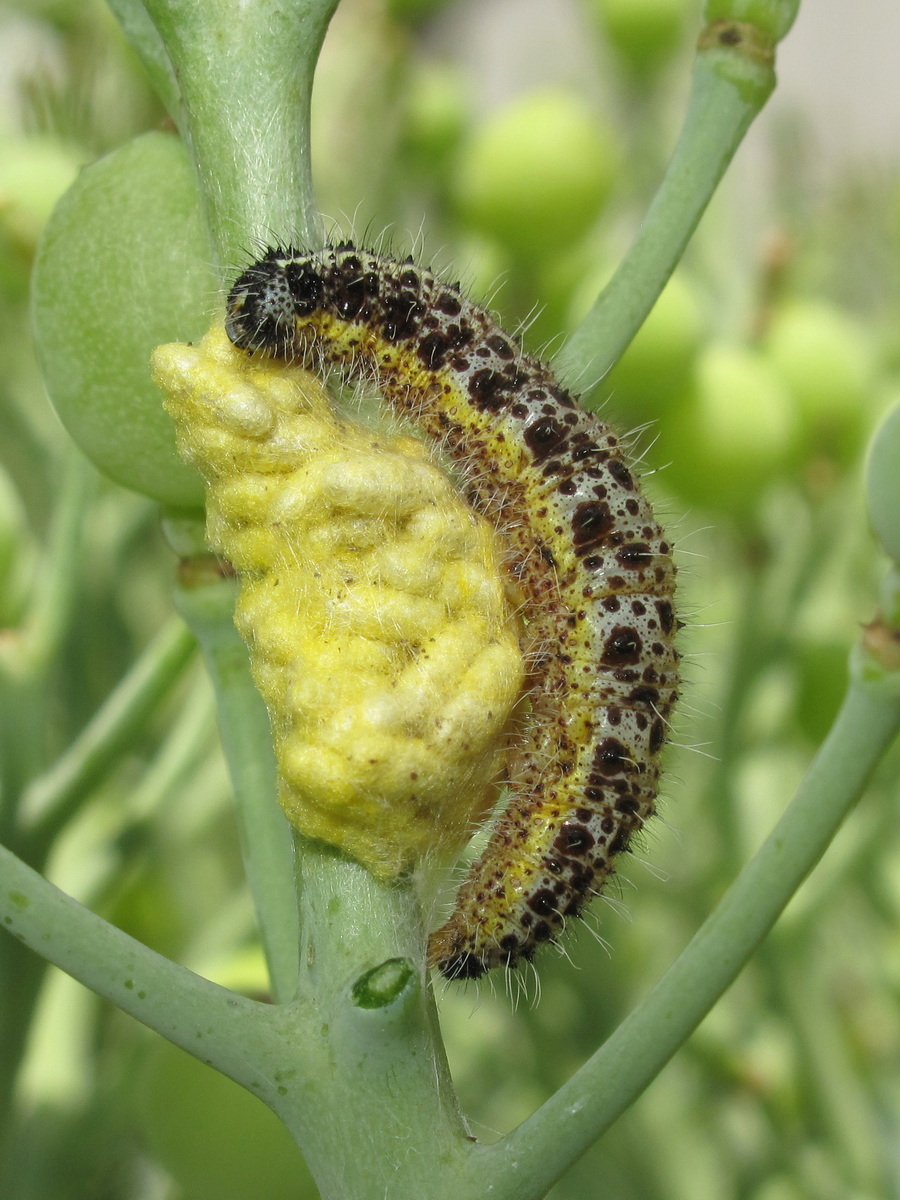
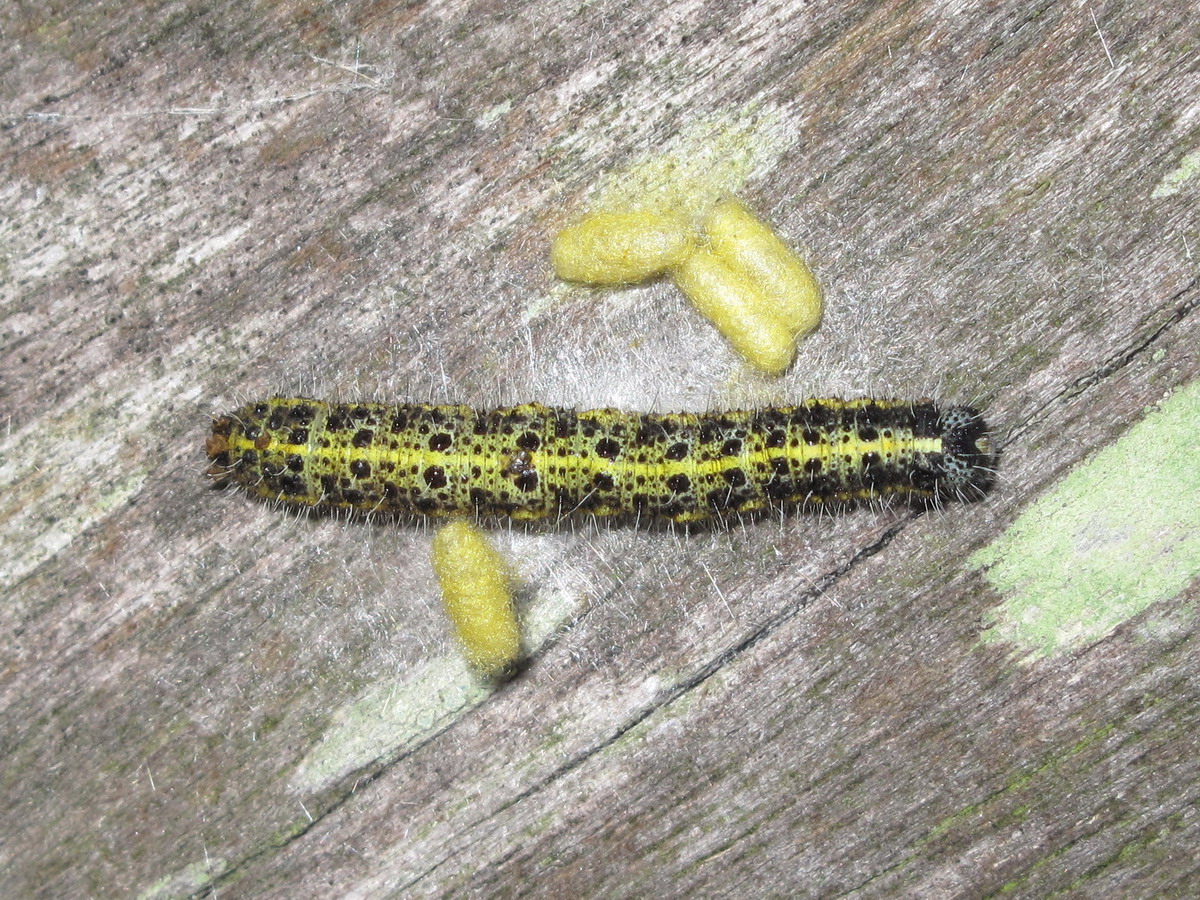
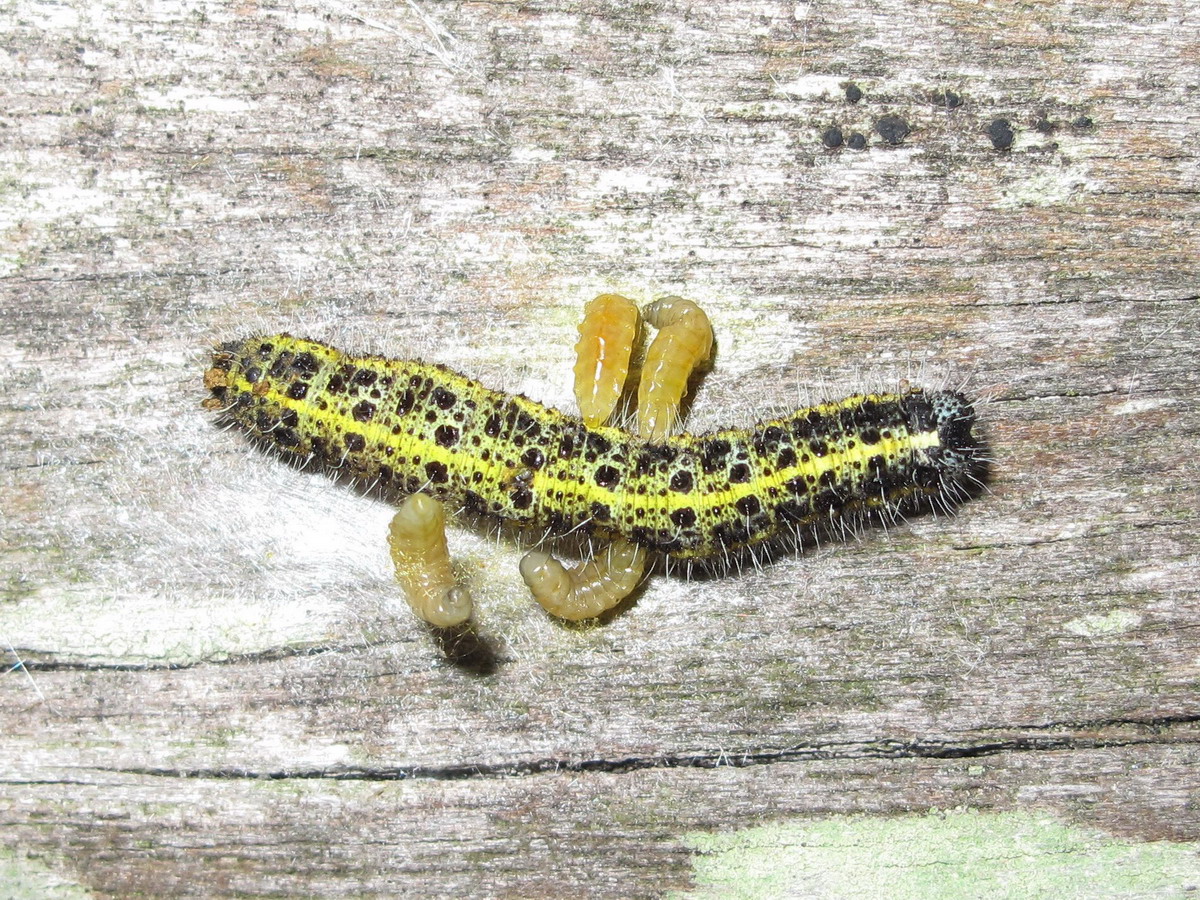
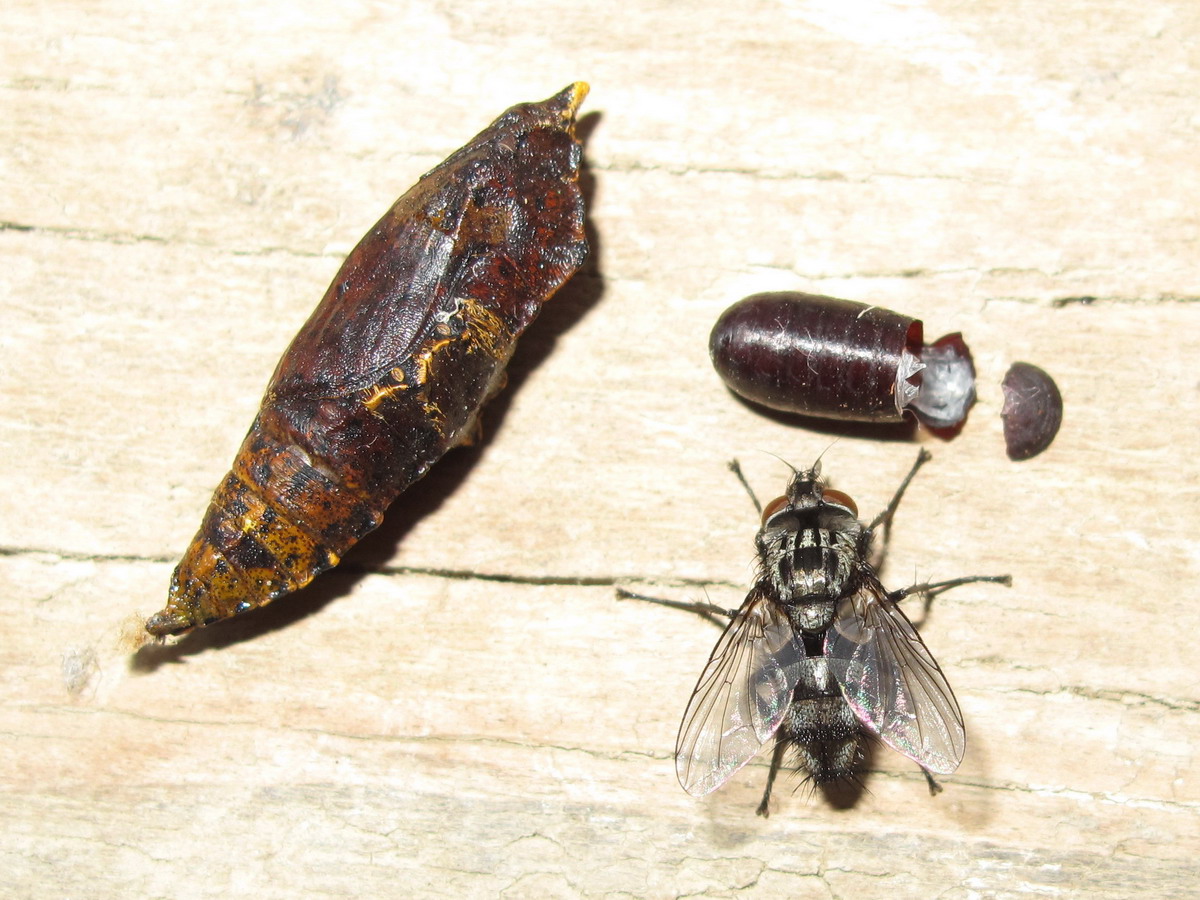
This species is particularly vulnerable to a parasitic ichneumon fly, Apanteles glomeratus, which deposits its eggs inside young larvae. The fly larvae feed on the insides of their host, avoiding vital organs, and, when their host is full-grown, break through the skin and pupate within yellow cocoons on or near their host.
The primary larval foodplant is Cabbage family (Brassicaceae). Nasturtium (Tropaeolum majus), Sea-kale (Crambe maritima) and Wild Mignonette (Reseda lutea) are also used.


"The young larvae upon emerging eat the empty shells, leaving only the base, which forms their first meal; they then spin a fine layer of silk over the surface of the leaf and live thereon, and feed in company, eating first the cuticle of one side only, but after a short time they perforate the whole substance. They usually rest side by side closely packed together. Shortly after emergence the larva measures 2.12 mm. in length. The head is shining black, bearing a few simple white hairs of various lengths. The body is fairly cylindrical, the segments are sub-divided in the centre and rather bulbous along the lateral ridge. It is of a pale greenish-ochreous, very glossy and smooth over the entire dorsal surface; below the spiracles the surface is covered with minute black points developed into short bristles ventrally. There are six rows of black and yellow tubercles, each on a brown disc and bearing a moderately long fine simple hair curving forwards, the tip of which is slightly clubbed. The spiracles are brown. On each segment below the spiracle are two olive-grey discs forming a lateral series, each having a fine long white sharply-pointed bristle, and on the ventral lobe of each segment is a larger disc of similar colour bearing two shorter bristles. On the first segment are two transverse sub-dorsal discs and a larger medio-dorsal disc on the anal segment; the legs and claspers are dusky." - Frohawk (1924)




"First moult June 17th, the eggs hatched June 8th, 1909. Before second moult, fourteen days old, the larva measures 6.35 mm. long. The ground colour is light greenish-yellow, a medio-dorsal line lemon-yellow. The body is sprinkled with black, shining, conical tubercles of various sizes, each emitting a simple, finely-pointed, slightly-curved hair, the longer are white, the shorter black. The largest tubercles with white hairs are on the dorsal region and form longitudinal series, the first bordering the medio-dorsal stripe. On the first three segments they are large and form transverse bands darkening the segments; the spiracular stripe is yellow and with only small tubercles. The spiracles are small and black; head, legs and anal shield also black. The body is covered with minute black points; the claspers being black and yellow." - Frohawk (1924)


"Second moult June 22nd, 1909. Before third moult, eighteen days old, the larva is 8.5 mm. long. It is similar to the previous stage excepting that the whole colouring is clearer and brighter. They still feed and rest in company, lying side by side." - Frohawk (1924)


"Fixed for third moult June 26th and moulted following day. Before fourth moult it measures 19 mm. long. In all respects it resembles the previous stage and is still gregarious. Some fixed for fourth moult July 1st." - Frohawk (1924)


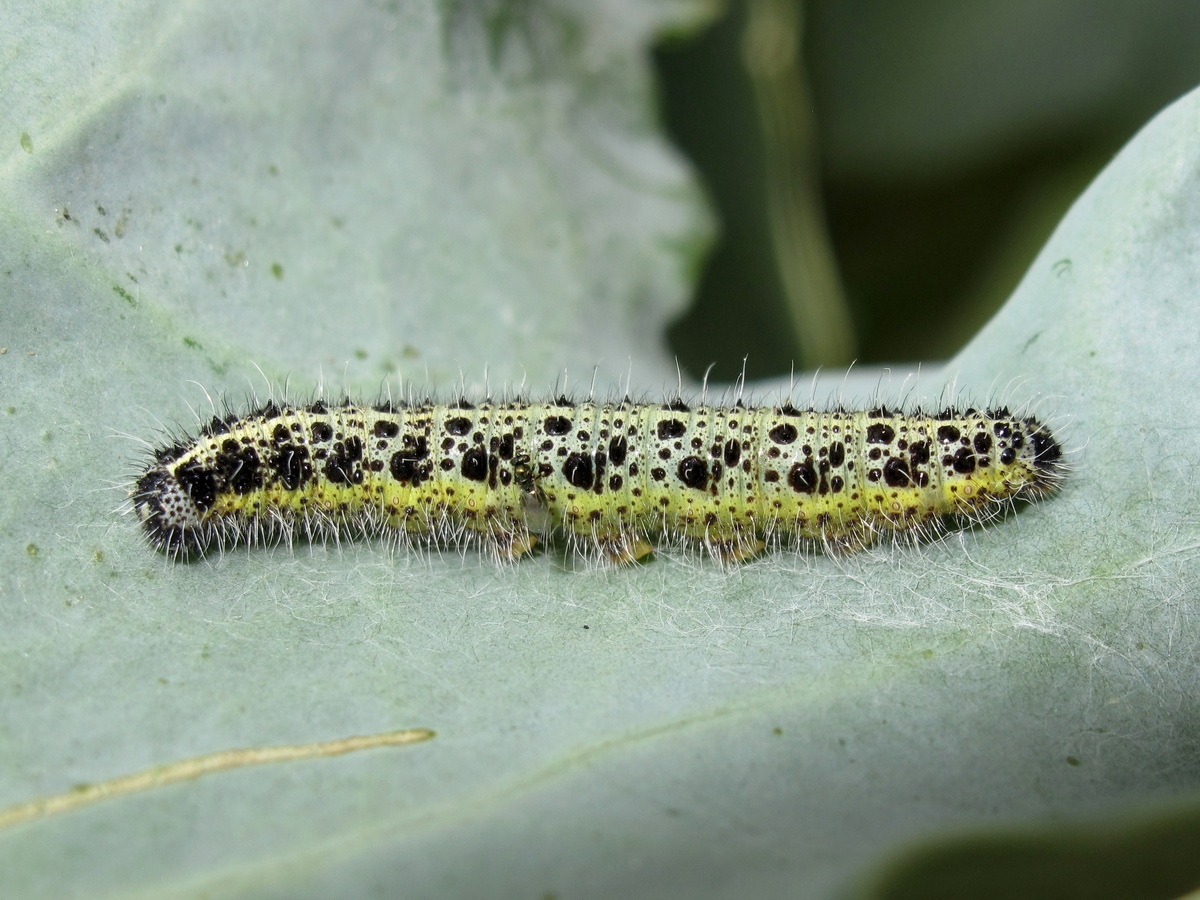
"Fourth and last moult July 2nd, 1909. After fourth and last moult, fully grown, the larva measures 41.3 mm. long. The body is almost cylindrical, being only slightly attenuated at the ends. The middle segments have six sub-divisions, the first two on each segment being the largest; over the whole surface of the body are transverse series of shining black, short, pointed tubercles, each situated on a conspicuous black blotch, the largest being placed on the second sub-division above the spiracle; the others are of various sizes and some are extremely small, only visible under a lens, but each one bears in proportion to its size a hair, some are white and others black, all are simple, finely-pointed and mostly slightly curved. The tubercles on the anterior sub-division of the first segment are large and glistening black, and the anal segment has a large dorsal shining black disc which resembles the head. The head is black with a light-grey patch on each side of the crown and a pale yellow clypeus; it is covered with black points emitting hairs, similar to the body. The colouring of the body is a grey-green, darkest on the dorsal half, with three gamboge-yellow longitudinal stripes, one medio-dorsal, and a spiracular one on each side, the edges of these stripes are ill-defined and blend into the ground colour. The ventral surface is greenish-ochreous, the claspers amber-ochreous and blotched with brown. The black points are situated on olive-brown spots, below the spiracles, the latter being flesh-colour outlined with dark-brown, but very inconspicuous. The whole surface is finely granular; each grain has an exceedingly minute point. The legs are black and yellow. Below the spiracles the surface is covered with white hairs only. The larvae have a curious habit of all resting and feeding at the same time; although they spread out over the plant, for some reason they all feed at once. In this their last stage they do not spin webs over the leaves. The first larva spun up for pupation on July 8th, having been feeding for just thirty days, and pupated on the 10th, followed by all the others on the following two days." - Frohawk (1924)
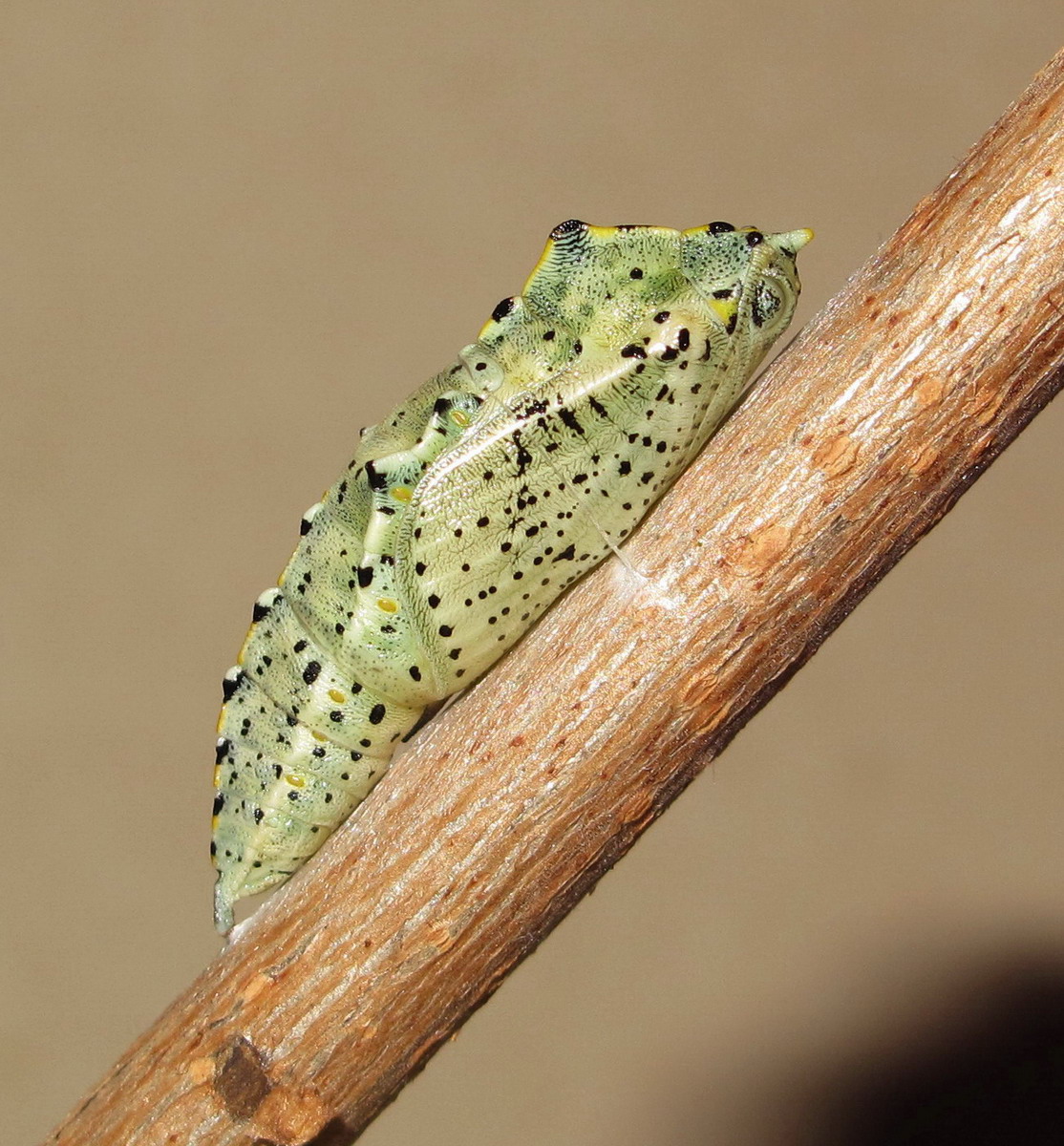
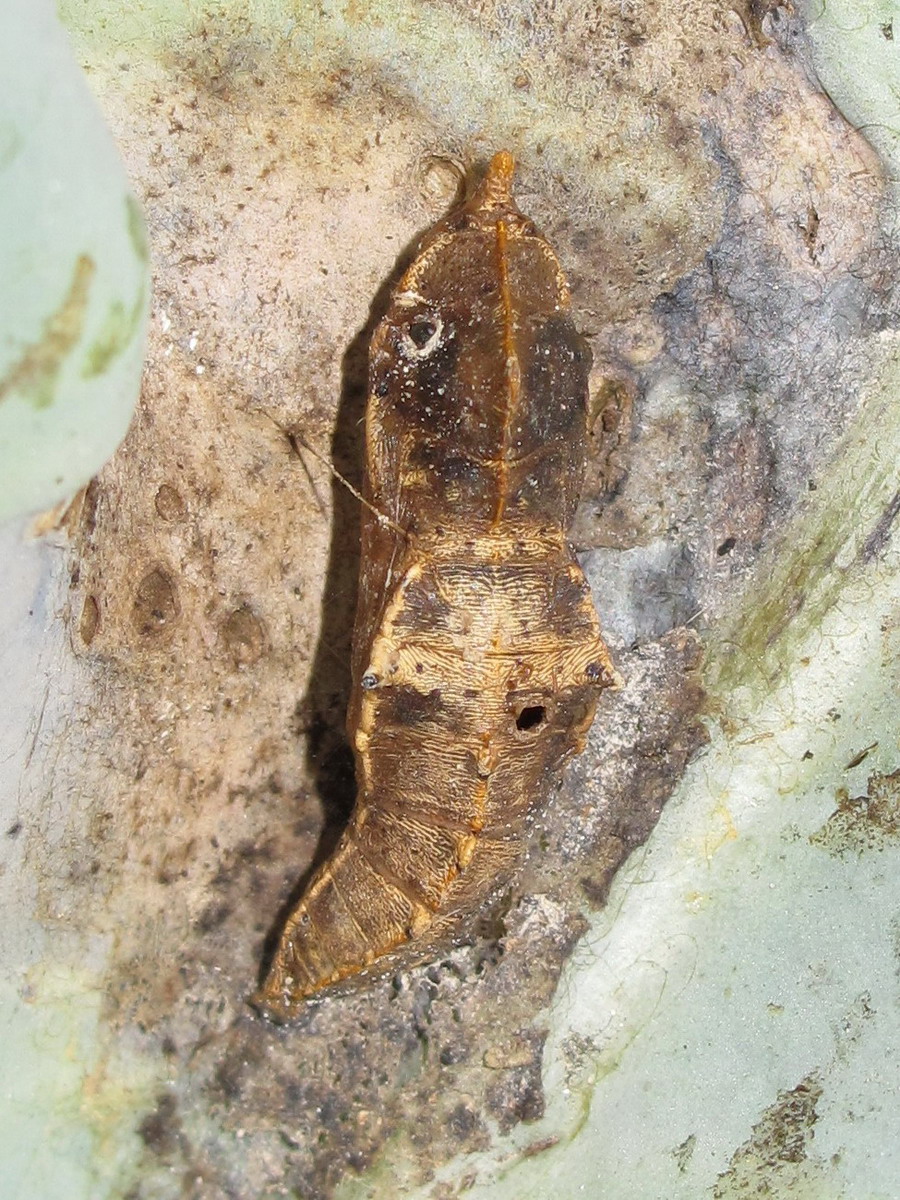
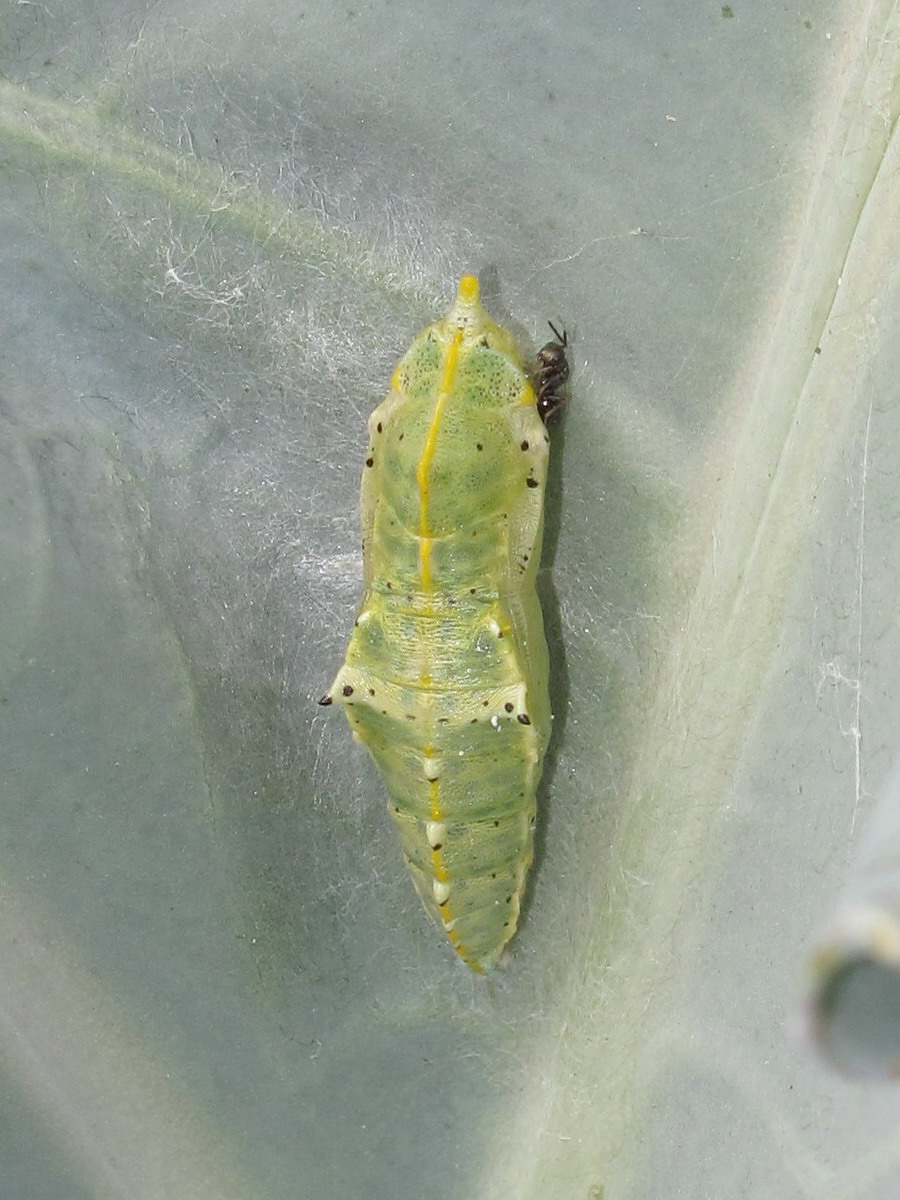
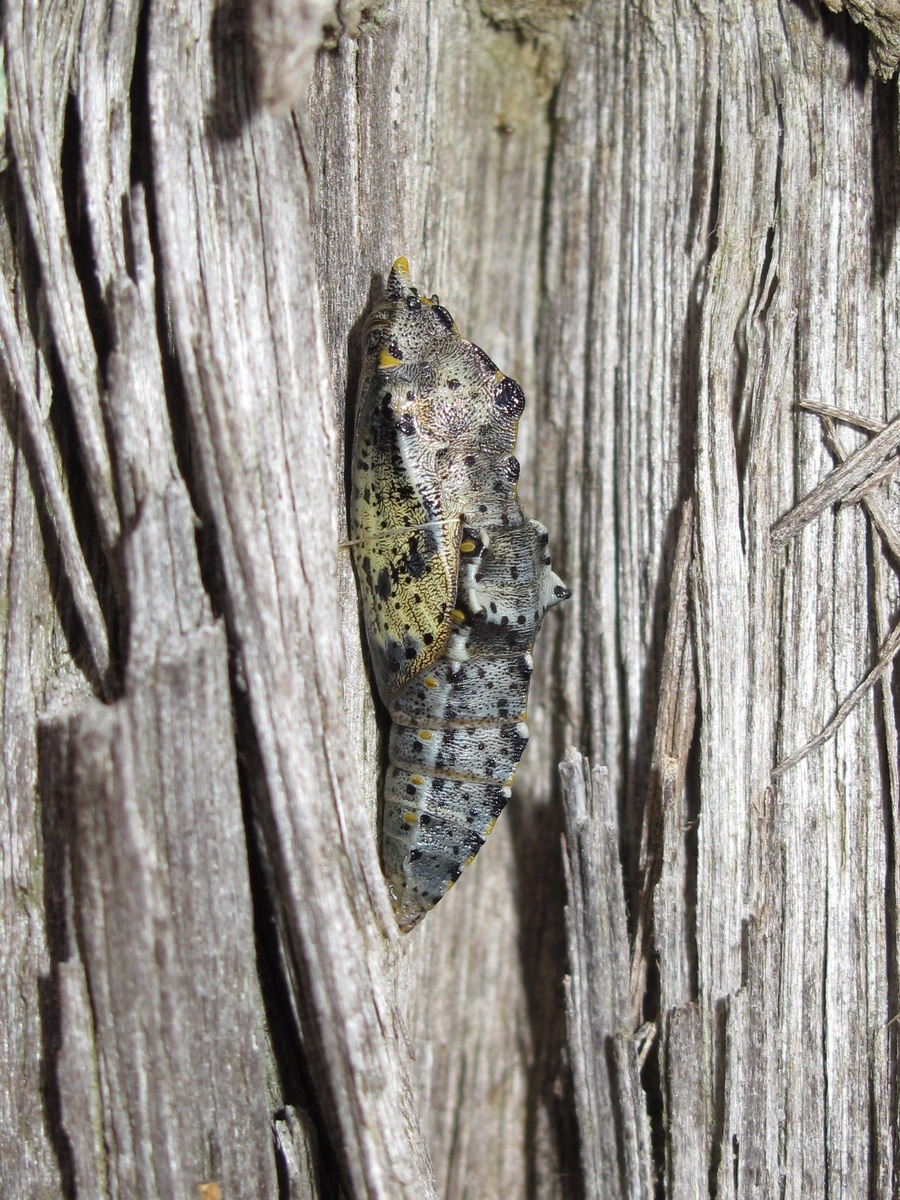
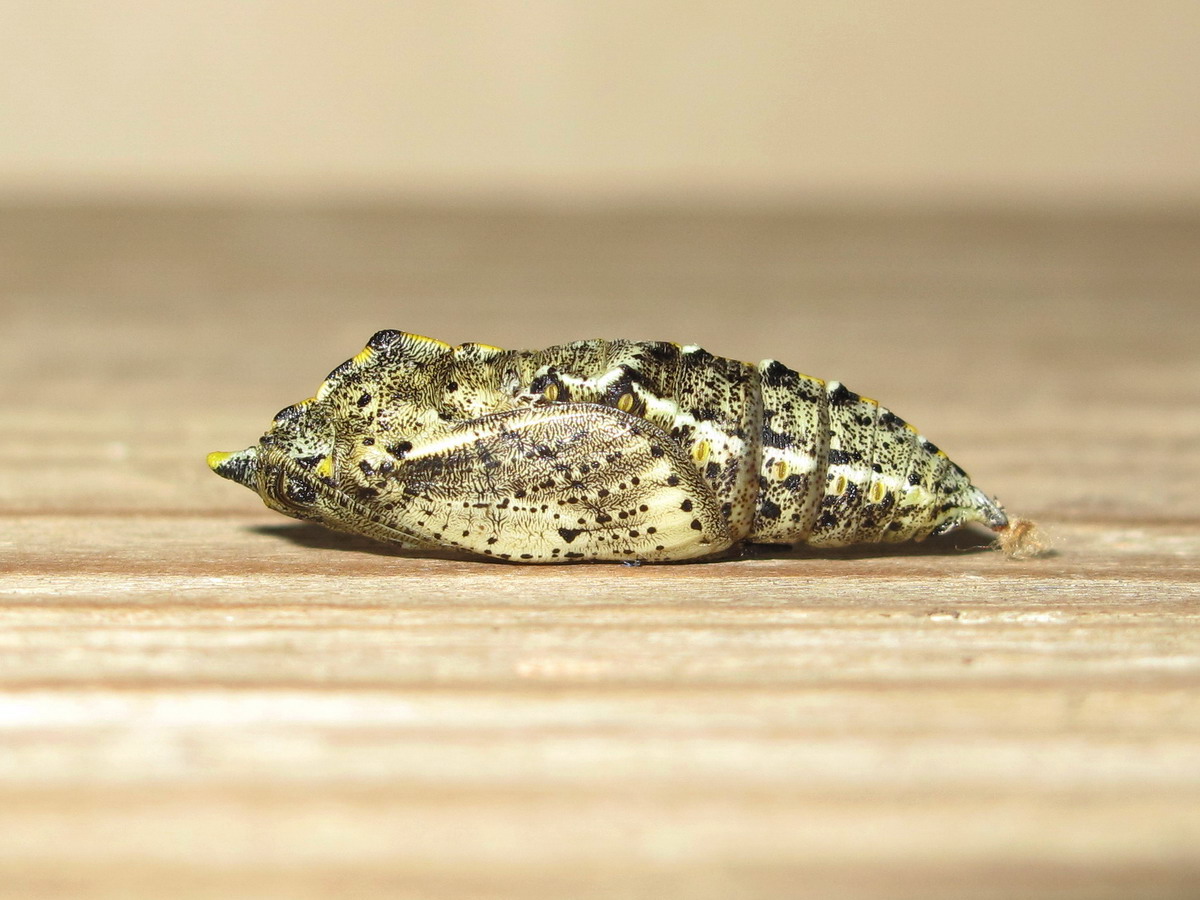
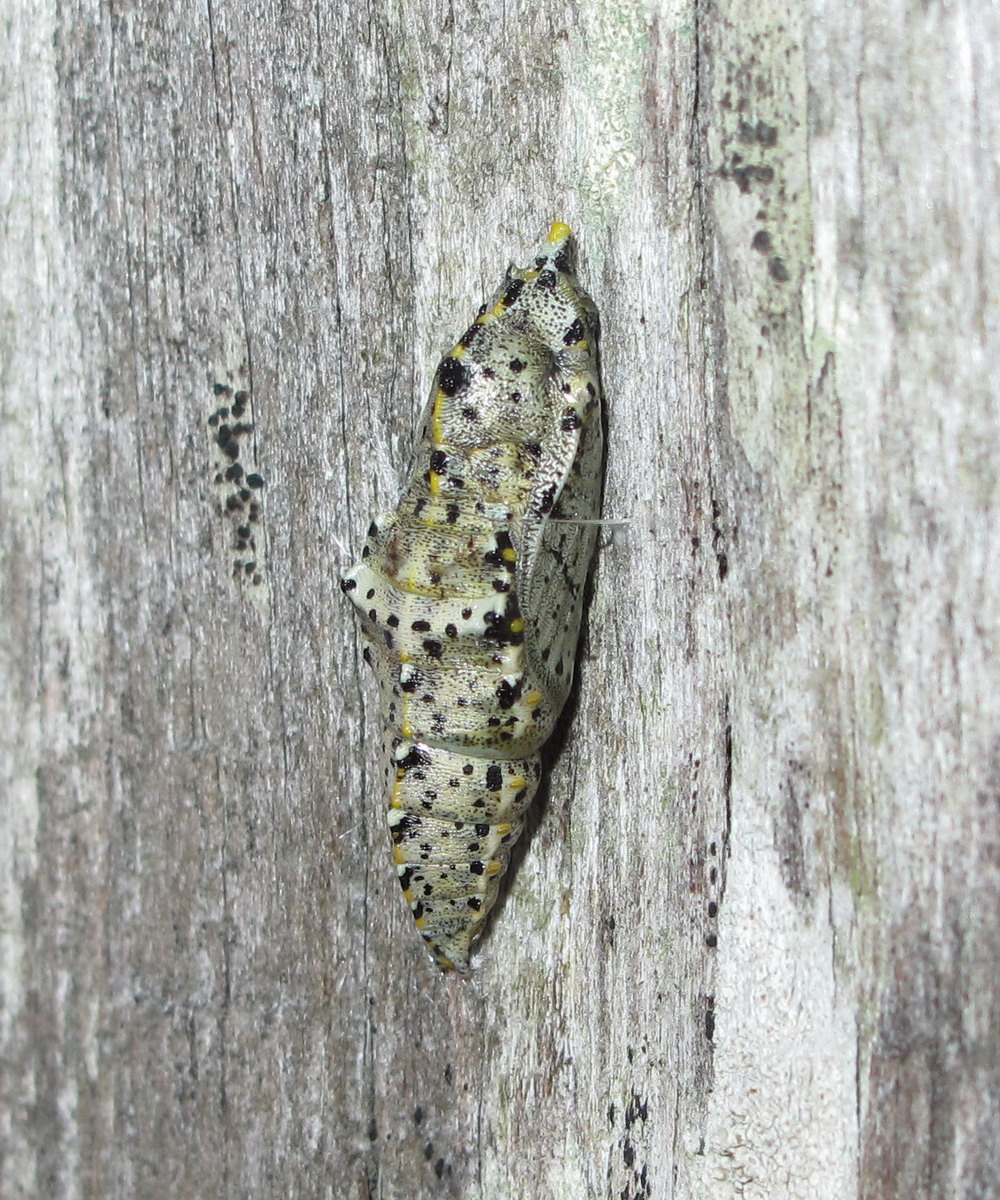
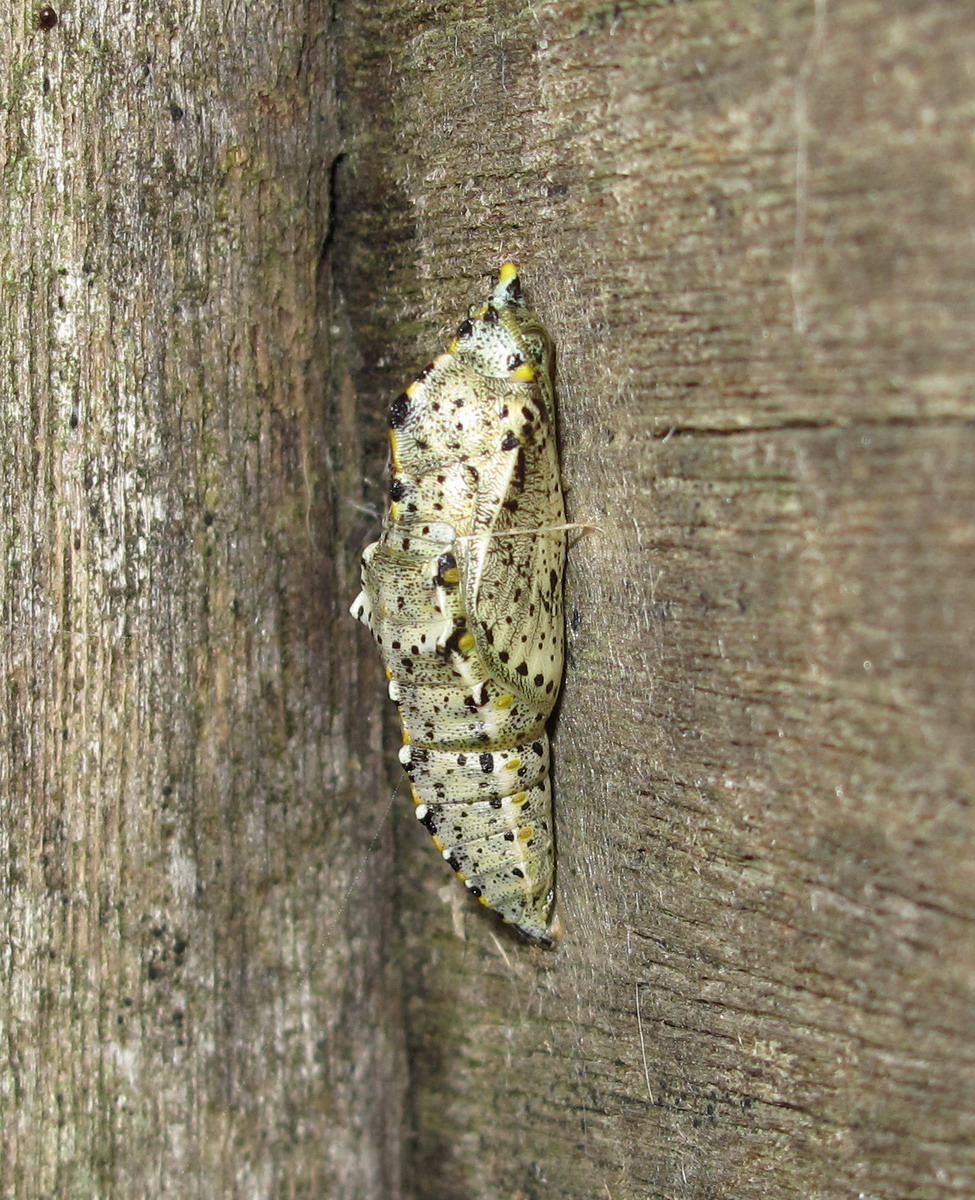
After wandering for some time, the larva finds a suitable pupation site that is typically away from the foodplant, such as fences, tree trunks, and under any overhang on a building, such as its eaves. The pupa is attached by a silk girdle and the cremaster. This stage lasts around 2 weeks for pupae that produce the summer brood. This stage lasts around 8 months for pupae which overwinter and that produce the spring brood.
"The fully-grown larvae select various places for pupation; the most usual being under some ledge, such as the copings of walls, palings or woodwork of sheds and other timber buildings, when the pupa is attached in a horizontal position. Often it is fixed upright on window frames or tree trunks in proximity to the food plant. The larvae of the summer broods often pupate upon the leaves and stems of their food plants when they are normally green, and exactly assimilate in colour to their environment. The pupa measures 25.4 mm. long. It is well proportioned and angular on the dorsal surface. Side view : The head is beaked in front, the thorax angulated by a central dorsal keel indented at each thoracic division. The keel is continued along the abdomen, recommencing on the fourth abdominal segment; the abdomen is attenuated and terminates in a long cremaster furnished with hooks; the ventral outline is slightly curved at either end; the sub-dorsal keel is strongly bi-angular above the inner angle of the wing, the keel then runs in a lateral course to the anal segment. The colouring varies considerably, as it greatly depends upon the surrounding colour of the object upon which it is attached. The normal ground colour is ivory white, or white delicately tinged with pale greenish-ochreous; the whole surface is speckled, blotched and reticulated with black; the point of the beak and dorsal keel variegated with yellow; the spiracles also yellow; the thorax and abdomen are densely sprinkled with extremely minute warts, each emitting an equally minute hair; the warts are sunk in minute black depressions which are so small that they only appear as black specks under a lens. The largest black markings form longitudinal series chiefly along the dorsal keels; the wings are reticulated, speckled and splashed with black; the antennae are checkered black and white. The entire surface is covered with exceedingly minute granulations somewhat resembling lizard skin. When the pupa is attached to the food plant, it is more or less of a green colour to harmonize with the surroundings. The green form is usually only sparsely speckled with black and is generally greenish over the anterior half; it is variegated with yellow similar to the white form. It is attached by a silken cincture round the middle and by the cremastral hooks to a pad of silk. The first imago emerged on July 24th, 1909, followed by all the others on the two following days; remaining in the pupal state fourteen days. The larvae which hatched August 15th, 1909, pupated during the first few days of September." - Frohawk (1924)
The following links provide additional information on this butterfly.